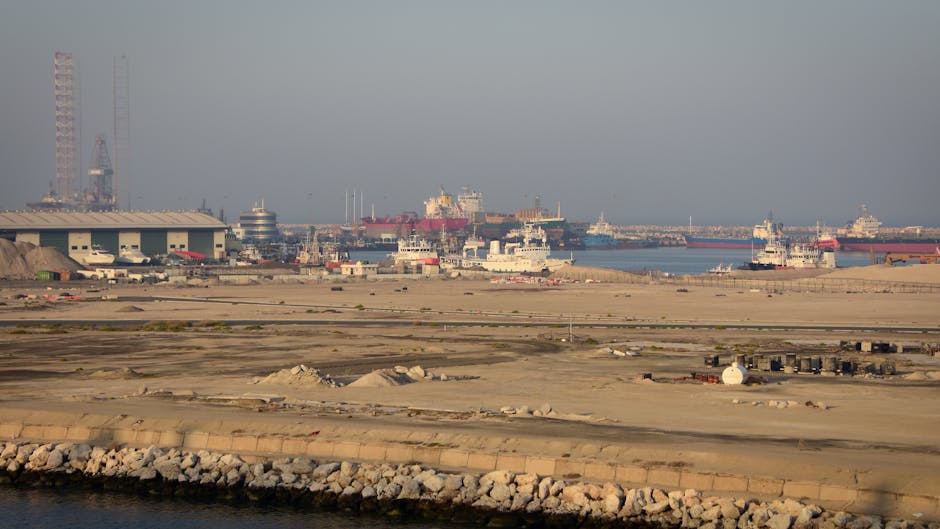
- China’s call for the Strait of Hormuz reopening is driven by its need for stable oil supply routes, given its status as the world’s largest oil importer.
- The Strait of Hormuz handles approximately 20% of the world’s oil supply, making it a crucial waterway for global energy trade.
- China’s diplomatic maneuvering in the region reflects its aim to balance its relationships with Iran and other Gulf nations.
- The Strait of Hormuz has become a focal point of geopolitical tensions, symbolizing the power dynamics at play in the Gulf.
- China’s position as a neutral and reliable partner in the Gulf is crucial for its economic expansion and energy security.
Amid escalating tensions in the Persian Gulf, Chinese President Xi Jinping has called for the reopening of the Strait of Hormuz, a vital waterway through which a significant portion of the world’s oil passes. This statement underscores China’s complex and multifaceted relationships with Iran and other Gulf nations, as Beijing seeks to balance its strategic interests in the region. With China being the world’s largest oil importer, the stability of oil supply routes is of paramount importance, and the Strait of Hormuz is crucial in this regard, handling approximately 20% of the world’s oil supply.
Geopolitical Context of the Strait

The Strait of Hormuz, located between Iran and Oman, has become a focal point of geopolitical tensions in recent years. The strait’s significance extends beyond its role in global oil trade; it is also a symbol of the power dynamics at play in the Gulf. China’s call for the strait’s reopening reflects not only its economic interests but also its diplomatic maneuvering in the region. Beijing has been cultivating relationships with both Iran and the Arab states of the Gulf, seeking to position itself as a neutral and reliable partner. This delicate balancing act is crucial for China, given its reliance on imported oil and its ambitions for economic expansion.
China’s Interests in the Gulf

China’s interests in the Gulf are diverse and interconnected. Economically, the region is vital for China’s energy security, with several Gulf nations being key oil suppliers. Politically, China has been engaging with regional actors to promote its Belt and Road Initiative (BRI), aiming to integrate the Gulf into its vast network of trade and infrastructure projects. The BRI offers China a platform to enhance its influence in the region, potentially challenging the traditional dominance of Western powers. Meanwhile, China’s diplomatic efforts, including its call for the reopening of the Strait of Hormuz, are designed to reassure its partners of its commitment to regional stability and cooperation.
Analysis of the Situation
The situation in the Strait of Hormuz is complex, with multiple stakeholders and interests at play. China’s call for the strait’s reopening must be analyzed in the context of its broader foreign policy objectives, including the promotion of the BRI and the enhancement of its global influence. The economic implications of the strait’s closure would be significant, not just for China but for the global economy, given the potential for oil price spikes and supply chain disruptions. Experts point to the need for a multifaceted approach to resolving the tensions in the Gulf, one that addresses both the immediate security concerns and the underlying issues driving regional instability.
Implications for Global Stability
The implications of the Strait of Hormuz’s status extend far beyond the Gulf, affecting global oil markets and the broader geopolitical landscape. A prolonged closure of the strait could lead to increased oil prices, impacting economies worldwide, particularly those heavily reliant on imported oil. Furthermore, the situation in the Gulf has the potential to draw in other global powers, escalating tensions and complicating efforts to find a diplomatic solution. China’s role in this context is critical, as its actions and statements can influence the behavior of other nations and the trajectory of regional conflicts.
Expert Perspectives
Experts offer contrasting viewpoints on China’s motivations and the potential outcomes of its actions in the Gulf. Some see China’s call for the reopening of the Strait of Hormuz as a genuine attempt to promote regional stability and protect its economic interests. Others interpret it as a strategic move to expand China’s influence in the Gulf, potentially at the expense of other powers. The diversity of opinions highlights the complexity of the issue and the need for ongoing analysis and dialogue to understand the evolving dynamics in the region.
Looking forward, the situation in the Strait of Hormuz and China’s role within it will continue to evolve, influenced by a range of factors including diplomatic efforts, economic pressures, and regional security dynamics. A key question is how China will navigate its relationships with Iran and the Arab states of the Gulf, balancing its strategic interests with the need to maintain stability in the region. The answer to this question will have significant implications not just for China’s foreign policy but for global oil markets and the broader landscape of international relations.