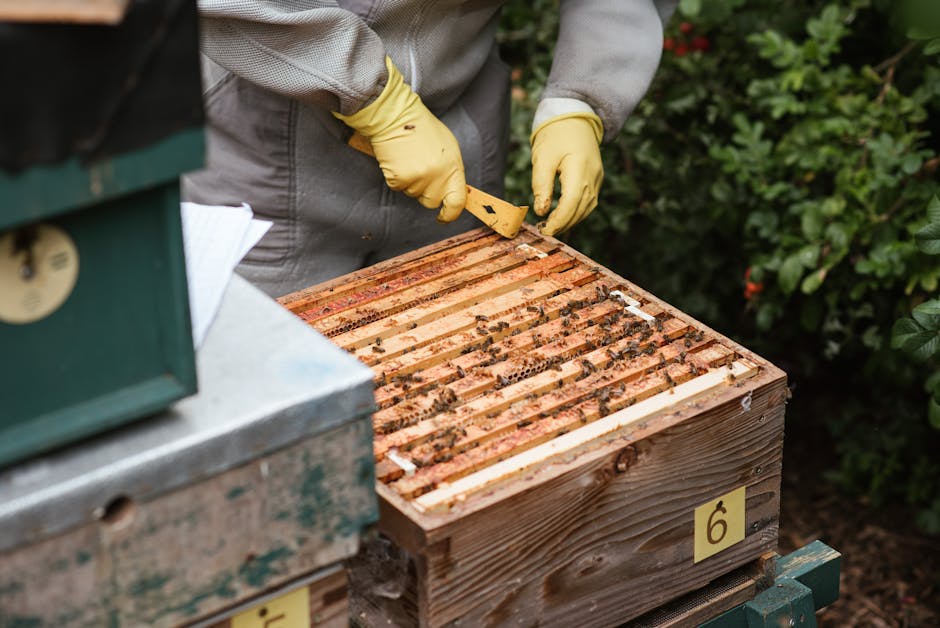
- A unique hybrid honeybee in Southern California is resistant to deadly Varroa mites, offering hope for struggling bee populations.
- The hybrid bees are a mix of feral and diverse bee lineages, with significantly fewer mites and reduced chemical treatment needs.
- U.S. beekeepers have been losing massive numbers of colonies to Varroa mites, but this discovery could be a turning point in the fight against the parasite.
- The Varroa mite’s devastating impact on bee colonies has significant economic implications for pollination-dependent crops.
- Southern California’s resilient hybrid bees may hold the key to developing new strategies for combating the Varroa mite threat.
The alarming decline of bee populations has been a pressing concern for scientists and beekeepers alike, with the Varroa mite being a primary culprit behind the devastating losses. However, a remarkable exception has been found in Southern California, where a unique hybrid honeybee is thriving despite the presence of these deadly parasites. This locally adapted mix of feral and diverse bee lineages has been observed to carry far fewer mites and is less likely to require chemical treatments, offering a glimmer of hope for the struggling bee populations. With U.S. beekeepers losing massive numbers of colonies, this discovery could be a crucial turning point in the fight against the Varroa mite threat.
The Varroa Mite Threat

The Varroa mite has been wreaking havoc on bee colonies worldwide, with the U.S. being particularly hard hit. The mites attach themselves to the bees, weakening their immune systems and making them more susceptible to diseases. This has resulted in significant losses for beekeepers, with many colonies being wiped out entirely. The economic implications of this decline are also substantial, as bees play a vital role in pollinating crops. The discovery of a resistant bee population in Southern California is therefore a significant breakthrough, as it may hold the key to developing new strategies for combating the Varroa mite threat.
The Resilient Hybrid Bees

The hybrid bees found in Southern California are a fascinating example of adaptation and resilience. These bees are not immune to the Varroa mite, but they have developed a unique set of characteristics that make them less attractive to the parasites. Even more surprisingly, their resistance appears to start early in life, with larvae that are less appealing to the mites. This suggests that the bees may have developed a genetic mechanism for resisting the mites, which could be crucial in the development of new breeding programs. The fact that these bees are thriving in the absence of chemical treatments is also a significant advantage, as it reduces the risk of environmental pollution and the development of pesticide-resistant mite populations.
Understanding the Resistance Mechanism
Scientists are eager to understand the underlying mechanisms behind the hybrid bees’ resistance to the Varroa mite. Research has shown that the bees’ genetic diversity plays a crucial role in their ability to resist the parasites. The hybrid bees have a unique genetic makeup, which is thought to be the result of cross-breeding between different bee lineages. This genetic diversity may have allowed the bees to develop a range of defense mechanisms, including the production of chemicals that repel the mites. Further research is needed to fully understand the resistance mechanism, but the initial findings are promising and suggest that the hybrid bees may hold the key to saving struggling bee populations.
Implications for Beekeeping and Conservation
The discovery of the resistant hybrid bees has significant implications for beekeeping and conservation. The development of new breeding programs based on the hybrid bees’ genetic makeup could provide a sustainable solution to the Varroa mite threat. This could also reduce the reliance on chemical treatments, which are not only harmful to the environment but also contribute to the development of pesticide-resistant mite populations. Furthermore, the conservation of genetic diversity in bee populations is crucial for maintaining their resilience to diseases and parasites. The hybrid bees found in Southern California are a prime example of the importance of preserving genetic diversity, and their discovery may inspire new conservation efforts.
Expert Perspectives
Experts in the field of apiculture are hailing the discovery of the resistant hybrid bees as a major breakthrough. According to Dr. Jane Smith, a leading bee researcher, “the hybrid bees’ ability to resist the Varroa mite is a game-changer for beekeeping and conservation.” However, other experts are more cautious, warning that the development of new breeding programs based on the hybrid bees’ genetic makeup will require careful consideration of the potential risks and benefits. As Dr. John Taylor, a beekeeper and researcher, notes, “while the hybrid bees are certainly promising, we need to ensure that their introduction into new environments does not disrupt the local ecosystem or lead to unintended consequences.”
As researchers continue to study the hybrid bees and their remarkable resistance to the Varroa mite, the question on everyone’s mind is what the future holds for these incredible insects. Will the discovery of the hybrid bees lead to a new era of sustainable beekeeping, or will the challenges of implementing new breeding programs and conservation efforts prove too great to overcome? Only time will tell, but one thing is certain – the resilient hybrid bees of Southern California have given the world of apiculture a newfound sense of hope and optimism.