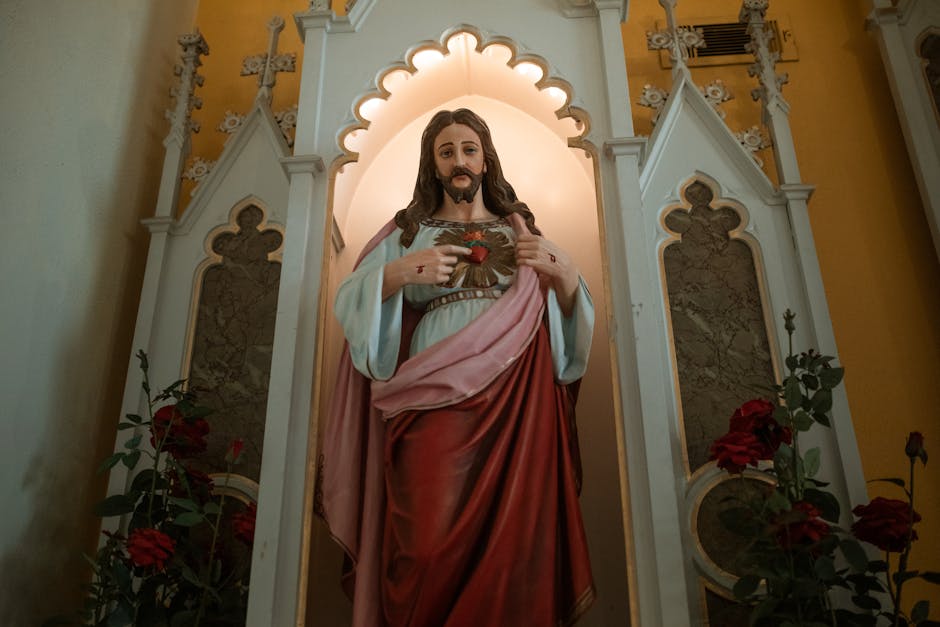
- An Israeli soldier was filmed destroying a statue of Jesus in Lebanon, causing international outrage.
- The incident has led to a formal investigation by the Israeli military and an expression of regret from Prime Minister Benjamin Netanyahu.
- The destruction of the statue is seen as a serious breach of protocol and a potential provocation due to the region’s delicate religious sensitivities.
- This event highlights the need for the Israeli military to adhere to international norms and respect religious symbols.
- The incident has sparked concerns about the Israeli military’s treatment of religious and cultural heritage sites.
A striking incident has unfolded in Lebanon, where an Israeli soldier was filmed sledgehammering a statue of Jesus, sparking widespread outrage and condemnation from the international community. The incident, which has been widely circulated on social media, has led to a formal investigation by the Israeli military, with Prime Minister Benjamin Netanyahu expressing regret for any hurt caused to “believers in Lebanon and around the world.” The soldier’s actions have been deemed a serious breach of protocol and a potential provocation, highlighting the delicate nature of religious sensitivities in the region. As the investigation continues, the incident has raised questions about the Israeli military’s adherence to international norms and respect for religious symbols.
The Incident’s Background and Significance

The desecration of the Jesus statue in Lebanon is a highly sensitive issue, given the country’s complex religious demographics and history of sectarian tensions. Lebanon is home to a significant Christian population, and the destruction of a revered religious symbol has been perceived as a grave insult to the community. The incident has also sparked concerns about the Israeli military’s respect for religious and cultural heritage sites, particularly in the context of the ongoing conflict in the region. With the investigation underway, the Israeli government is under pressure to demonstrate its commitment to upholding international norms and respecting the religious sensitivities of all communities. The incident has also highlighted the need for greater awareness and education about the importance of respecting religious symbols and cultural heritage sites.
Key Details of the Incident

According to reports, the Israeli soldier involved in the incident was part of a military operation in Lebanon, although the exact circumstances surrounding the desecration of the Jesus statue remain unclear. The soldier’s actions were captured on video, which has been widely shared on social media, prompting a swift response from the Israeli military and government. The investigation is expected to examine the soldier’s motivations and the chain of command, as well as the military’s procedures for respecting religious and cultural heritage sites. The incident has also raised questions about the role of social media in amplifying provocative incidents and the need for greater responsibility in sharing sensitive content.
Analysis of the Incident’s Causes and Effects
The desecration of the Jesus statue in Lebanon has been attributed to a combination of factors, including a lack of awareness and sensitivity towards religious symbols, as well as a broader culture of impunity within the Israeli military. Experts have pointed to the need for greater education and training on the importance of respecting religious and cultural heritage sites, particularly in the context of military operations. The incident has also highlighted the risks of escalation and retaliation, particularly in a region where sectarian tensions are already high. As the investigation continues, there are concerns about the potential consequences for the Israeli soldier involved, as well as the broader implications for the Israeli military’s reputation and relationships with neighboring countries.
Implications of the Incident
The desecration of the Jesus statue in Lebanon has significant implications for the Israeli military and government, as well as for the broader region. The incident has sparked outrage and condemnation from Christian communities around the world, and has raised questions about the Israeli military’s commitment to respecting religious and cultural heritage sites. The incident has also highlighted the need for greater dialogue and cooperation between different religious communities, as well as the importance of promoting tolerance and understanding. As the investigation continues, there are concerns about the potential consequences for the Israeli soldier involved, as well as the broader implications for the Israeli military’s reputation and relationships with neighboring countries.
Expert Perspectives
Experts have weighed in on the incident, with some condemning the soldier’s actions as a serious breach of protocol and a potential provocation. Others have highlighted the need for greater awareness and education about the importance of respecting religious symbols and cultural heritage sites. “This incident is a stark reminder of the need for greater sensitivity and respect towards religious symbols and cultural heritage sites,” said one expert. “The Israeli military must take concrete steps to prevent such incidents in the future and to promote a culture of tolerance and understanding.” Another expert noted that the incident has significant implications for the Israeli military’s reputation and relationships with neighboring countries, and highlighted the need for a thorough investigation and accountability.
Looking ahead, the incident raises important questions about the future of religious tolerance and cooperation in the region. As the investigation continues, there are concerns about the potential consequences for the Israeli soldier involved, as well as the broader implications for the Israeli military’s reputation and relationships with neighboring countries. One open question is how the Israeli government will respond to the incident, and what steps it will take to prevent similar incidents in the future. Another question is how the international community will respond to the incident, and what role it will play in promoting greater tolerance and understanding in the region. As the situation continues to unfold, one thing is clear: the desecration of the Jesus statue in Lebanon has sparked a critical conversation about the importance of respecting religious symbols and cultural heritage sites, and the need for greater dialogue and cooperation between different religious communities.