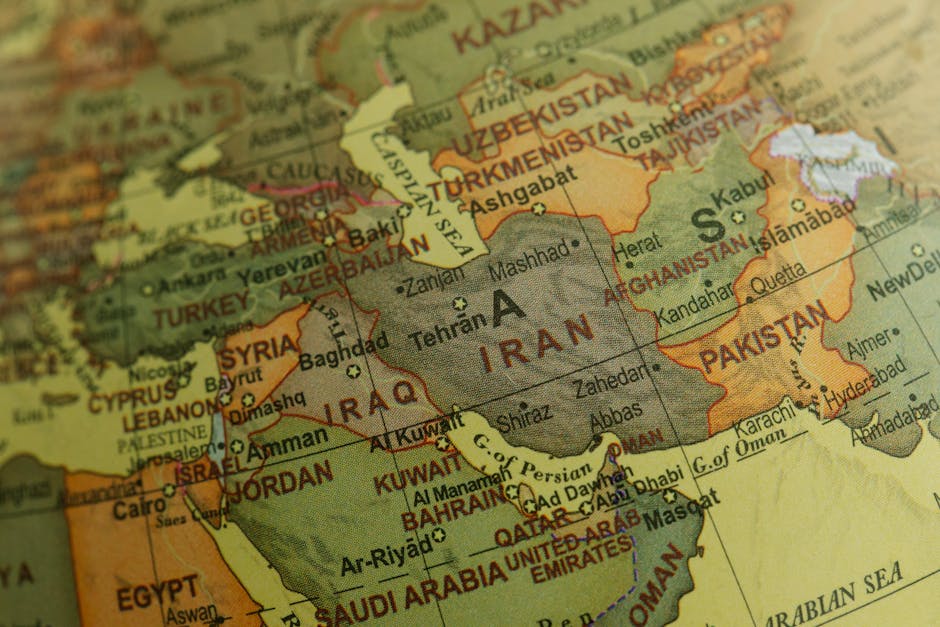
- The Strait of Hormuz is a critical waterway connecting the Persian Gulf to the Arabian Sea, with 20% of the world’s oil passing through it.
- Iran’s ability to control the Strait of Hormuz has emerged as a new deterrent, potentially altering regional conflict dynamics.
- The Strait’s narrow width and Iran’s geographical position give Tehran significant influence over maritime traffic.
- Tensions between Iran and other nations, including the US, have escalated, increasing the risk of disruptions to the strait.
- Restricting or threatening traffic through the Strait of Hormuz could lead to oil price spikes and global economic destabilization.
The Strait of Hormuz, a critical waterway connecting the Persian Gulf to the Arabian Sea, has long been a focal point of international concern due to its strategic importance in global oil trade. Approximately 20% of the world’s oil passes through this narrow strait, making it a chokepoint that could significantly impact the global economy if disrupted. Recently, Iran’s ability to flex control over this waterway has emerged as a new deterrent, potentially altering the dynamics of the conflict in the region and providing Tehran with a significant bargaining chip in its dealings with adversaries.
Strategic Significance of the Strait

The Strait of Hormuz’s importance cannot be overstated. Its narrow width of about 21 miles at its narrowest point makes it vulnerable to disruption, whether by accident or design. Iran’s geographical position, with its coastline running along the strait, gives it a unique ability to influence maritime traffic. This has become particularly relevant as tensions between Iran and other nations, including the United States, have escalated. The strait’s role in global energy supply chains means that any attempt by Iran to restrict or threaten traffic could have immediate and far-reaching consequences, potentially leading to spikes in oil prices and destabilizing the global economy.
Recent Developments and Key Players

Recent months have seen an increase in tensions in the region, with incidents involving Iranian forces and international shipping drawing global attention. These have included the seizure of foreign tankers, alleged attacks on shipping, and the downing of a U.S. drone, which Iran claimed had entered its airspace. The U.S. and its allies have responded with a mix of military deployments and diplomatic initiatives aimed at securing the strait and reassuring allies and trading partners. Key players in this drama include not just Iran and the U.S., but also European powers, China, and regional states like Saudi Arabia and the UAE, each with their own interests and strategies for the region.
Analysis of Causes and Effects
At the heart of the current tensions is a complex interplay of factors, including Iran’s response to economic sanctions, its pursuit of regional influence, and the geopolitical rivalries between major powers. The U.S. withdrawal from the Joint Comprehensive Plan of Action (JCPOA), also known as the Iran nuclear deal, and the subsequent imposition of stringent sanctions have significantly impacted Iran’s economy. Tehran’s ability to exert control over the Strait of Hormuz serves as a powerful reminder of its capacity to retaliate against these measures, affecting not just its immediate adversaries but also the global economy. Experts point to the strategic calculation behind Iran’s actions, suggesting that by demonstrating its ability to disrupt oil supplies, Iran aims to deter further escalation and potentially force a renegotiation of the terms of its international relations.
Implications for Global Security and Trade
The implications of Iran’s control over the Strait of Hormuz are far-reaching, affecting global security, trade, and the balance of power in the Middle East. For countries dependent on oil imports from the Gulf, the potential for disruption poses significant economic and strategic risks. Moreover, the situation underscores the vulnerabilities of global supply chains to geopolitical tensions and the importance of maritime security. As the world’s largest economies and military powers weigh their responses, the situation remains precarious, with the potential for miscalculation or accident that could lead to wider conflict.
Expert Perspectives
Experts offer contrasting viewpoints on the situation, with some emphasizing the need for a robust military presence to deter Iranian aggression, while others advocate for diplomatic engagement to address the root causes of the conflict. Some analysts suggest that Iran’s actions, while risky, reflect a rational calculation of its interests and capabilities, and that a negotiated solution that addresses Iran’s security concerns and economic needs could provide a way out of the current impasse. Others warn that any concessions to Iran could embolden it to make further demands, destabilizing the region.
Looking forward, the key question is how the international community will respond to Iran’s newfound assertiveness in the Strait of Hormuz. Will the situation escalate into a wider conflict, or can diplomatic efforts find a path to de-escalation and a new equilibrium in the region? The answer will depend on a complex interplay of factors, including the strategies of major powers, the resilience of the global economy, and the calculations of Iran’s leadership as they navigate the challenges and opportunities of their current position.