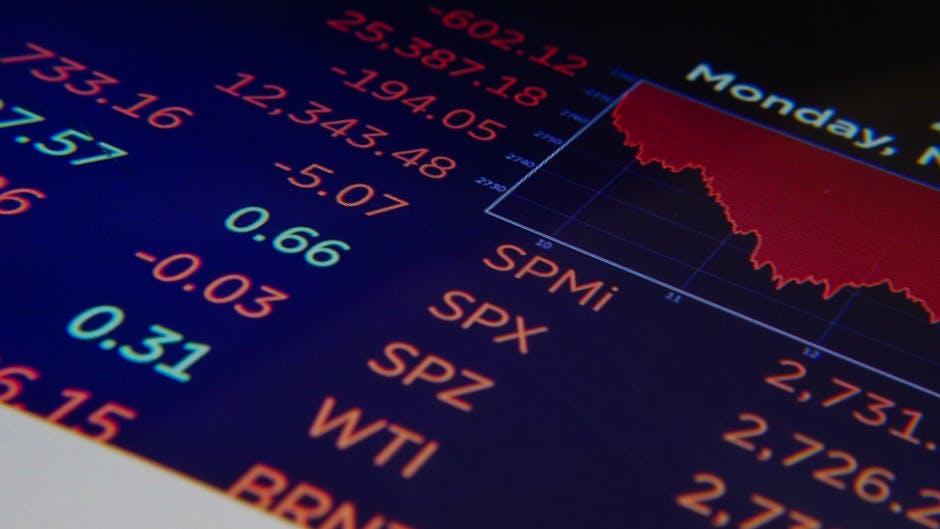
- 20% of Wall Street jobs are at risk of being automated by A.I. within the next five years, sparking concerns about job security.
- A.I. technology is rapidly advancing, enabling financial institutions to make faster and more informed decisions with vast amounts of data.
- The increased adoption of A.I. on Wall Street has led to significant improvements in efficiency and productivity, but also raises questions about the future of human workers.
- A.I. is taking on tasks such as data analysis, trading, and risk management, potentially displacing human workers in these areas.
- While A.I. offers vast potential to transform the financial industry, its impact on job security remains a pressing concern for many in the sector.
According to a recent report, nearly 20% of jobs on Wall Street are at risk of being automated by A.I. in the next five years. This staggering statistic has left many in the financial industry wondering if their jobs are safe. As A.I. technology continues to advance, it is becoming increasingly clear that the future of finance will be shaped by machines. With the ability to process vast amounts of data in seconds, A.I. is giving financial institutions the power to make faster, more informed decisions. However, this increased efficiency comes at a cost, as many jobs are being eliminated in the process. As one bank’s chief executive noted, “A.I. gives us places to go we haven’t gone,” highlighting the vast potential of this technology to transform the industry.
The Rise of A.I. on Wall Street

The use of A.I. on Wall Street is not a new phenomenon, but its impact is being felt more than ever before. In recent years, financial institutions have been investing heavily in A.I. technology, with many implementing machine learning algorithms to analyze market trends and make predictions. This increased adoption of A.I. has led to significant improvements in efficiency and productivity, allowing banks and other financial institutions to process transactions faster and with greater accuracy. However, as A.I. takes on more responsibilities, many are left wondering what the future holds for human workers in the industry. With A.I. handling tasks such as data analysis, risk management, and even investment decisions, it is becoming increasingly clear that the role of humans on Wall Street is changing.
A.I. in Action: Key Developments

Several major banks have already begun to implement A.I. technology, with impressive results. For example, JPMorgan Chase has developed an A.I. system that can analyze financial contracts and extract relevant data, a task that previously took hours to complete by hand. Similarly, Goldman Sachs has implemented an A.I. platform that can analyze market trends and make predictions, allowing the bank to make more informed investment decisions. These developments demonstrate the significant potential of A.I. to transform the financial industry, and many other institutions are following suit. As A.I. continues to advance, it is likely that we will see even more innovative applications of this technology on Wall Street.
Understanding the Impact of A.I.
The impact of A.I. on Wall Street is complex and multifaceted. On the one hand, A.I. has the potential to bring significant benefits to the financial industry, including increased efficiency, improved accuracy, and enhanced decision-making capabilities. However, as A.I. takes on more responsibilities, there is a growing concern about the potential consequences for human workers. As jobs are automated, many are left wondering what the future holds for their careers. Furthermore, there are also concerns about the potential risks associated with A.I., including the possibility of machine errors and the lack of transparency in A.I. decision-making processes. As the use of A.I. continues to grow, it is essential to carefully consider these factors and work towards a future where A.I. and human workers can coexist and thrive.
The Human Cost of A.I.
The implications of A.I. on Wall Street are far-reaching, with significant consequences for human workers. As A.I. takes on more responsibilities, many jobs are being eliminated, leaving workers to wonder what the future holds for their careers. According to some estimates, up to 30% of jobs in the financial industry could be automated by A.I. in the next decade. This has significant implications for the economy, as many workers will need to adapt to new roles and industries. Furthermore, there is also a concern about the potential for A.I. to exacerbate existing social and economic inequalities, as those with the skills and training to work with A.I. are likely to thrive, while those without may be left behind.
Expert Perspectives
Experts in the field have differing opinions on the impact of A.I. on Wall Street. Some, such as Dr. David Ferrucci, a leading expert in A.I., believe that A.I. has the potential to bring significant benefits to the financial industry, including increased efficiency and improved decision-making capabilities. However, others, such as Dr. Kate Darling, a robotics ethicist, are more cautious, highlighting the potential risks associated with A.I., including the possibility of machine errors and the lack of transparency in A.I. decision-making processes. As the use of A.I. continues to grow, it is essential to consider these differing perspectives and work towards a future where A.I. and human workers can coexist and thrive.
As we look to the future, it is clear that A.I. will play an increasingly important role on Wall Street. With its ability to process vast amounts of data in seconds, A.I. has the potential to revolutionize the financial industry, bringing significant benefits and improvements. However, as A.I. takes on more responsibilities, it is essential to carefully consider the potential consequences for human workers and the economy as a whole. What will the future hold for Wall Street, and how will A.I. continue to shape the industry? Only time will tell, but one thing is certain: the impact of A.I. on Wall Street will be profound and far-reaching.