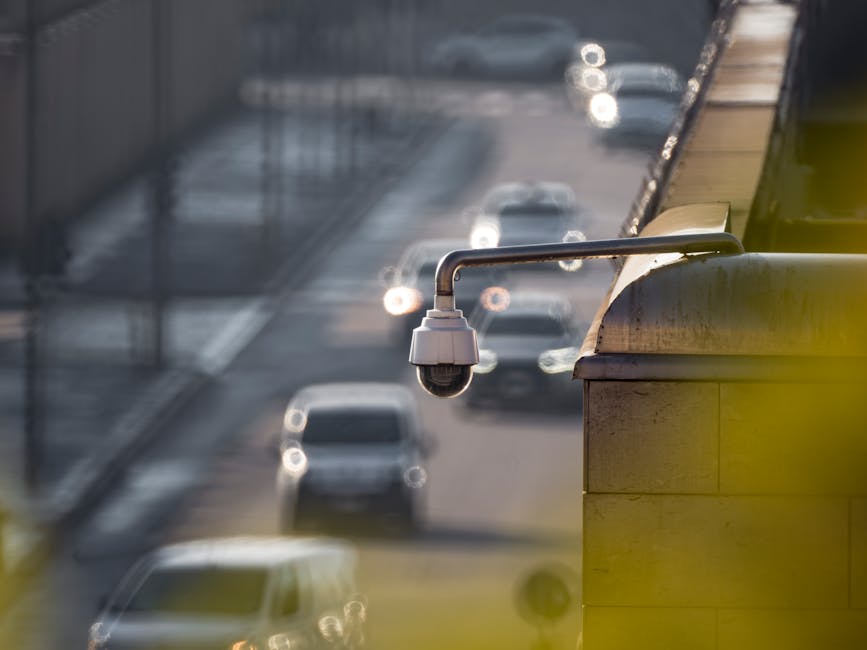
- The integration of surveillance technologies into daily life has become ubiquitous, with over 70% of adults in developed countries aware of being digitally surveilled.
- The shift towards surveillance as the new default is not just technological but also deeply cultural, driven by changing social norms and the convenience offered by tech.
- The proliferation of smartphones, IoT, and social media has democratized and commercialized surveillance, with companies collecting vast amounts of user data.
- The cost of individual privacy is significant, as data collection is used to personalize services and enhance user experiences.
- Despite the Snowden revelations, the trend towards surveillance has continued, with many accepting it as a necessary trade-off for convenience and safety.
In the past two decades, the integration of surveillance technologies into our daily lives has been so profound that it often goes unnoticed. From facial recognition systems in public spaces to data collection by social media giants, the extent to which we are monitored has surged, reshaping our understanding of privacy and security. According to a 2023 report by the Electronic Frontier Foundation (EFF), over 70% of adults in developed countries are aware of being under some form of digital surveillance, yet a majority accept it as a necessary trade-off for convenience and safety. This shift is not just technological but deeply cultural, and it demands a closer examination of the forces that have normalized such invasive practices.
The Evolution of Surveillance

The journey of surveillance from a niche, often dystopian concept to a ubiquitous reality is a testament to the rapid advancement of technology and the changing social norms. Initially, surveillance was primarily associated with government intelligence and law enforcement, seen as a tool to protect national security. However, the proliferation of smartphones, the internet of things (IoT), and social media platforms has democratized and commercialized surveillance. Companies now collect vast amounts of data to personalize services and enhance user experiences, but this comes at a significant cost to individual privacy. The 2013 Snowden revelations were a wake-up call, yet they did not halt the trend. Instead, they seemed to accelerate it, as people became accustomed to the idea that their data is a valuable commodity.
The Role of AI in Surveillance

Artificial intelligence (AI) has played a pivotal role in the normalization of surveillance. AI-driven technologies, such as facial recognition and predictive analytics, have made surveillance more efficient and less noticeable. For instance, facial recognition systems, once the domain of science fiction, are now deployed in airports, shopping malls, and even schools. These systems can identify individuals in real-time, track their movements, and predict their behaviors, all with minimal human intervention. The involvement of tech giants like Google, Amazon, and Facebook has further embedded AI surveillance into the fabric of society. Their algorithms are not just watching us; they are learning from us, creating detailed profiles that can be used for everything from targeted advertising to law enforcement.
The Ethical and Societal Implications
The normalization of surveillance has profound ethical and societal implications. On one hand, it can enhance public safety and security, making it easier to prevent and solve crimes. On the other hand, it raises concerns about consent, data misuse, and the potential for authoritarian control. A study by the University of California, Berkeley, found that AI surveillance can disproportionately affect marginalized communities, leading to increased scrutiny and potential discrimination. Moreover, the lack of transparency and accountability in how data is collected and used has created a trust deficit between citizens and the institutions that monitor them. This has led to a growing movement advocating for stronger privacy laws and more ethical AI practices.
Expert Perspectives
Experts in the field of AI and privacy offer contrasting viewpoints on the normalization of surveillance. Dr. Helen Nissenbaum, a professor at New York University, argues that the acceptance of surveillance is a result of a “privacy paradox”—people express concern about privacy but continue to use services that compromise it. Conversely, Dr. Ian Kerr, a law professor at the University of Ottawa, believes that the convenience and safety provided by surveillance technologies outweigh the risks, especially in a world where threats are increasingly digital. These differing opinions highlight the complexity of the issue and the need for a nuanced debate.
Looking ahead, the key question is whether the current trajectory of surveillance can be altered. As AI technologies continue to evolve, the potential for more invasive and pervasive monitoring grows. However, increasing public awareness and advocacy for privacy rights may lead to regulatory changes. What is certain is that the conversation about surveillance and privacy will remain a critical one in the years to come, shaping the balance between technological advancement and individual freedom.