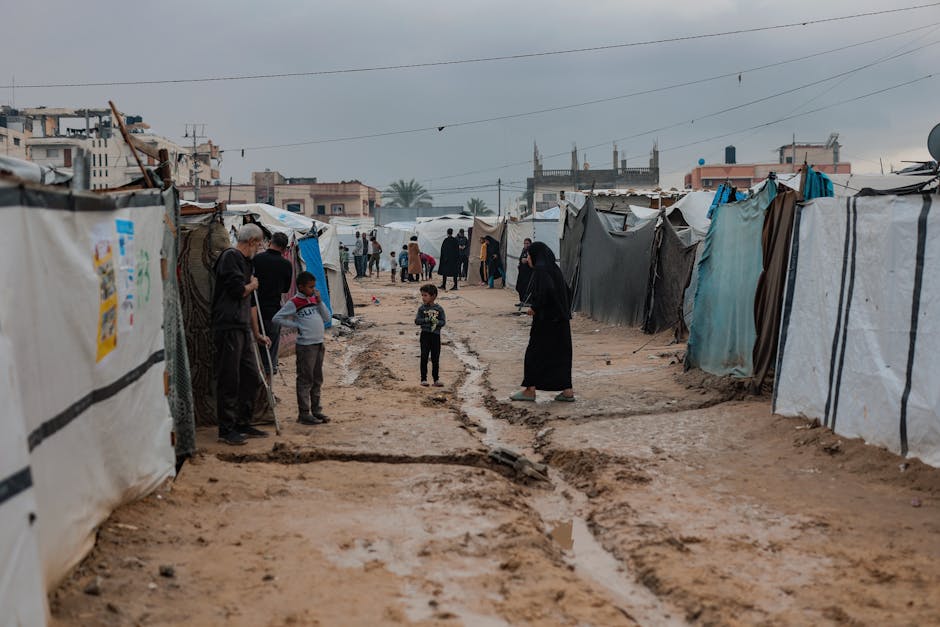
- President Trump has proposed relocating Palestinians from Gaza to Egypt and Jordan, sparking controversy and resistance from Arab countries.
- The Gaza Strip has been severely damaged, with over 2 million people affected by poverty, unemployment, and lack of access to basic necessities.
- The relocation plan would involve temporarily or permanently relocating thousands of Palestinians, raising concerns about humanitarian implications.
- The conflict between Israel and Palestine has resulted in significant humanitarian suffering in the Gaza Strip for years.
- The blockade imposed on Gaza since 2007 has exacerbated the humanitarian crisis, with widespread poverty and unemployment reported.
The Gaza Strip, a heavily bombed enclave, has been at the center of a longstanding conflict between Israel and Palestine. In a recent statement, President Trump referred to the region as “a demolition site,” sparking widespread controversy. The president’s comments came as he proposed a plan to relocate Palestinians from the Gaza Strip to neighboring countries, including Egypt and Jordan. This proposal has been met with fierce resistance from Arab countries, who have rejected the idea since the war began. The plan, which would involve temporarily or permanently relocating thousands of Palestinians, has raised concerns about the humanitarian implications and the potential for further destabilization in the region.
The Humanitarian Crisis in Gaza

The situation in Gaza has been deteriorating for years, with the conflict between Israel and Palestine resulting in significant humanitarian suffering. The region has been subject to periodic outbreaks of violence, with both sides suffering heavy losses. The Gaza Strip, which is home to over 2 million people, has been under a blockade since 2007, leading to widespread poverty, unemployment, and a lack of access to basic necessities like food, water, and healthcare. The recent proposal by President Trump to relocate Palestinians from the region has only added to the sense of uncertainty and fear among the population.
Key Details of the Relocation Plan

According to reports, the relocation plan proposed by President Trump would involve working with Egypt and Jordan to temporarily or permanently resettle Palestinians from the Gaza Strip. The plan would allegedly involve providing financial incentives to the host countries, as well as investing in infrastructure and job creation programs to support the relocated populations. However, the details of the plan remain unclear, and it is unclear how the relocation would be implemented, or what the long-term consequences would be for the affected populations. The proposal has been met with skepticism by many, who argue that it does not address the underlying causes of the conflict and could potentially exacerbate the humanitarian crisis in the region.
Analysis of the Proposal
The proposal to relocate Palestinians from the Gaza Strip has been widely criticized by experts and policymakers, who argue that it does not provide a viable solution to the conflict. Many have pointed out that the plan ignores the complex historical and political context of the conflict, and fails to address the underlying issues that have led to the current crisis. Others have raised concerns about the potential humanitarian consequences of the relocation, including the risk of displacement, trauma, and human rights violations. Furthermore, the proposal has been seen as an attempt to bypass the internationally recognized two-state solution, which has been the basis of peace negotiations between Israel and Palestine for decades.
Implications of the Proposal
The implications of the proposal to relocate Palestinians from the Gaza Strip are far-reaching and potentially devastating. The plan could lead to the displacement of thousands of people, causing significant humanitarian suffering and destabilization in the region. It could also have a profound impact on the political landscape, potentially undermining the prospects for a peaceful resolution to the conflict. The proposal has already been rejected by Arab countries, who have expressed concerns about the potential consequences of the relocation and the lack of consultation with regional stakeholders. As the situation continues to unfold, it remains to be seen how the international community will respond to the proposal and what the long-term consequences will be for the people of Gaza.
Expert Perspectives
Experts have expressed differing opinions on the proposal to relocate Palestinians from the Gaza Strip. Some have argued that the plan is a necessary step towards addressing the humanitarian crisis in the region, while others have condemned it as a violation of international law and human rights. Dr. Khalil Shikaki, a prominent Palestinian scholar, has stated that the proposal is “a recipe for disaster” and would only serve to exacerbate the conflict. In contrast, some Israeli officials have expressed support for the plan, arguing that it could provide a solution to the humanitarian crisis in Gaza. However, the majority of experts agree that the proposal is flawed and requires significant revision before it can be considered a viable solution.
As the situation in Gaza continues to unfold, it remains to be seen what the future holds for the people of the region. The international community will be watching closely as the proposal is debated and negotiated, and it is likely that the outcome will have significant implications for the prospects of peace in the Middle East. One thing is certain, however: the people of Gaza deserve a comprehensive and sustainable solution to the conflict, one that addresses their humanitarian needs and provides a foundation for a lasting peace. The question on everyone’s mind is: what will it take to achieve this goal, and how can the international community work together to support a peaceful resolution to the conflict?