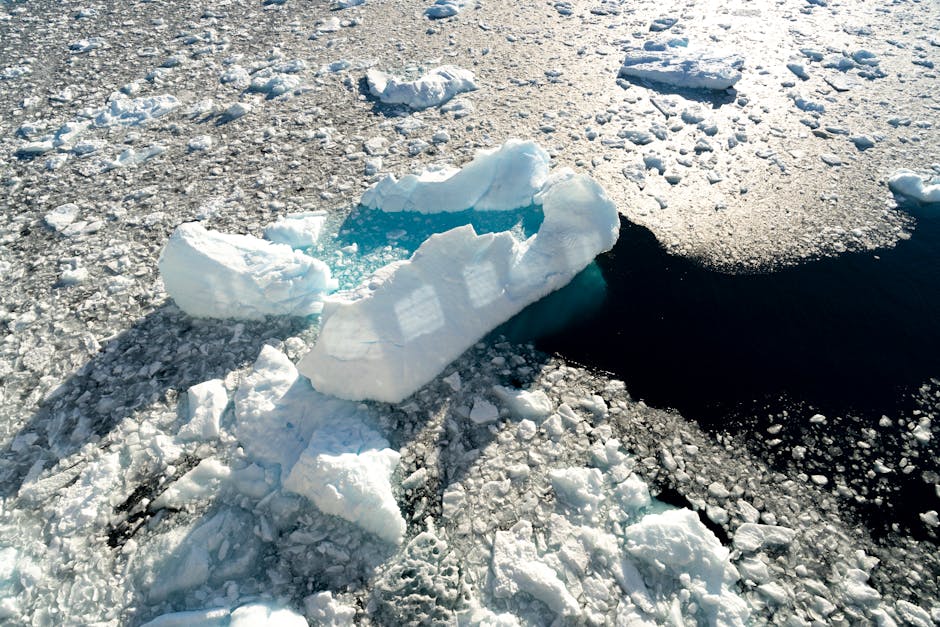
- The Arctic is warming at a rate twice as fast as the global average, leading to significant environmental and ecological changes.
- Thawing permafrost and melting ice have far-reaching impacts on global climate patterns and weather systems.
- Geopolitical tensions in the Arctic are rising due to strategic trade routes and natural resources, complicating international relations.
- Understanding the complex interplay of factors driving Arctic warming is crucial for developing effective climate policies and strategies.
- The Arctic’s diminishing ice cover is opening up new shipping routes, increasing maritime traffic and raising safety concerns.
The Arctic is experiencing a rate of warming that is twice as fast as the global average, with temperatures rising by as much as 3°C in the past few decades. This rapid thawing has significant implications for the environment, wildlife, and human populations in the region. A recent study published in Nature highlights the urgent need to address the causes and consequences of Arctic warming, which is not only affecting the local ecosystem but also having far-reaching impacts on global climate patterns. As the Arctic continues to thaw at an unprecedented rate, it is essential to understand the complex interplay of factors driving this trend and the potential consequences for the future of the far north.
Background and Context

The Arctic has long been a region of significant scientific interest, with researchers studying the unique and fragile ecosystem that exists in this harsh and remote environment. However, in recent years, the Arctic has also become a focal point for geopolitical tensions, as countries such as the United States, Russia, and China vie for access to the region’s natural resources and strategic trade routes. The thawing of the Arctic is not only a climate issue but also a complex geopolitical problem, with significant implications for international relations and global security. As the region continues to warm, it is likely that these tensions will only increase, making it essential to develop a deeper understanding of the complex factors driving Arctic thawing and its potential consequences.
Key Trends and Developments

One of the primary drivers of Arctic thawing is the reduction of sea ice, which has been declining at a rate of around 13% per decade since the 1980s. This decline is not only affecting the local ecosystem but also having far-reaching impacts on global climate patterns, with potential consequences for weather events such as hurricanes and droughts. The thawing of permafrost is another significant trend, with around 30% of the Arctic’s permafrost expected to thaw by 2100, releasing large quantities of methane and carbon dioxide into the atmosphere. The impacts of these trends are already being felt, with changes to ocean currents, fish populations, and the distribution of wildlife, highlighting the urgent need for action to address the causes and consequences of Arctic thawing.
Causes, Effects, and Analysis
The causes of Arctic thawing are complex and multifaceted, involving a combination of natural and human-induced factors. Climate change is the primary driver, with rising temperatures and changes to precipitation patterns altering the delicate balance of the Arctic ecosystem. However, other factors such as pollution, overfishing, and the impacts of human activity such as shipping and mining are also playing a significant role. The effects of Arctic thawing are far-reaching, with potential consequences for global climate patterns, international relations, and human populations in the region. According to experts, the thawing of the Arctic could have significant implications for the global economy, with potential disruptions to trade routes, fisheries, and the extraction of natural resources.
Implications and Consequences
The implications of Arctic thawing are significant, with potential consequences for human populations, wildlife, and the environment. The reduction of sea ice and the thawing of permafrost are already affecting the distribution of wildlife, with changes to migration patterns, breeding habits, and access to food sources. The impacts on human populations are also significant, with potential consequences for the livelihoods of indigenous communities, the extraction of natural resources, and the stability of global food systems. As the Arctic continues to thaw, it is essential to develop a deeper understanding of the complex factors driving this trend and the potential consequences for the future of the far north.
Expert Perspectives
According to Dr. Maria Rodriguez, a leading expert on Arctic climate change, the thawing of the Arctic is a complex and multifaceted issue that requires a comprehensive and coordinated response. “The Arctic is not just a climate issue, but also a geopolitical problem, with significant implications for international relations and global security,” she notes. In contrast, Dr. John Taylor, a specialist in Arctic ecology, argues that the focus should be on developing sustainable and resilient solutions that prioritize the needs of local communities and the environment. “The Arctic is a unique and fragile ecosystem that requires a delicate balance of human activity and environmental protection,” he emphasizes.
As the Arctic continues to thaw, it is essential to develop a forward-looking approach that prioritizes the needs of the environment, local communities, and the global economy. According to experts, this will require a coordinated and comprehensive response that addresses the complex interplay of factors driving Arctic thawing and its potential consequences. As the region enters a new era of rapid change and uncertainty, one thing is clear: the future of the far north will be shaped by the actions we take today to address the causes and consequences of Arctic thawing.