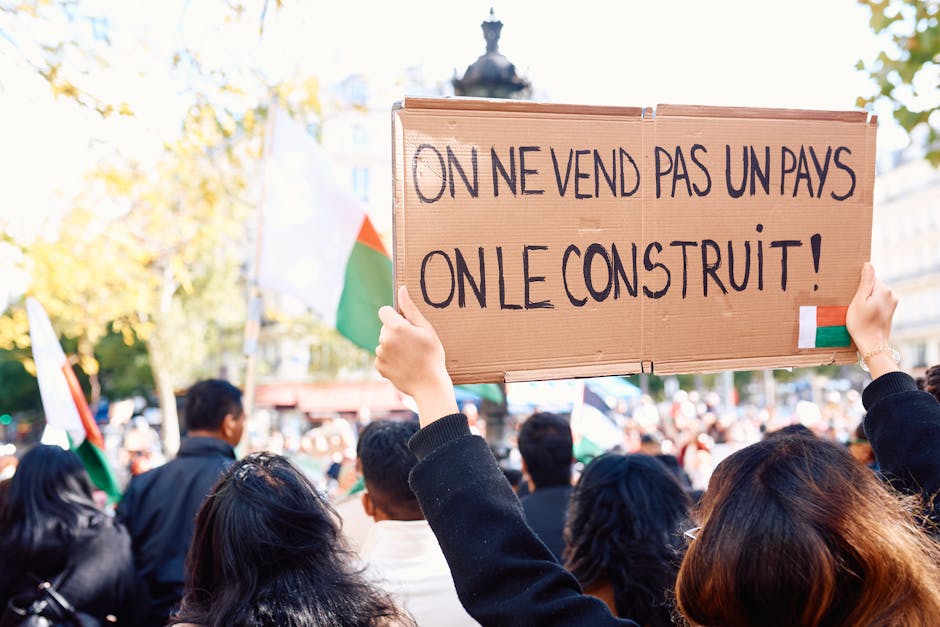
- Madagascar’s young protesters who toppled the previous government are now facing a harsh crackdown under the new regime.
- The arrests of four activists have sent a chilling message to the country’s Gen Z population, sparking widespread concern.
- The new regime in Madagascar is facing questions about its commitment to democratic values and human rights.
- The protest movement in Madagascar was largely driven by social media and a sense of disillusionment among young people.
- The military regime’s promise to listen to young people’s concerns and build a more democratic society is being questioned.
The recent arrests of several young protesters in Madagascar have sent a chilling message to the country’s Gen Z population, who had been at the forefront of the movement that toppled the previous government last year. According to reports, four activists – Herizo Andriamanantena, Miora Rakotomalala, Dina Randrianarisoa, and Nomena Ratsihorimanana – were taken into custody after participating in a demonstration calling for the military regime to set a date for elections. This crackdown has sparked widespread concern among young people, who are beginning to question whether the new regime is any better than the one they helped to overthrow.
Background to the Protests

The protests in Madagascar were sparked by a sense of disillusionment among young people, who felt that the previous government was out of touch with their needs and aspirations. The movement, which was largely driven by social media, gained momentum as thousands of young people took to the streets to demand change. The protests were marked by their peaceful nature, with demonstrators calling for free and fair elections, as well as an end to corruption and economic mismanagement. The military regime that took power after the protests had promised to listen to the concerns of young people and to work towards building a more democratic and inclusive society.
The Arrests and Their Aftermath

The arrests of the four Gen Z activists have been widely condemned by human rights groups and civil society organizations, who see them as a clear attempt to intimidate and silence young people. The regime has claimed that the protesters were arrested for violating public order laws, but many believe that the real reason is to prevent them from continuing to speak out against the government. The arrests have also sparked fears of a wider crackdown on dissent, with many young people now afraid to express their opinions or participate in public demonstrations. As the situation continues to unfold, it remains to be seen how the regime will respond to the growing unrest and whether it will be able to address the concerns of young people.
Analysis of the Situation
The arrests in Madagascar are a stark reminder of the challenges that many countries face in transitioning from authoritarian rule to democracy. While the military regime may have promised to listen to the concerns of young people, its actions suggest that it is more interested in maintaining power than in building a more inclusive and democratic society. The fact that the regime is using public order laws to silence dissent is also a concern, as it suggests that it is more interested in maintaining control than in protecting the rights of its citizens. As the situation continues to unfold, it will be important to watch how the international community responds, and whether it will be able to put pressure on the regime to respect the rights of its citizens.
Implications of the Arrests
The implications of the arrests in Madagascar are far-reaching, and will be felt not just by young people, but by the wider population. The fact that the regime is willing to use force to silence dissent suggests that it is not committed to building a democratic society, and that it is more interested in maintaining power than in listening to the concerns of its citizens. This will likely lead to widespread disillusionment among young people, who may begin to feel that their voices are not being heard. It may also lead to a decline in trust in the regime, and a sense that the country is moving backwards rather than forwards.
Expert Perspectives
Experts believe that the arrests in Madagascar are a clear indication that the regime is not committed to democracy. “The fact that the regime is using public order laws to silence dissent is a stark reminder of the challenges that many countries face in transitioning from authoritarian rule to democracy,” said one expert. “It is clear that the regime is more interested in maintaining power than in building a more inclusive and democratic society.” Others have called for the international community to put pressure on the regime to respect the rights of its citizens, and to ensure that those who have been arrested are released and allowed to continue their activism without fear of persecution.
As the situation in Madagascar continues to unfold, it remains to be seen how the regime will respond to the growing unrest. Will it be able to address the concerns of young people, or will it continue to use force to silence dissent? One thing is clear: the eyes of the world will be watching, and the international community will be expecting the regime to respect the rights of its citizens and to work towards building a more democratic and inclusive society. The question on everyone’s mind is: what’s next for Madagascar, and will the regime be able to find a way to balance its own interests with the needs and aspirations of its young people?