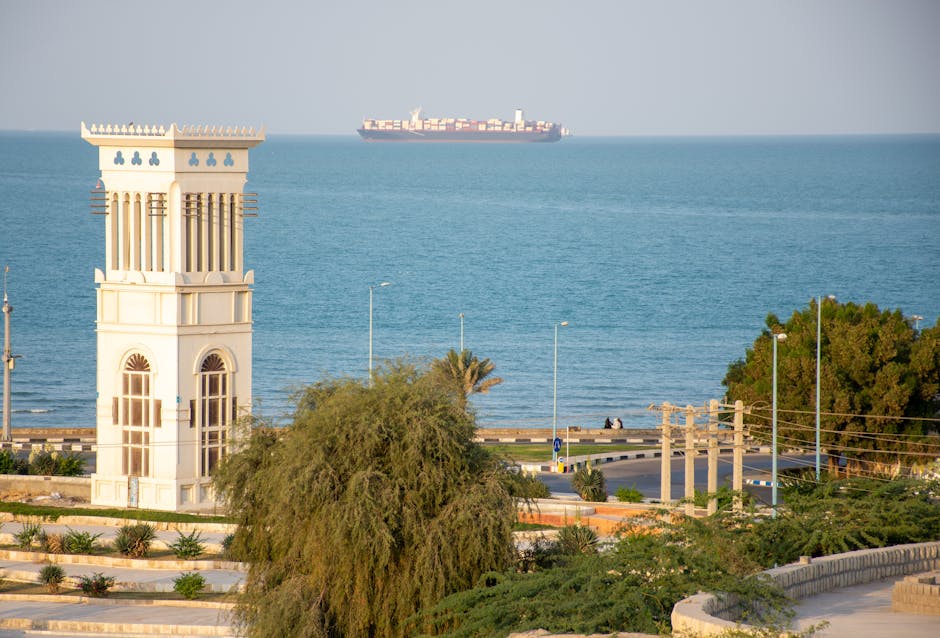
- The Strait of Hormuz is a critical waterway for international oil trade, with nearly 20% of the world’s oil passing through it.
- Iran’s assertion of control over the strait has raised concerns among shipping companies and nations reliant on the strait for oil exports.
- Disruptions to oil flows through the strait could have far-reaching consequences, including increased oil prices and decreased economic growth.
- The Strait of Hormuz has long been a source of contention between Iran and other nations, particularly the United States.
- Iran’s claims that it has the right to supervise the strait have sparked concerns about the potential for conflict and impact on global oil markets.
The Strait of Hormuz, a critical waterway for international oil trade, has become a focal point of tension between Iran and the global community. In a recent statement, Iranian authorities announced that the strait is open, but emphasized that it remains under Tehran’s supervision. This assertion of control has raised concerns among shipping companies and nations reliant on the strait for oil exports, as it potentially allows Iran to disrupt the flow of oil and impact the global economy. With nearly 20% of the world’s oil passing through the strait, any disruption could have far-reaching consequences, including increased oil prices and decreased economic growth.
Background and Significance

The Strait of Hormuz has long been a source of contention between Iran and other nations, particularly the United States. The strait’s strategic importance stems from its role as a conduit for oil exports from the Middle East, making it a critical component of the global energy supply chain. As tensions between Iran and the US have escalated in recent years, the strait has become an increasingly important factor in the geopolitical landscape of the region. The current situation is further complicated by Iran’s claims that it has the right to supervise the strait, which has sparked concerns among other nations about the potential for conflict and the impact on global oil markets.
Key Developments and Actors

The situation in the Strait of Hormuz is complex, involving multiple actors and interests. The Iranian government has stated that it will continue to supervise the strait, citing concerns about security and the need to protect its own interests. Meanwhile, the US and other nations have expressed concerns about the potential for disruption to oil supplies and have called on Iran to respect the principles of free navigation. Shipping companies and oil exporters are also closely watching the situation, as any disruption to the strait could have significant financial and logistical implications. As the situation continues to unfold, it remains to be seen how the various actors will respond and what the ultimate outcome will be.
Analysis and Implications
From an analytical perspective, the situation in the Strait of Hormuz is driven by a complex interplay of geopolitical, economic, and strategic factors. Iran’s assertion of control over the strait is likely motivated by a desire to demonstrate its influence in the region and to counter what it sees as external pressure from the US and other nations. At the same time, the global community is concerned about the potential for conflict and the impact on oil supplies, which could have far-reaching economic consequences. Data from recent years suggests that even minor disruptions to oil supplies can have significant effects on global markets, highlighting the need for a peaceful resolution to the situation.
Regional and Global Implications
The implications of the situation in the Strait of Hormuz are far-reaching, with potential consequences for nations and industries around the world. If Iran were to disrupt the flow of oil through the strait, it could lead to increased oil prices, decreased economic growth, and potentially even conflict. The situation is also being closely watched by other nations in the region, which are concerned about the potential for instability and the impact on their own economies. As the situation continues to unfold, it is likely that the global community will be increasingly focused on finding a peaceful resolution that respects the interests of all parties involved.
Expert Perspectives
Experts in the field offer contrasting viewpoints on the situation in the Strait of Hormuz. Some argue that Iran’s assertion of control is a legitimate response to external pressure and a necessary step to protect its own interests. Others, however, see the move as a provocative and potentially dangerous escalation of tensions, which could have significant consequences for the global economy. As the situation continues to evolve, it is likely that expert opinions will play an increasingly important role in shaping the response of the global community.
Looking forward, the key question is what will happen next in the Strait of Hormuz. Will Iran continue to assert its control, or will the global community be able to find a peaceful resolution that respects the interests of all parties involved? As the situation continues to unfold, it is likely that the world will be watching closely, with significant implications for the global economy, international relations, and the future of the region. One thing is certain, however: the situation in the Strait of Hormuz is a critical issue that requires careful attention and a peaceful resolution.