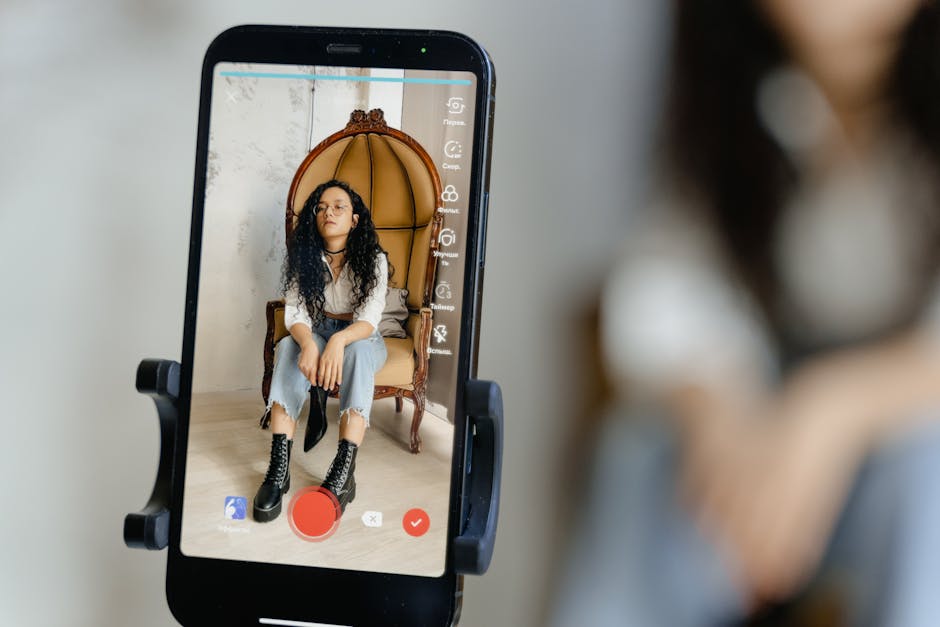
A striking phenomenon has emerged on social media platforms, with hundreds of artificial intelligence-generated fake avatars popping up to promote pro-Trump content. These AI-generated profiles, complete with fake photos, bios, and posts, have surged on TikTok, Instagram, Facebook, and YouTube, in an apparent bid to influence conservative voters. The emergence of these fake influencers has raised concerns about the spread of disinformation and the potential impact on the upcoming elections. With their convincing profiles and engaging content, these avatars have already amassed a significant following, making them a formidable force in the online political landscape.
The Rise of AI-Generated Fake Influencers

The proliferation of AI-generated fake influencers on social media is a relatively new development, but one that has gained significant traction in recent months. As social media platforms continue to evolve and become increasingly influential in shaping public opinion, the potential for disinformation and manipulation has grown exponentially. The fact that these fake avatars are specifically targeting conservative voters suggests a coordinated effort to sway public opinion and potentially influence the outcome of elections. The implications of this trend are far-reaching, and social media platforms are facing mounting pressure to address the issue and prevent the spread of disinformation.
Key Players and Motivations

The exact motivations behind the creation of these AI-generated fake influencers are unclear, but it is evident that they are part of a larger campaign to promote pro-Trump content and sway conservative voters. The individuals or groups responsible for creating these avatars are using sophisticated AI algorithms to generate convincing profiles, complete with fake photos, bios, and posts. The content promoted by these avatars is often provocative and engaging, designed to elicit strong emotions and encourage sharing and engagement. As the number of fake influencers continues to grow, it is becoming increasingly difficult for social media platforms to distinguish between genuine and fake accounts, making it challenging to combat the spread of disinformation.
Analysis and Implications
The emergence of AI-generated fake influencers on social media has significant implications for the integrity of online discourse and the potential impact on elections. The use of AI algorithms to generate convincing profiles and content raises concerns about the authenticity of online information and the potential for manipulation. Furthermore, the fact that these fake avatars are targeting conservative voters suggests a coordinated effort to sway public opinion and potentially influence the outcome of elections. As social media platforms struggle to combat the spread of disinformation, it is essential to consider the long-term implications of this trend and the potential consequences for democracy and public discourse.
Consequences and Fallout
The consequences of the emergence of AI-generated fake influencers on social media are far-reaching and have the potential to affect not only the integrity of online discourse but also the outcome of elections. As these fake avatars continue to spread disinformation and promote pro-Trump content, it is essential to consider the potential impact on conservative voters and the broader political landscape. The fact that these avatars are often convincing and engaging makes them a formidable force in shaping public opinion, and it is crucial to address the issue before it is too late. Social media platforms, policymakers, and the public must work together to combat the spread of disinformation and ensure the integrity of online discourse.
Expert Perspectives
Experts in the field of social media and disinformation are sounding the alarm about the emergence of AI-generated fake influencers, warning of the potential consequences for democracy and public discourse. While some argue that social media platforms are doing enough to combat the spread of disinformation, others contend that more needs to be done to address the issue. As the debate continues, one thing is clear: the emergence of AI-generated fake influencers on social media is a significant threat to the integrity of online discourse, and it requires a coordinated effort to combat.
As the situation continues to evolve, it is essential to keep a close eye on the developments and consider the potential implications for the future of social media and online discourse. Will social media platforms be able to effectively combat the spread of disinformation, or will the emergence of AI-generated fake influencers become a permanent fixture of the online landscape? Only time will tell, but one thing is certain: the integrity of online discourse depends on it.