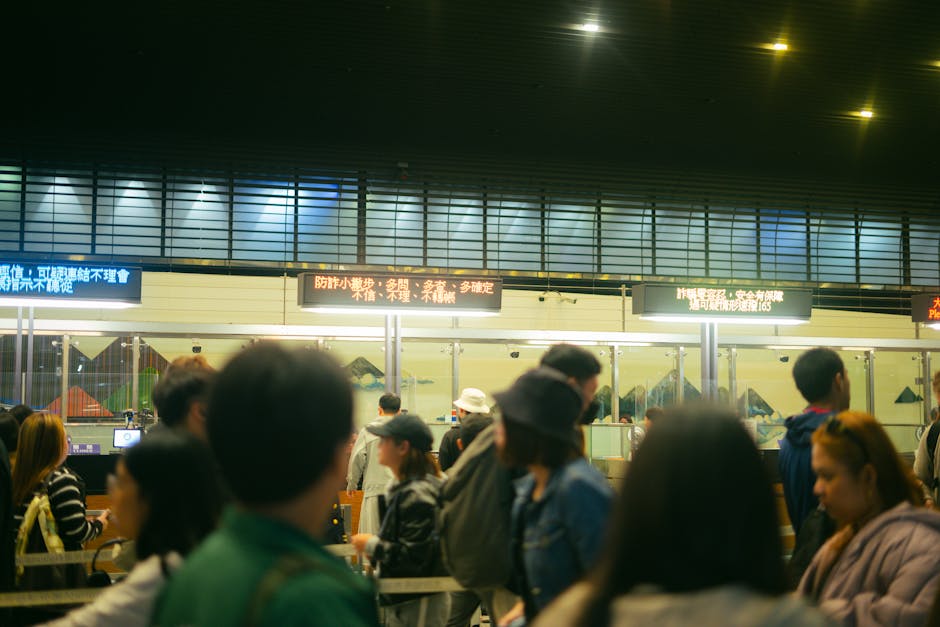
- European border rules are causing flight delays due to increased processing times at airports.
- At least a dozen flights have left passengers behind in the past month due to border delays.
- Airports across the continent are experiencing significant disruptions and congestion.
- New border rules, aimed at enhancing security and streamlining travel, have ironically led to a surge in delays.
- A shortage of staff and resources at airports is exacerbating the issue of border control backlogs.
A striking fact has emerged in the European air travel sector: over the past month, at least a dozen flights have left passengers behind due to border delays, highlighting the growing issue of congestion at airports across the continent. This phenomenon is not isolated, as airports from London to Paris, and from Amsterdam to Frankfurt, are experiencing significant disruptions. The primary cause of these delays can be attributed to the new European border rules, which have increased the processing time for passengers. As a result, flights are being forced to depart without all of their passengers on board, leaving many stranded and frustrated.
The Backlog of Border Control

The new European border rules, which were implemented to enhance security and streamline the travel process, have ironically led to a surge in delays at airports. The rules require more stringent checks on passengers, resulting in longer wait times at border control. This, in turn, has created a backlog of passengers waiting to be processed, causing flights to be delayed or, in some cases, to depart without all passengers on board. The situation is further complicated by the fact that many airports are struggling to cope with the increased demand for air travel, which has led to a shortage of staff and resources to handle the new border rules.
Key Players and Incidents

Several key players are involved in addressing the issue of border delays, including airport authorities, airlines, and government agencies. Recent incidents have highlighted the need for urgent action, with one notable example being a flight from London to New York that left over 20 passengers behind due to delays at border control. The airline in question has since apologized for the incident and is working to implement new procedures to minimize the risk of such events occurring in the future. Meanwhile, airport authorities are investing in new technology and staffing to improve the efficiency of border control and reduce wait times for passengers.
Causes and Consequences
An analysis of the causes and consequences of the border delays reveals a complex interplay of factors. The new border rules, while intended to improve security, have had the unintended consequence of creating significant disruptions to air travel. The effects of these delays are far-reaching, impacting not only passengers but also airlines, airports, and the broader economy. According to industry experts, the delays are resulting in significant losses for airlines, which are being forced to compensate stranded passengers and absorb the costs of delayed flights. Furthermore, the delays are also having a negative impact on the overall travel experience, leading to decreased customer satisfaction and loyalty.
Implications for Travelers and the Economy
The implications of the border delays are significant, affecting not only individual travelers but also the broader economy. Passengers are facing increased wait times, missed flights, and stranded journeys, resulting in frustration and disappointment. The delays are also having a negative impact on the economy, as the air travel sector is a critical component of international trade and commerce. The World Tourism Organization estimates that the delays could result in a significant decline in tourist arrivals, leading to losses in revenue and employment opportunities. As such, it is essential that airport authorities, airlines, and government agencies work together to address the issue of border delays and restore the efficiency and reliability of air travel.
Expert Perspectives
Experts in the field are offering contrasting viewpoints on the issue of border delays, with some arguing that the new rules are necessary for security and others claiming that they are an overreaction. According to one expert, the delays are a small price to pay for the enhanced security measures, which are critical in today’s global environment. In contrast, another expert argues that the rules are too stringent and are having a disproportionate impact on air travel, leading to unnecessary delays and disruptions. As the debate continues, one thing is clear: the issue of border delays requires urgent attention and a coordinated response from all stakeholders involved.
Looking ahead, the key question is what measures can be taken to address the issue of border delays and restore the efficiency of air travel. One potential solution is the implementation of new technologies, such as automated border control systems, which could significantly reduce wait times and improve the processing of passengers. Additionally, airlines and airport authorities could work together to develop new procedures and protocols for managing delays and minimizing the impact on passengers. As the air travel sector continues to evolve, it is essential that stakeholders prioritize the needs of passengers and work towards creating a more efficient, reliable, and secure travel experience.