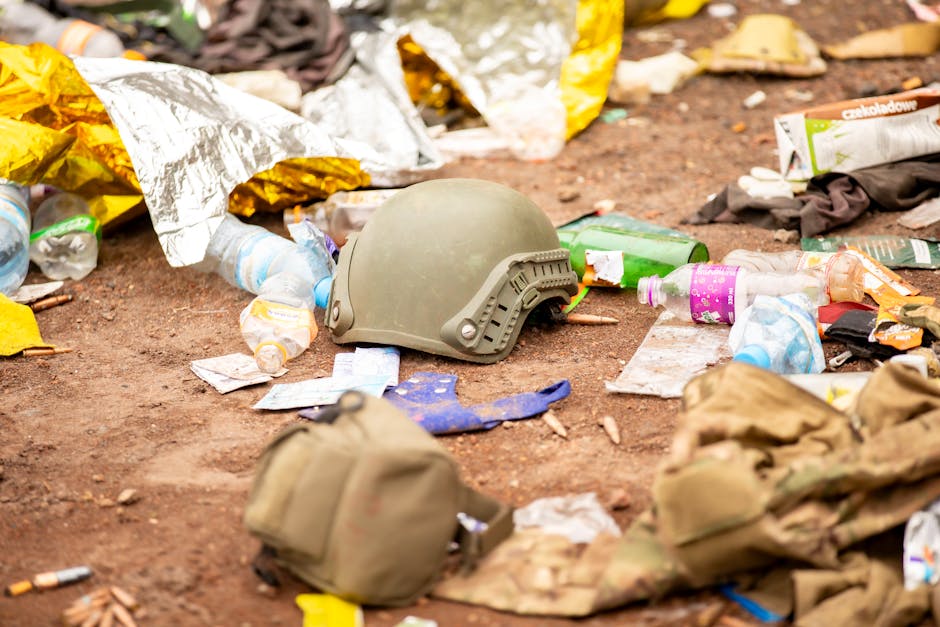
- The DRC government and M23 rebel group have agreed to protect civilians and aid deliveries, marking progress in the peace process.
- The conflict in the DRC has led to significant displacement and human rights abuses, with over 200,000 people displaced.
- The M23, a former army group, has been a major cause of instability in the region, with talks aiming to address their influence.
- Peace talks in Switzerland show both sides are willing to engage in dialogue for a peaceful resolution, though challenges remain.
- The humanitarian crisis in the DRC remains severe, with many facing food and water shortages despite recent developments.
The Democratic Republic of Congo has witnessed a significant breakthrough in its ongoing conflict, with the government and M23 rebel group committing to protect civilians and facilitate aid deliveries. This development comes after a series of talks held in Switzerland, which also saw progress on a protocol for ceasefire oversight. The commitment to safeguard civilians is particularly noteworthy, given the devastating humanitarian toll of the conflict, which has resulted in thousands of displaced individuals and countless human rights abuses. According to recent estimates, over 200,000 people have been displaced in the region, with many more facing severe food and water shortages.
Background to the Conflict

The conflict in the DRC has been ongoing for decades, with various rebel groups, including the M23, vying for control and resources in the region. The M23, which consists of former soldiers who defected from the Congolese army, has been a key player in the conflict, and its activities have been responsible for significant instability and violence. The DRC government has struggled to assert its authority, and the international community has been working to broker a peace agreement. The recent talks in Switzerland represent a crucial step forward in this process, as they demonstrate a willingness on the part of both parties to engage in constructive dialogue and work towards a peaceful resolution.
Key Developments in the Peace Talks

The peace talks in Switzerland, facilitated by international mediators, have yielded several key developments. Firstly, the DRC government and the M23 have agreed to establish a joint committee to oversee the implementation of the ceasefire agreement. This committee will be responsible for monitoring compliance and addressing any breaches of the agreement. Secondly, the two sides have made progress on a protocol for ceasefire oversight, which will provide a framework for monitoring and reporting on ceasefire violations. These developments are significant, as they demonstrate a commitment to transparency and accountability, and provide a foundation for building trust between the parties.
Analysis of the Agreement
The agreement between the DRC government and the M23 is a complex and multifaceted development, with various implications for the region. On the one hand, the commitment to protect civilians and facilitate aid deliveries is a major step forward, as it will help to alleviate the humanitarian crisis in the region. On the other hand, the agreement is not without its challenges, as the parties will need to work to establish a sustainable and lasting peace. According to experts, the key to success will lie in the implementation of the agreement, and the ability of the parties to build trust and work together to address the underlying causes of the conflict. Data suggests that the conflict has resulted in significant economic losses, with the DRC’s GDP growth rate declining by over 2% in recent years.
Implications of the Agreement
The implications of the agreement between the DRC government and the M23 are far-reaching, and will be felt by various stakeholders in the region. Firstly, the commitment to protect civilians will provide much-needed relief to those affected by the conflict, and will help to reduce the humanitarian toll. Secondly, the agreement will have significant economic implications, as it will help to stabilize the region and attract investment. According to estimates, the conflict has resulted in over $1 billion in economic losses, and a peaceful resolution will be essential for rebuilding the economy. The international community will also be affected, as a stable DRC will be better equipped to participate in regional and global affairs.
Expert Perspectives
Experts have welcomed the agreement between the DRC government and the M23, but have also cautioned that significant challenges lie ahead. According to one expert, “the agreement is a positive step, but it is only the beginning. The parties will need to work hard to establish a sustainable peace, and address the underlying causes of the conflict.” Another expert noted that “the international community will need to provide significant support to the parties, in order to help them build trust and implement the agreement.” These perspectives highlight the complexity of the situation, and the need for ongoing engagement and support from the international community.
Looking to the future, it is clear that the situation in the DRC will require ongoing attention and engagement from the international community. The parties will need to work to implement the agreement, and address the underlying causes of the conflict. One key question that remains is how the parties will be held accountable for their commitments, and what mechanisms will be put in place to ensure compliance. As the situation continues to evolve, it will be essential to monitor developments closely, and provide support to the parties as needed. The coming months will be critical, as the parties work to establish a sustainable peace and rebuild the region.