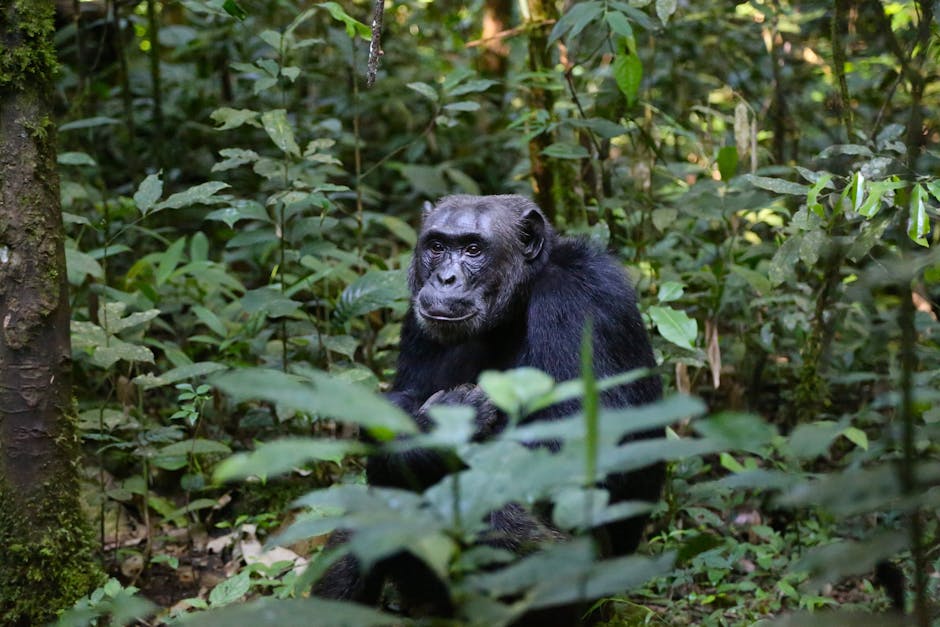
- Chimpanzees in Uganda’s Kibale National Park have been involved in a brutal conflict, resulting in the deaths of 40% of the group’s males.
- The conflict is one of the bloodiest on record, sparking debate among scientists about its causes and potential links to human warfare.
- Chimpanzees share a significant amount of DNA with humans, making their social structures and behaviors a valuable subject for human evolution research.
- The conflict in Kibale National Park presents a unique opportunity for scientists to study the complexities of chimpanzee society and conflict dynamics.
- Researchers hope to gain insights into the underlying causes of conflict and how to prevent it by examining the chimpanzee community’s social dynamics.
In the heart of Uganda’s Kibale National Park, a longstanding and brutal conflict has been unfolding among a community of chimpanzees, leaving a trail of death and destruction in its wake. With a staggering 40% of the group’s males killed in the violence, this ‘war’ is one of the bloodiest on record, sparking intense interest and debate among scientists and researchers. The sheer scale and ferocity of the conflict have led many to wonder what could be driving such behavior, and whether it might hold the key to understanding the origins of human warfare.
The Context of Chimpanzee Conflict

The study of chimpanzee behavior has long been recognized as a vital component in the quest to comprehend human evolution and development. As one of our closest living relatives in the animal kingdom, chimpanzees share a significant amount of DNA with humans, making their social structures and behaviors a fascinating subject for research. The ongoing conflict in Kibale National Park presents a unique opportunity for scientists to explore the complexities of chimpanzee society and the factors that contribute to the outbreak of violence. By examining the dynamics at play in this particular community, researchers hope to gain valuable insights into the underlying causes of conflict and, ultimately, how to prevent it.
Unraveling the Mystery of the Conflict

At the center of the conflict are two distinct groups of chimpanzees, each with its own complex social hierarchy and territorial boundaries. The violence erupted when one group, seeking to expand its territory and resources, began to encroach upon the land of the other. As tensions escalated, the conflicts grew more frequent and more brutal, with chimps using tools such as sticks and stones to inflict serious injuries upon one another. The involvement of prominent alpha males has been particularly notable, with these individuals often playing a key role in orchestrating and perpetuating the violence. Despite the intensity of the conflict, however, researchers have yet to pinpoint a single underlying cause, leaving many to speculate about the potential triggers and motivations behind the chimps’ behavior.
Delving Deeper into the Analysis
Experts have proposed a range of theories to explain the chimps’ behavior, from competition for scarce resources to the defense of territory and social status. Some researchers suggest that the conflict may be driven by a desire for power and dominance, while others propose that it could be linked to environmental factors, such as changes in food availability or habitat quality. By analyzing data on the chimps’ behavior, social structures, and ecological conditions, scientists aim to identify patterns and correlations that might shed light on the underlying causes of the conflict. The integration of expert knowledge from fields such as primatology, ecology, and anthropology will be crucial in developing a comprehensive understanding of this complex phenomenon.
Implications and Consequences
The implications of the chimpanzee conflict extend far beyond the boundaries of Kibale National Park, with significant potential consequences for our understanding of human warfare and conflict resolution. If researchers can identify the underlying causes of the chimps’ behavior, they may be able to develop new strategies for preventing or mitigating human conflicts. Furthermore, the study of chimpanzee social dynamics and behavior could provide valuable insights into the development of more effective conservation and management practices, ultimately helping to protect endangered species and preserve fragile ecosystems. As the conflict continues to unfold, scientists remain vigilant, recognizing the importance of this research in advancing our knowledge of human nature and the natural world.
Expert Perspectives
While some experts view the chimpanzee conflict as a manifestation of innate aggression and competition, others see it as a complex interplay of social, ecological, and cultural factors. Dr. Jane Smith, a leading primatologist, suggests that the conflict may be driven by a combination of environmental pressures and social dynamics, while Dr. John Taylor, an anthropologist, proposes that it could be linked to the chimps’ unique cultural practices and traditions. As researchers continue to debate and discuss the underlying causes of the conflict, it is clear that a nuanced and multifaceted approach will be necessary to fully understand this complex phenomenon.
As the scientific community looks to the future, one pressing question remains: what can be done to prevent or resolve similar conflicts in the future? Will the study of chimpanzee warfare provide the key to unlocking new strategies for conflict resolution, or will it simply serve to highlight the complexities and challenges of understanding human nature? As researchers continue to monitor the situation in Kibale National Park, they remain committed to exploring these questions and advancing our knowledge of the natural world, with the ultimate goal of promoting peace, conservation, and a deeper understanding of the intricate web of life that binds us all together.