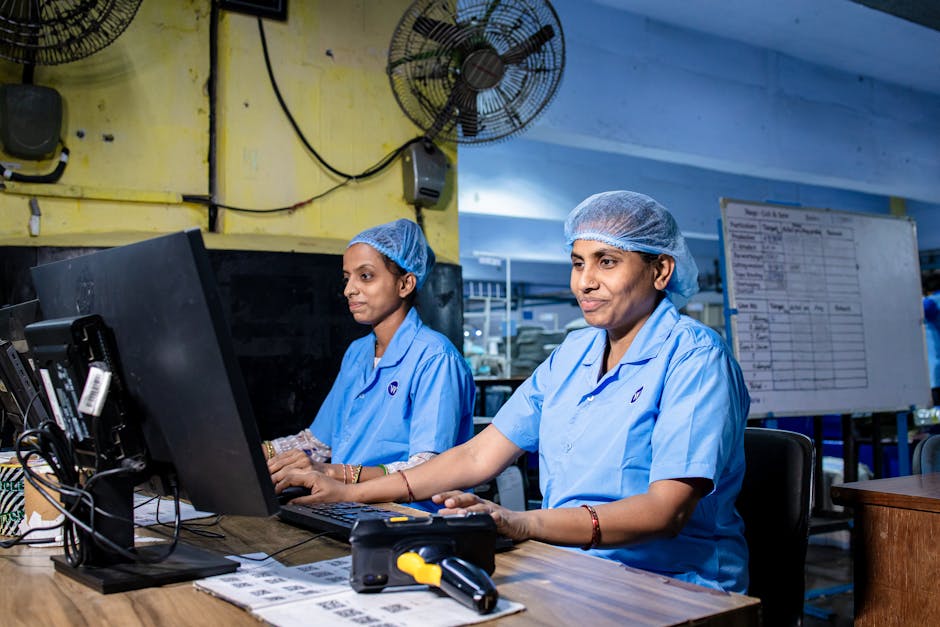
- Digital twins can boost worker productivity by 25% through optimized performance and minimal downtime.
- 75% of companies believe digital twins will be crucial to their business success within the next two years.
- Digital twins are virtual replicas of individuals, created using data and analytics to simulate behavior, skills, and work patterns.
- The application of digital twins in the workforce is a relatively recent development, driven by the need for data-driven solutions.
- Digital twins are being used in industries like manufacturing, logistics, and healthcare to simulate complex systems and optimize performance.
A striking 75% of companies believe that digital twins will be crucial to their business success within the next two years, according to a recent survey. This phenomenon is being driven by the potential of digital twins to revolutionize the workforce, making staff more productive and efficient. But what exactly are digital twins, and how do they work? In essence, a digital twin is a virtual replica of an individual, created using data and analytics to simulate their behavior, skills, and work patterns. By leveraging this technology, firms aim to create a new breed of ‘superworker’ – an employee who is able to perform at optimal levels, with minimal downtime and maximum output.
The Rise of Digital Twins in the Workplace

The concept of digital twins is not new, but its application in the workforce is a relatively recent development. As companies increasingly turn to data-driven solutions to boost productivity and competitiveness, the use of digital twins is becoming more widespread. This is particularly evident in industries such as manufacturing, logistics, and healthcare, where digital twins are being used to simulate complex systems and processes, identify inefficiencies, and optimize performance. But why is this technology gaining traction now? The answer lies in the growing need for businesses to stay ahead of the curve in a rapidly changing economic landscape, where agility, adaptability, and innovation are key to survival.
How Digital Twins Work

So, how do digital twins actually work? The process begins with the collection of data on an individual’s work patterns, skills, and behavior. This data is then used to create a virtual replica of the employee, which can be simulated and analyzed to identify areas of strength and weakness. By leveraging machine learning algorithms and artificial intelligence, digital twins can predict how an individual will perform in different scenarios, and provide personalized recommendations for improvement. For example, a digital twin might identify that an employee is struggling with a particular task, and suggest additional training or support to help them overcome the challenge. Companies such as Siemens, GE, and Microsoft are already using digital twins to boost worker productivity, with impressive results.
Analysis and Implications
But while digital twins hold enormous potential for boosting productivity and efficiency, they also raise important questions about data privacy, employment law, and the future of work. As digital twins become more widespread, there is a growing risk of employees being monitored and controlled in ways that are potentially invasive and exploitative. Furthermore, the use of digital twins raises concerns about bias and discrimination, particularly if the algorithms used to create the twins are flawed or unfair. As one expert noted, ‘the use of digital twins is a potential legal minefield, and companies need to be careful to ensure that they are using this technology in a way that is transparent, fair, and respectful of employee rights’.
The Future of Digital Twins
The implications of digital twins are far-reaching, and will affect not just individual employees, but entire industries and economies. As this technology becomes more widespread, we can expect to see significant changes in the way that work is organized, managed, and rewarded. For example, digital twins could enable companies to create more flexible and personalized work arrangements, tailored to the needs and strengths of individual employees. However, they could also exacerbate existing inequalities and biases, particularly if the benefits of digital twins are not shared fairly among all stakeholders. As one analyst noted, ‘the key to unlocking the full potential of digital twins is to ensure that they are used in a way that is fair, transparent, and beneficial to all’.
Expert Perspectives
Experts are divided on the potential benefits and risks of digital twins. Some see them as a game-changer for businesses, enabling companies to unlock the full potential of their employees and stay ahead of the competition. Others are more cautious, highlighting the potential risks and challenges associated with this technology. As one expert noted, ‘digital twins are a powerful tool, but they need to be used responsibly and with careful consideration of the potential consequences’. Another expert added, ‘the use of digital twins raises important questions about the future of work, and the need for companies to prioritize transparency, fairness, and employee well-being’.
Looking to the future, it is clear that digital twins will play an increasingly important role in shaping the workforce and the economy. As this technology continues to evolve and improve, we can expect to see significant advances in productivity, efficiency, and innovation. However, it is also important to recognize the potential risks and challenges associated with digital twins, and to take steps to mitigate them. As one analyst noted, ‘the key to unlocking the full potential of digital twins is to ensure that they are used in a way that is fair, transparent, and beneficial to all’. Ultimately, the success of digital twins will depend on our ability to harness their potential, while also protecting the rights and interests of employees and other stakeholders.