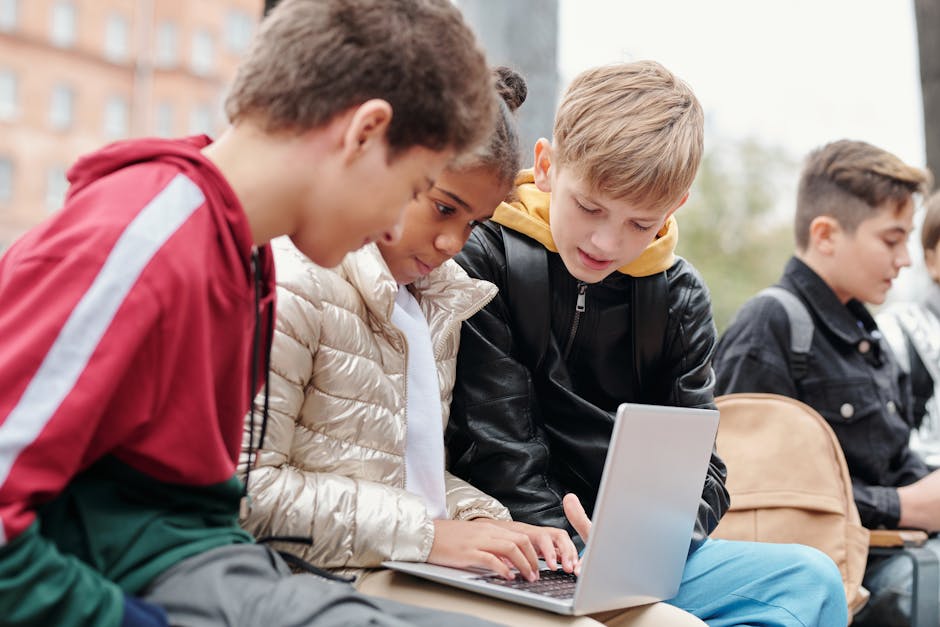
- Artificial intelligence has become a tangible reality in education, with over 70% of institutions worldwide incorporating AI-powered tools into their curriculum.
- The integration of AI is reshaping the landscape of learning, posing significant questions about the future role of human teachers.
- The COVID-19 pandemic has accelerated the digital transformation of education, forcing schools to adapt to remote learning solutions.
- AI has the potential to enhance learning outcomes, but also exposes traditional teaching methods to technological disruption.
- Educators are grappling with how to effectively integrate AI into their teaching practices in response to technological advancements.
The integration of artificial intelligence into educational settings is no longer a topic of speculation but a tangible reality that is reshaping the landscape of learning. A striking fact that underscores this shift is that over 70% of educational institutions worldwide are now incorporating some form of AI-powered tool into their curriculum, heralding a new era in the classroom. This statistic not only reflects the rapid pace of technological advancement but also poses significant questions about the future role of human teachers in an environment where chatbots and AI algorithms are increasingly taking on traditional teaching tasks. As someone who has recently ventured into the teaching profession, the prospect of navigating these uncharted waters is both daunting and exhilarating, akin to attempting to solve a complex puzzle while the pieces are still being invented.
The Changing Face of Education

The reason this matters now more than ever is that the COVID-19 pandemic has accelerated the digital transformation of education, forcing schools and universities to embrace remote learning solutions on a massive scale. This abrupt shift has not only highlighted the potential of technology to enhance learning outcomes but also exposed the vulnerabilities of traditional teaching methods in the face of technological disruption. As educators, we are not just grappling with how to effectively integrate AI into our teaching practices but are also being compelled to redefine what it means to teach and learn in a world where information is abundantly available and the role of the teacher is evolving from a knowledge dispenser to a facilitator of learning. This evolution is as much about the teacher’s ability to adapt as it is about the willingness of educational institutions to invest in the infrastructure and training necessary to support this change.
Key Developments in AI-Powered Education

One of the key developments in this area is the emergence of sophisticated chatbots designed to offer personalized learning experiences to students. These AI-powered tools can analyze a student’s learning patterns, identify areas of weakness, and provide tailored feedback and support. For instance, platforms like DreamBox Learning and Carnegie Learning are using AI to create adaptive math lessons that adjust their level of difficulty based on a student’s performance in real-time. Moreover, the involvement of tech giants like Google and Microsoft in developing educational software is further evidence of the significant resources being dedicated to this field. As these technologies continue to advance, they are likely to have a profound impact on how we approach education, potentially making learning more accessible, efficient, and effective for a wider range of students.
Analysis of the Impact
An analysis of the causes and effects of this technological invasion of the classroom reveals a complex interplay of factors. On one hand, AI has the potential to address some of the long-standing challenges in education, such as the achievement gap and teacher shortages, by providing high-quality, accessible educational content to all students. On the other hand, there are legitimate concerns about the job security of human teachers, the privacy and security of student data, and the potential for AI to exacerbate existing inequalities if its development and deployment are not carefully managed. Data from a recent study indicates that while AI can process and analyze vast amounts of data quickly and accurately, human teachers bring a level of empathy, creativity, and critical thinking to the learning process that is currently beyond the capabilities of even the most advanced AI systems. This underscores the need for a balanced approach that leverages the strengths of both human and artificial intelligence to create a more inclusive and effective learning environment.
Implications for the Future of Education
The implications of this technological shift are far-reaching and multifaceted. For students, AI-powered education tools offer the promise of more personalized and engaging learning experiences. For teachers, the challenge is to adapt their pedagogical practices to complement the capabilities of AI, focusing on those aspects of teaching that are uniquely human, such as mentoring, counseling, and facilitating complex discussions. For educational institutions, the task is to invest in the necessary infrastructure and training to support this transition, ensuring that teachers are equipped to work effectively with AI tools and that students have equitable access to these technologies. Ultimately, the future of education will depend on our ability to harness the potential of AI while preserving the essence of human teaching and learning.
Expert Perspectives
Experts in the field of educational technology offer contrasting viewpoints on the integration of AI into classrooms. Some argue that AI is a disruptive force that will inevitably lead to the replacement of human teachers in many roles, while others see it as a complementary tool that will enhance the teaching profession by automating routine tasks and allowing teachers to focus on higher-value activities. Dr. Randi Weingarten, President of the American Federation of Teachers, notes that while AI has the potential to support teachers and improve student outcomes, it is crucial to prioritize transparency, accountability, and equity in the development and deployment of these technologies. Conversely, technologist and educator, Dr. Sugata Mitra, believes that AI could democratize access to high-quality education, especially in underserved communities, by providing learning opportunities that are currently out of reach for many students.
Looking forward, one of the key questions that remains to be answered is how we will ensure that the benefits of AI in education are equitably distributed. As we continue to navigate this uncharted territory, it will be essential to monitor the impact of AI on learning outcomes, teacher roles, and educational equity, and to adjust our strategies accordingly. The open question of how to balance the potential of AI with the need to preserve the human element in education is one that will require ongoing dialogue, research, and innovation. By embracing this challenge, we can work towards creating a future for education that is both technologically advanced and profoundly human.