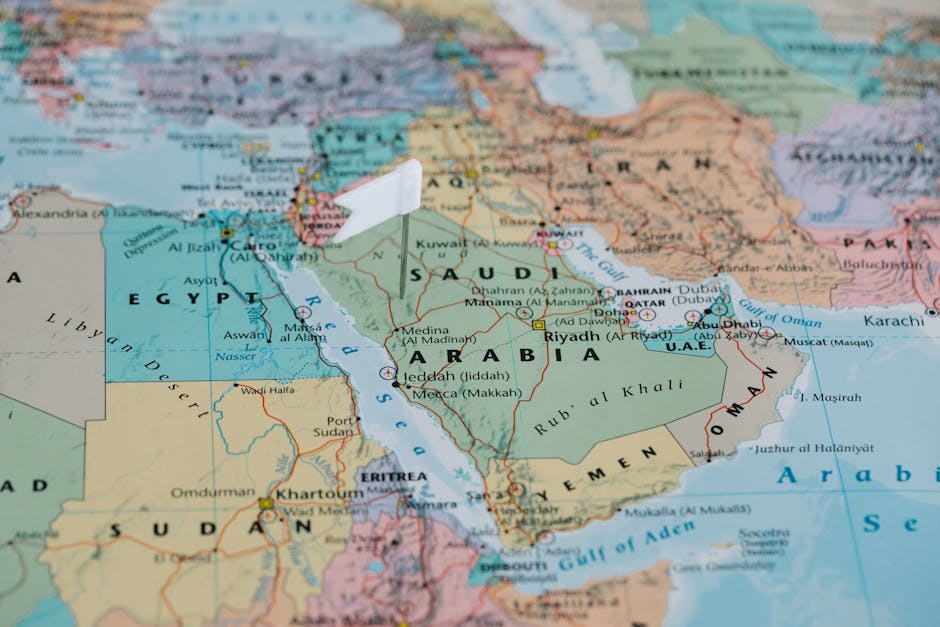
The war between the U.S. and Iran has dealt a serious blow to Qatar’s economy, sending the gas-rich Gulf nation into a state of “strategic shock.” With its extensive trade relationships and geographic location, Qatar is uniquely vulnerable to the fallout from the conflict. The nation’s economy, heavily reliant on natural gas exports, has been severely impacted, with trade volumes and revenue declining sharply. This has significant implications not only for Qatar but also for the global energy market, as the country is one of the world’s largest suppliers of liquefied natural gas. As the situation continues to unfold, Qatar is being forced to re-evaluate its strategic relationships and economic priorities in order to mitigate the damage and ensure its long-term stability.
The Background: Qatar’s Delicate Balance

Qatar’s unique position in the Middle East has long been a double-edged sword. On the one hand, its strategic location and vast natural gas reserves have made it an important player in regional and global energy markets. On the other hand, its small size and lack of military might have forced it to maintain a delicate balance between its relationships with the U.S. and Iran. For years, Qatar has walked a tightrope, attempting to maintain good relations with both nations while avoiding being drawn into their conflict. However, the recent escalation of tensions between the U.S. and Iran has made it increasingly difficult for Qatar to maintain this balance, and the nation is now facing the consequences of its failed neutrality.
The War’s Impact: Economic Devastation

The war between the U.S. and Iran has had a devastating impact on Qatar’s economy. The nation’s trade relationships have been severely disrupted, with many of its key markets and trade routes affected by the conflict. The decline in trade volumes and revenue has been sharp, with Qatar’s economy contracting significantly in recent months. The situation has been further exacerbated by the decline in global energy prices, which has reduced the revenue Qatar earns from its natural gas exports. As a result, the nation is facing significant economic challenges, including a large budget deficit and a decline in living standards. The Qatari government is now under pressure to implement austerity measures and diversify the nation’s economy in order to reduce its reliance on natural gas exports.
Analysis: Causes and Effects
The causes of Qatar’s economic crisis are complex and multifaceted. The war between the U.S. and Iran is the most immediate factor, but the nation’s failed neutrality and lack of diversification are also significant contributors. Qatar’s economy has long been heavily reliant on natural gas exports, which has made it vulnerable to fluctuations in global energy prices. The nation’s failure to diversify its economy and reduce its reliance on a single industry has exacerbated the impact of the war. Furthermore, Qatar’s geographic location and strategic relationships have made it a focal point for regional tensions, which has increased its vulnerability to conflict. As the situation continues to unfold, it is likely that Qatar will be forced to re-evaluate its strategic relationships and economic priorities in order to mitigate the damage and ensure its long-term stability.
Implications: A Ripple Effect
The implications of Qatar’s economic crisis are far-reaching and have significant implications for the global energy market. As one of the world’s largest suppliers of liquefied natural gas, Qatar’s decline in production and exports has the potential to impact energy prices and availability around the world. Furthermore, the nation’s strategic location and trade relationships make it an important hub for regional trade, and any disruption to its economy has the potential to impact the broader regional economy. The situation also has significant geopolitical implications, as Qatar’s relationships with the U.S. and Iran are crucial to regional stability. As the situation continues to unfold, it is likely that Qatar will be forced to navigate a complex web of strategic relationships and economic priorities in order to mitigate the damage and ensure its long-term stability.
Expert Perspectives
Experts are divided on the best course of action for Qatar, with some arguing that the nation should prioritize its relationships with the U.S. and others arguing that it should maintain its neutrality. “Qatar is facing a strategic shock, and it needs to re-evaluate its relationships and priorities in order to mitigate the damage,” said one expert. “The nation’s failed neutrality has put it in a difficult position, and it now needs to make some tough choices in order to ensure its long-term stability.” Others argue that Qatar should prioritize its economic diversification and reduce its reliance on natural gas exports. “Qatar’s economy is too heavily reliant on a single industry, and it needs to diversify in order to reduce its vulnerability to fluctuations in global energy prices,” said another expert.
As the situation continues to unfold, it is likely that Qatar will be forced to navigate a complex web of strategic relationships and economic priorities. The nation’s ability to mitigate the damage and ensure its long-term stability will depend on its ability to make tough choices and adapt to changing circumstances. One key question is what role Qatar will play in regional trade and energy markets in the future, and how it will balance its relationships with the U.S. and Iran. As the situation continues to evolve, it is likely that Qatar will be a key player in regional and global energy markets, and its actions will have significant implications for the global economy.