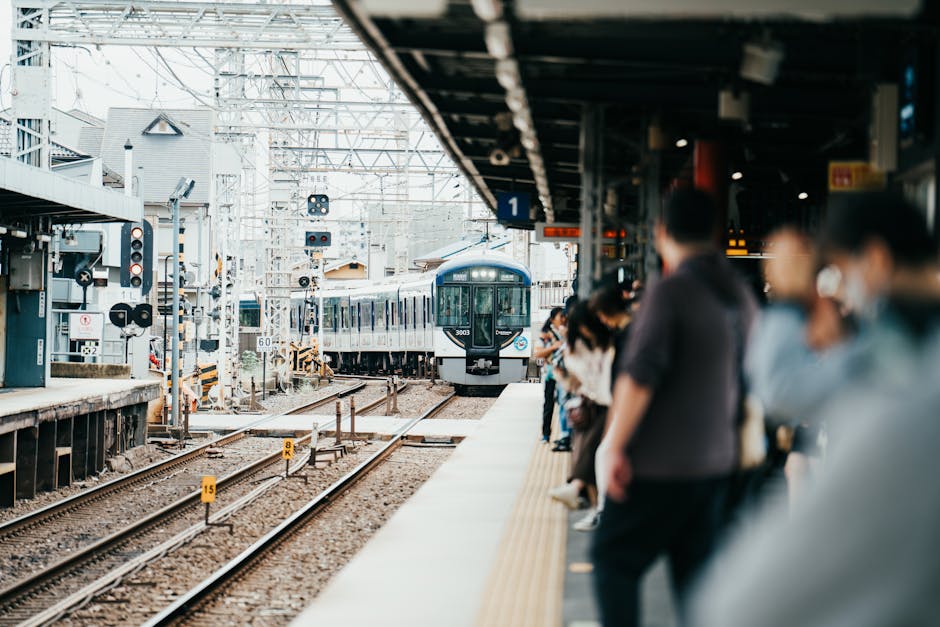
- Japan’s railway system boasts an average delay of just 18 seconds, a testament to its efficiency and reliability.
- The country’s rail network spans over 9,000 stations and features more than 20,000 daily train operations.
- A combination of public and private companies operates Japan’s railways, ensuring a high level of customer service.
- Japan’s railway system has adapted to its challenging terrain and population density through continuous modernization and expansion.
- The country’s strong culture of punctuality and attention to detail is a key factor in its railway success.
Japan’s railway system is often regarded as one of the most efficient and reliable in the world, with trains running to the exact minute and an average delay of just 18 seconds. This is a striking fact, especially when compared to other countries where delays and disruptions are a common occurrence. But what makes Japan’s railways so good, and what can other countries learn from its example? With a network of over 9,000 stations and more than 20,000 trains operating daily, Japan’s railway system is a complex and impressive feat of engineering.
The History of Japan’s Railways

The history of Japan’s railways dates back to the late 19th century, when the country first began to develop its rail network. Over the years, the system has undergone significant modernization and expansion, with a focus on punctuality, safety, and customer service. Today, Japan’s railways are operated by a combination of public and private companies, including JR East, JR Central, and JR West, which are responsible for different regions of the country. Despite the challenges posed by Japan’s mountainous terrain and densely populated cities, the railway system has been able to adapt and evolve to meet the needs of its users.
Key Factors in Japan’s Railway Success

So what are the key factors that contribute to Japan’s railway success? One major factor is the country’s strong culture of punctuality and attention to detail, which is reflected in every aspect of the railway system. From the precise timing of trains to the meticulous cleaning of stations and trains, every detail is carefully considered to ensure a smooth and efficient service. Another important factor is the high level of investment in infrastructure and technology, including advanced signaling systems and comfortable, modern trains. Additionally, Japan’s railways have a strong focus on customer service, with friendly and helpful staff, clean and well-maintained facilities, and a range of amenities and services available to passengers.
Analysis of Japan’s Railway System
An analysis of Japan’s railway system reveals a number of interesting insights and trends. For example, the system’s punctuality is achieved through a combination of careful planning, advanced technology, and a strong culture of discipline and attention to detail. The use of advanced signaling systems, such as the Automatic Train Control (ATC) system, allows trains to run at precise intervals and reduces the risk of accidents. Additionally, the system’s focus on customer service is reflected in the high level of satisfaction among passengers, with over 90% of users reporting that they are satisfied with the service. According to data from the Japanese Ministry of Land, Infrastructure, Transport, and Tourism, the railway system carries over 22 billion passengers per year, making it one of the busiest and most efficient in the world.
Implications of Japan’s Railway Success
The implications of Japan’s railway success are significant, both for the country itself and for other nations around the world. For Japan, the efficient and reliable railway system is a major contributor to the country’s economic growth and development, facilitating the movement of people and goods across the country. For other countries, Japan’s railway system provides a model for how to develop and operate a successful and efficient railway network. By studying Japan’s approach to railway management and operations, other countries can learn valuable lessons about how to improve their own systems and provide better services to their users.
Expert Perspectives
Experts in the field of transportation and railway management have a range of perspectives on Japan’s railway system and its success. Some argue that the system’s punctuality and efficiency are due to the country’s unique cultural and historical context, while others believe that the system’s success can be replicated in other countries through careful planning and investment. According to Dr. Kazuo Nishimura, a professor of transportation engineering at the University of Tokyo, “Japan’s railway system is a result of a long history of investment and development, and it is not easy to replicate in other countries. However, by studying Japan’s approach and adapting it to their own contexts, other countries can learn valuable lessons about how to improve their own railway systems.”
Looking to the future, there are a number of challenges and opportunities facing Japan’s railway system. One major challenge is the need to adapt to changing demographics and population trends, including an aging population and declining birth rates. To address this challenge, the railway system will need to be more flexible and responsive to the needs of its users, including the development of new services and amenities. Another opportunity is the potential for Japan’s railway system to play a greater role in the country’s economic development, including the facilitation of trade and tourism. As the system continues to evolve and adapt to the needs of its users, it is likely that Japan’s railways will remain a global benchmark for efficiency and reliability.