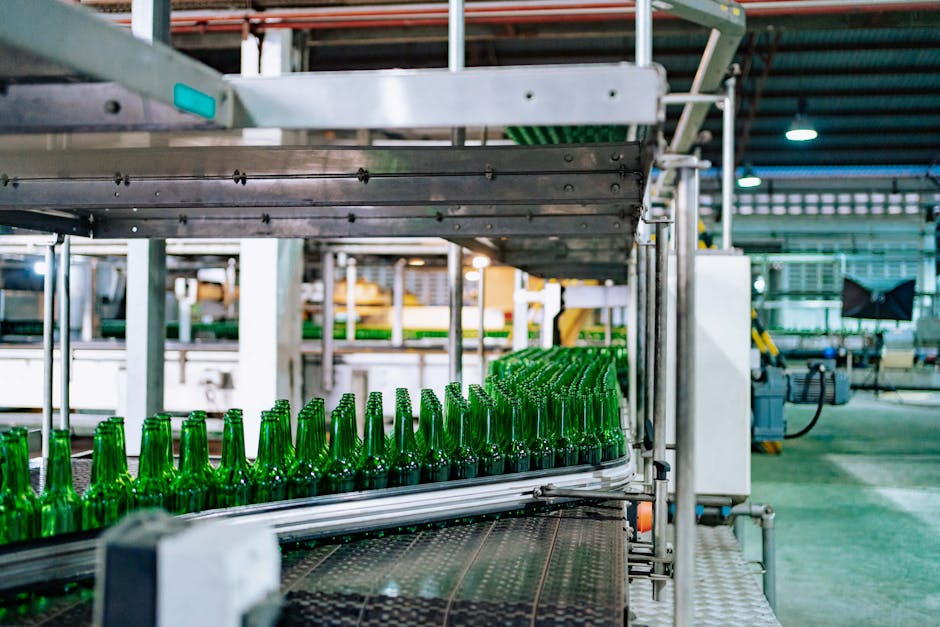
- Germany’s export-led growth model, which has driven its prosperity for decades, is showing signs of strain.
- China’s slowing economy and US tariffs have reduced demand for German goods, leading to a decline in exports.
- Germany’s exports have declined by 2.5% in the last quarter, the biggest drop in three years.
- The German economy is facing a perfect storm due to the combination of economic and trade headwinds.
- A new economic model is needed to maintain Germany’s economic growth and competitiveness.
Germany, the economic powerhouse of Europe, is facing a crisis. The country’s export-led growth model, which has been the driving force behind its prosperity for decades, is showing signs of strain. With China, one of Germany’s largest trading partners, slowing down its imports and the US threatening to impose tariffs on European goods, the German economy is facing a perfect storm. The latest data shows that Germany’s exports have declined by 2.5% in the last quarter, the biggest drop in three years. This has raised concerns about the country’s ability to maintain its economic growth and has sparked a debate about the need for a new economic model.
The Export-Led Growth Model

Germany’s economic model has been based on exports for decades. The country has a highly developed manufacturing sector, with a strong focus on engineering, automotive, and chemical industries. This has enabled Germany to become one of the world’s leading exporters, with exports accounting for over 40% of its GDP. However, this model is now under threat. China’s slowing economy and the US’s protectionist trade policies have reduced demand for German goods, leading to a decline in exports. Furthermore, the rise of new technologies, such as electric vehicles and renewable energy, is disrupting traditional industries and requiring German companies to adapt quickly to changing market conditions.
Political Inaction

Despite the growing concerns about the German economy, politicians have been slow to respond. The current government has been criticized for lacking a clear vision for the country’s economic future. While some politicians have called for increased investment in education and research, others have advocated for a more protectionist approach, including imposing tariffs on imports. However, these measures are unlikely to address the underlying issues facing the German economy. The country needs a fundamental transformation of its economic model, including a shift towards more service-oriented and digital industries. So far, however, there is little sign of a coherent plan to achieve this.
Causes and Effects
The causes of Germany’s economic woes are complex and multifaceted. One major factor is the country’s over-reliance on exports, which has made it vulnerable to changes in global demand. Additionally, the German economy has been slow to adapt to new technologies and business models, such as the sharing economy and e-commerce. The effects of this are already being felt, with many German companies struggling to compete with more agile and innovative rivals from other countries. Furthermore, the decline of traditional industries, such as coal mining and steel production, has led to significant job losses and social disruption in certain regions. To address these challenges, Germany needs to invest in education and training programs, as well as in infrastructure and research, to support the growth of new industries and businesses.
Implications
The implications of Germany’s economic crisis are far-reaching. If the country is unable to transform its economic model and adapt to changing global conditions, it risks falling behind other major economies. This could have significant consequences for the European Union as a whole, as Germany is the largest economy in the EU and plays a key role in shaping its economic policies. Furthermore, a decline in Germany’s economic fortunes could also have a knock-on effect on other countries, including those in Eastern Europe and the Balkans, which have close trade and investment ties with Germany. To avoid this, Germany needs to take bold action to reform its economy and invest in its future.
Expert Perspectives
Experts are divided on the best course of action for Germany. Some argue that the country needs to focus on investing in new technologies and industries, such as artificial intelligence and renewable energy, to drive growth and innovation. Others believe that Germany should prioritize social welfare and job protection, to mitigate the effects of economic change on vulnerable communities. However, most experts agree that the current economic model is unsustainable and that significant reforms are needed to ensure Germany’s long-term prosperity. As one expert noted, “Germany needs to wake up and realize that its economic model is no longer fit for purpose. It needs to adapt quickly to changing global conditions and invest in its future, or risk being left behind.”
Looking ahead, the key question is what will happen next. Will Germany be able to transform its economic model and adapt to changing global conditions, or will it continue to struggle with the challenges of globalization and technological change? One thing is certain, however: the status quo is no longer an option. Germany needs to take bold action to reform its economy and invest in its future, or risk facing significant economic and social consequences. As the country navigates this critical juncture, all eyes will be on its leaders to see if they can rise to the challenge and create a new economic model that will ensure Germany’s prosperity for generations to come.