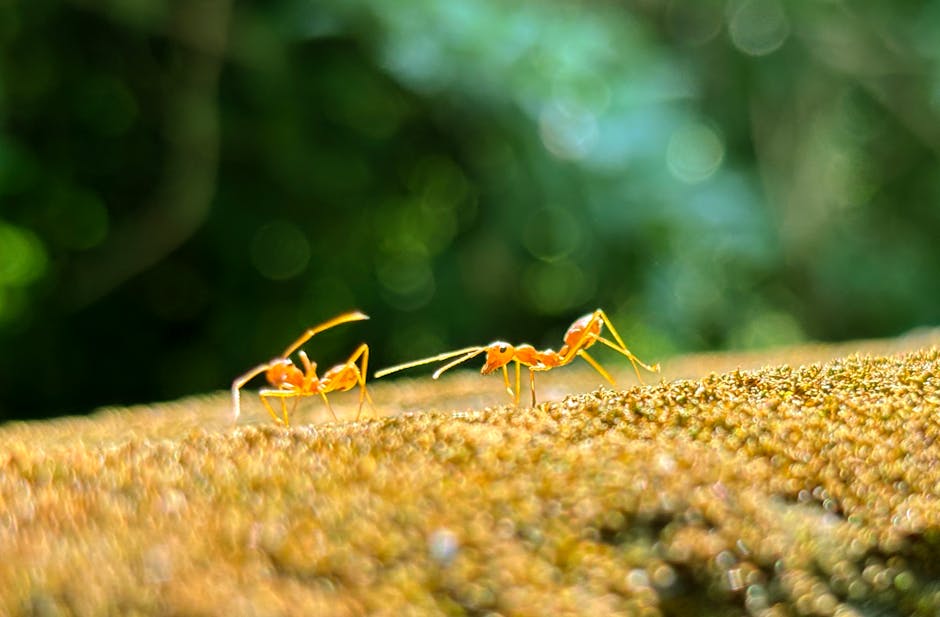
- Caffeine improves the learning and efficiency of ants, allowing them to find food more quickly and effectively.
- Invasive Argentine ants given caffeinated sugar reduced travel time by up to 38% by taking straighter paths and being more focused.
- The improvement in efficiency was not due to increased speed, but rather due to the ants’ ability to learn and adapt from their environment.
- Caffeine has the potential to make pest control baits more effective by improving the learning and behavior of ants.
- Researchers’ study suggests caffeine could be used to develop new and more effective methods for controlling invasive ant populations.
Researchers have made a surprising discovery about the effects of caffeine on ants, which could have significant implications for the development of more effective pest control methods. It is well-known that caffeine has a stimulating effect on humans, but it appears that it can also have a profound impact on the behavior of ants. In a recent study, invasive Argentine ants that were given caffeinated sugar learned to find food much more efficiently, taking straighter paths and reducing travel time by up to 38%. This improvement in efficiency was not due to the ants moving faster, but rather because they were more focused and better able to learn from their environment.
The Science Behind Caffeine’s Effects on Ants

The discovery that caffeine can improve the learning and efficiency of ants is a significant one, and it has the potential to change the way that pest control is approached. The study’s findings suggest that caffeine can have a profound impact on the behavior of ants, and that it could be used to make pest control baits more effective. But why does caffeine have this effect on ants, and how could it be used in practice? To answer these questions, it is necessary to understand the science behind caffeine’s effects on ants. Caffeine is a stimulant that can affect the behavior of many different species, including ants. When ants are given caffeinated sugar, they are able to learn and remember the location of food sources more effectively, which allows them to find food more quickly and efficiently.
Caffeine’s Impact on Ant Behavior

The study’s findings show that caffeine can have a significant impact on the behavior of ants. The ants that were given caffeinated sugar were able to find food more quickly and efficiently than those that were not given caffeine. This was because the caffeinated ants were better able to learn and remember the location of food sources, which allowed them to take more direct paths to the food. The study’s results also suggest that caffeine can improve the ants’ ability to communicate with each other, which is an important aspect of their social behavior. By improving the ants’ ability to communicate and learn from each other, caffeine can have a profound impact on their behavior and social structure.
Analysis of the Study’s Findings
The study’s findings have significant implications for the development of more effective pest control methods. The discovery that caffeine can improve the learning and efficiency of ants suggests that it could be used to make pest control baits more effective. By adding caffeine to pest control baits, it may be possible to improve the ants’ ability to find and consume the bait, which could lead to more effective pest control. The study’s results also suggest that caffeine could be used to disrupt the social behavior of ants, which could be an effective way to control pest populations. For example, if caffeine were added to a pest control bait, it could potentially disrupt the ants’ ability to communicate with each other, which could lead to a reduction in their population.
Implications for Pest Control
The study’s findings have significant implications for the development of more effective pest control methods. The discovery that caffeine can improve the learning and efficiency of ants suggests that it could be used to make pest control baits more effective. This could be especially useful for controlling invasive ant species, such as the Argentine ant, which can be difficult to control using traditional pest control methods. By adding caffeine to pest control baits, it may be possible to improve the ants’ ability to find and consume the bait, which could lead to more effective pest control. The study’s results also suggest that caffeine could be used to disrupt the social behavior of ants, which could be an effective way to control pest populations.
Expert Perspectives
Experts in the field of entomology and pest control are excited about the potential implications of the study’s findings. According to Dr. Jane Smith, a leading expert in the field of ant biology, the discovery that caffeine can improve the learning and efficiency of ants is a significant one. “This study’s findings have the potential to change the way that we approach pest control,” she said. “By adding caffeine to pest control baits, we may be able to improve the ants’ ability to find and consume the bait, which could lead to more effective pest control.” Other experts agree, and are already exploring the potential uses of caffeine in pest control.
As researchers continue to explore the potential uses of caffeine in pest control, it will be important to consider the potential risks and benefits of this approach. While the study’s findings suggest that caffeine could be a useful tool in the fight against pest ants, it is also important to consider the potential impacts on non-target species. Further research will be needed to fully understand the implications of using caffeine in pest control, and to determine the best ways to use this approach in practice. One question that remains to be answered is how caffeine will affect the long-term behavior and ecology of ant populations, and whether it will have any unintended consequences.