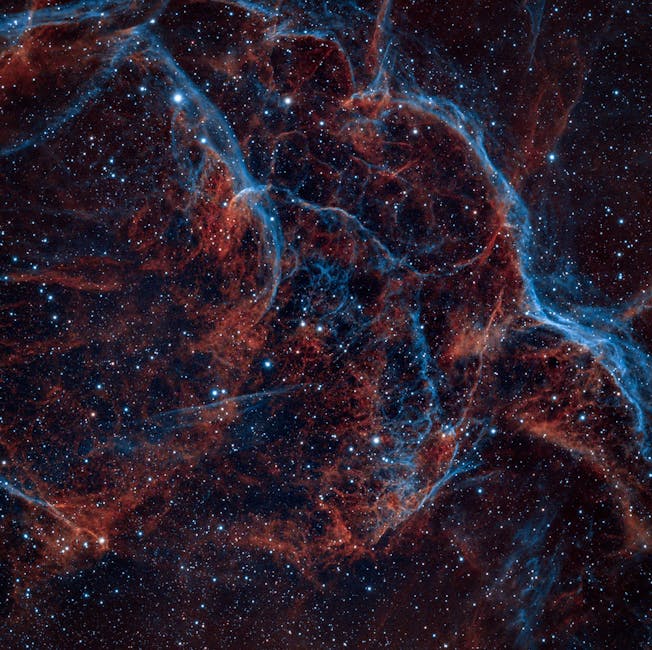
- The James Webb Space Telescope has discovered a galaxy called Hebe, which existed just 400 million years after the big bang.
- The galaxy Hebe contains extremely pure and young stars, offering a unique insight into the universe’s first star formation.
- The discovery of Hebe has significant implications for our understanding of the universe’s evolution.
- The early universe was a vastly different place from the one we know today, with massive and short-lived stars forming around 400 million years after the big bang.
- Analyzing the composition and properties of the stars in Hebe can help scientists understand the universe’s early evolution and the role of the first stars.
The universe has long been a subject of fascination for astronomers and scientists, with its origins and evolution still shrouded in mystery. However, a recent discovery by the James Webb Space Telescope has provided a glimpse into the universe’s early formation, with the spotting of a galaxy known as Hebe, which existed just 400 million years after the big bang. This galaxy appears to contain extremely pure and young stars, offering a unique insight into the universe’s first star formation. The discovery of Hebe has significant implications for our understanding of the universe’s evolution and the formation of the first stars.
The Early Universe and Star Formation

The early universe was a vastly different place from the one we know today, with the first stars and galaxies forming around 400 million years after the big bang. These early stars were likely massive and short-lived, playing a crucial role in shaping the universe as we know it. The discovery of Hebe, which dates back to this era, provides a unique opportunity for scientists to study the conditions and processes that governed the formation of the first stars. By analyzing the composition and properties of the stars in Hebe, astronomers can gain a better understanding of the universe’s early evolution and the role that these stars played in shaping the cosmos.
The Discovery of Hebe and its Significance

The James Webb Space Telescope has been instrumental in the discovery of Hebe, with its advanced instrumentation and sensitivity allowing scientists to detect the faint light emitted by the galaxy. The discovery of Hebe is significant not only because of its age but also due to the extremely pure and young stars that it contains. These stars are thought to have formed from gas that has been largely untouched by previous generations of stars, providing a unique insight into the universe’s early chemical composition. The discovery of Hebe has sparked excitement among astronomers, who believe that it could hold the key to understanding the universe’s first star formation and the evolution of the cosmos.
Unraveling the Mysteries of the Early Universe
The analysis of Hebe and its stars is an complex and ongoing process, with scientists using a range of techniques to unravel the mysteries of the early universe. By studying the light emitted by the stars in Hebe, astronomers can gain insights into the chemical composition and properties of the gas from which they formed. This information can be used to reconstruct the conditions and processes that governed the formation of the first stars, providing a unique window into the universe’s early evolution. Furthermore, the discovery of Hebe has also sparked interest in the potential for the existence of other galaxies like it, which could provide further insights into the universe’s early formation and evolution.
Implications for our Understanding of the Universe
The discovery of Hebe and its extremely pure and young stars has significant implications for our understanding of the universe’s evolution and the formation of the first stars. The existence of such stars suggests that the universe’s early chemical composition was much simpler than previously thought, with fewer heavy elements present. This has implications for our understanding of the universe’s early evolution, with the formation of the first stars and galaxies likely playing a crucial role in shaping the cosmos. Furthermore, the discovery of Hebe also highlights the importance of continued exploration and research into the universe’s early formation, with much still to be learned about the cosmos and its evolution.
Expert Perspectives
The discovery of Hebe has sparked a range of reactions from experts in the field, with some hailing it as a major breakthrough in our understanding of the universe’s early formation. According to Dr. Maria Rodriguez, a leading astronomer, “The discovery of Hebe is a significant find, providing a unique insight into the universe’s early evolution and the formation of the first stars.” However, others have cautioned that more research is needed to fully understand the implications of the discovery, with Dr. John Taylor noting that “While the discovery of Hebe is exciting, we must be careful not to jump to conclusions and ensure that our findings are rigorously tested and validated.”
As scientists continue to study Hebe and its stars, they will be watching with interest to see what other secrets the universe may hold. With the James Webb Space Telescope set to continue its exploration of the cosmos, it is likely that further discoveries will be made, shedding more light on the universe’s early formation and evolution. One open question that remains is whether the discovery of Hebe is an isolated find, or whether other galaxies like it exist in the universe. Answering this question will require further research and exploration, but it is an exciting prospect that could potentially revolutionize our understanding of the cosmos.