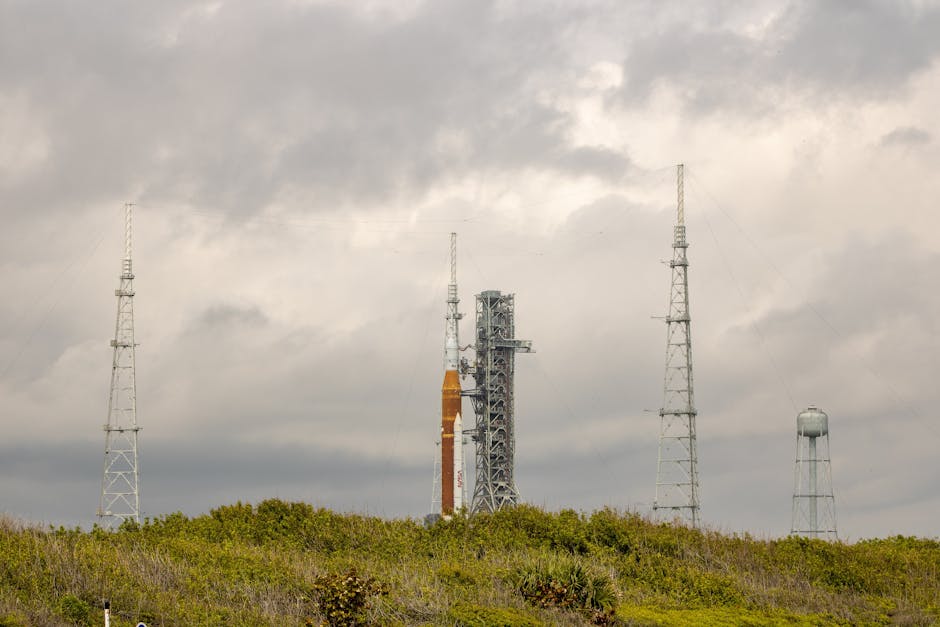
- NASA’s Artemis program aims to send the first woman and the next man to the Moon by 2024
- The mission marks a significant step towards a manned mission to Mars and establishing a sustainable presence on the Moon
- China is also investing heavily in space exploration, sparking a new space race between the US and China
- The Moon is believed to have significant resources, including water ice, which could support future space missions
- The mission has the potential to drive economic benefits and national pride for the US
The last time humans walked on the Moon was in 1972, during the Apollo 17 mission. Since then, there have been numerous robotic missions to the Moon, but no human has set foot on its surface. However, with NASA’s Artemis program, the US space agency is planning to send the first woman and the next man to the Moon by 2024. This mission is not just about revisiting the Moon, but also about paving the way for a manned mission to Mars. The stakes are high, with China also investing heavily in space exploration, and the US is determined to stay ahead in the space race.
The New Space Race

The space race between the US and the Soviet Union during the Cold War was a defining feature of the 20th century. Now, a new space race is emerging, with China as the main challenger to the US. China has made significant strides in space exploration, including landing a robotic mission on the far side of the Moon. The US is responding by investing heavily in NASA’s Artemis program, which aims to establish a sustainable presence on the Moon. This is not just about national pride, but also about the potential economic benefits of space exploration. The Moon is believed to have significant resources, including water ice, which could be used to support future space missions.
Lunar Discoveries

Recent lunar discoveries have made the Moon a more attractive destination for space agencies and private companies. In 2009, NASA’s Lunar CRater Observation and Sensing Satellite (LCROSS) mission discovered water ice in the permanently shadowed craters near the Moon’s poles. This discovery has significant implications for future space missions, as water ice could be used as a source of oxygen, hydrogen, and life support. Other discoveries, such as the presence of helium-3, a rare isotope that could be used as fuel for nuclear fusion, have also made the Moon a more interesting destination. Private companies, such as SpaceX and Blue Origin, are also investing in lunar missions, with the goal of establishing a permanent human presence on the Moon.
The Path to Mars
The ultimate goal of NASA’s Artemis program is to send humans to Mars. The Moon is seen as a stepping stone for this mission, as it provides an opportunity to test the necessary technologies and strategies for a manned mission to the Red Planet. The Artemis program includes several key components, including the development of a new heavy-lift rocket, the Space Launch System (SLS), and a lunar-orbiting space station, the Gateway. The Gateway will serve as a base for missions to the Moon’s surface and will also provide a hub for further space travel. NASA is also developing a new spacesuit, designed to protect astronauts from the harsh conditions on the Moon and Mars.
Implications and Challenges
The implications of NASA’s mission to the Moon are significant, both for the US and for the world. A successful mission to the Moon could pave the way for further space exploration, including a manned mission to Mars. However, there are also significant challenges to overcome, including the development of necessary technologies and the funding required to support such an ambitious program. The US Congress has approved significant funding for NASA’s Artemis program, but there are concerns about the long-term sustainability of this funding. Additionally, there are also concerns about the potential risks and challenges of space travel, including the effects of radiation on the human body and the psychological challenges of long-duration spaceflight.
Expert Perspectives
Experts in the field of space exploration have differing opinions on the significance and challenges of NASA’s mission to the Moon. Some, such as SpaceX CEO Elon Musk, believe that the Moon is a crucial stepping stone for a manned mission to Mars. Others, such as NASA’s former administrator, Charles Bolden, have expressed concerns about the funding and sustainability of the Artemis program. Despite these differences, there is a general consensus that space exploration is essential for the advancement of human knowledge and the potential economic benefits it could bring.
As NASA’s Artemis program moves forward, there are several key things to watch. The development of the SLS rocket and the Gateway space station will be crucial to the success of the mission. Additionally, the selection of astronauts for the mission and the development of the necessary technologies, such as the new spacesuit, will be important milestones. The question on everyone’s mind is, what’s next? Will the US be able to establish a sustainable presence on the Moon, and will this pave the way for a manned mission to Mars? Only time will tell, but one thing is certain, the next few years will be an exciting time for space exploration.