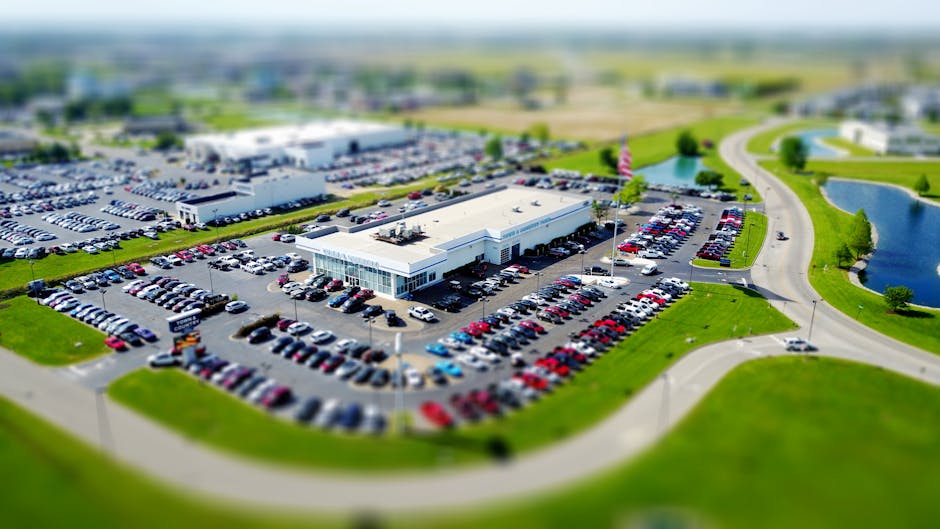
- US auto retail landscape is undergoing a seismic shift with multibillion-dollar dealerships emerging as industry titans.
- Local mom-and-pop car dealerships are struggling to survive as they are forced to either grow exponentially or face extinction.
- The top 10 US auto retailers accounted for over 10% of all new vehicle sales in 2020, with revenues exceeding $10 billion.
- The rise of mega-retailers is set to continue reshaping the US auto market, driven by economies of scale and technological advancements.
- Smaller, family-owned dealerships are being forced to adapt or risk being left behind in a grow-or-die industry mentality.
The US auto retail landscape is undergoing a seismic shift, with multibillion-dollar dealerships emerging as the new titans of the industry. Amid a decades-long consolidation, local mom-and-pop car dealerships are finding it increasingly difficult to survive, forced to either grow exponentially or face extinction. The numbers are stark: in 2020, the top 10 US auto retailers accounted for over 10% of all new vehicle sales, with the largest dealer groups boasting revenues exceeding $10 billion. This trend shows no signs of abating, with the rise of mega-retailers set to continue reshaping the US auto market.
Consolidation Nation

The current state of the US auto retail market is a far cry from the fragmented, localized industry of yesteryear. Over the past few decades, a steady stream of mergers and acquisitions has led to the emergence of massive dealer groups, capable of wielding significant market power. This consolidation has been driven by a combination of factors, including economies of scale, advances in technology, and the need for greater operational efficiency. As a result, many smaller, family-owned dealerships have been forced to adapt or risk being left behind, leading to a grow-or-die mentality that is transforming the industry.
The Rise of the Mega-Retailers

At the forefront of this shift are the mega-retailers, sprawling dealer groups with hundreds of locations and revenues to match. These behemoths of the auto retail world have been able to leverage their scale to negotiate better deals with manufacturers, invest heavily in digital marketing and e-commerce platforms, and offer a wider range of services to customers. The likes of AutoNation, Group 1 Automotive, and Penske Automotive Group have become household names, with their vast resources and extensive networks allowing them to dominate the market. As these mega-retailers continue to expand, they are leaving smaller dealerships in their wake, forcing them to either merge with larger groups or risk being squeezed out of the market.
Analysis: Causes and Consequences
So, what are the driving forces behind this consolidation, and what are the consequences for the US auto retail market? According to industry experts, the need for greater efficiency and scale has been a major factor, as dealerships seek to reduce costs and improve profitability in a highly competitive market. Additionally, the rise of digital commerce has created new opportunities for dealerships to reach customers and sell vehicles online, but this has also increased the barriers to entry for smaller players. As a result, many local dealerships are finding it difficult to compete, leading to a decline in their market share and, in some cases, outright extinction. The data is clear: since 2010, the number of US auto dealerships has declined by over 10%, with the majority of these closures being smaller, independent operators.
Implications: A Changing Landscape
The implications of this consolidation are far-reaching, with significant consequences for consumers, manufacturers, and the wider economy. As local dealerships disappear, communities are losing trusted businesses and sources of employment, leading to a decline in local economic activity. Furthermore, the rise of mega-retailers has led to a homogenization of the auto retail experience, with customers facing less choice and a more standardized sales process. While this may lead to some efficiencies and cost savings, it also risks eroding the personal touch and community focus that smaller dealerships have traditionally provided.
Expert Perspectives
Industry experts are divided on the impact of consolidation, with some arguing that it is a necessary evil in a rapidly changing market. “The US auto retail market is evolving, and dealerships need to adapt to survive,” says one analyst. “While it’s unfortunate that some smaller dealerships are being squeezed out, the rise of mega-retailers has brought many benefits, including greater efficiency and a better customer experience.” Others, however, are more skeptical, arguing that consolidation is leading to a loss of diversity and choice in the market. “The decline of local dealerships is a worrying trend,” says another expert. “It’s not just about the businesses themselves, but the communities they serve and the employment opportunities they provide.”
As the US auto retail market continues to evolve, one thing is clear: the rise of mega-retailers is set to continue, with significant implications for the industry and the wider economy. As consumers, manufacturers, and policymakers look to the future, they will need to navigate this changing landscape, balancing the need for efficiency and scale with the importance of preserving local communities and promoting diversity in the market. The question on everyone’s mind is: what’s next for the US auto retail market, and how will the growth of mega-retailers shape the industry in the years to come?