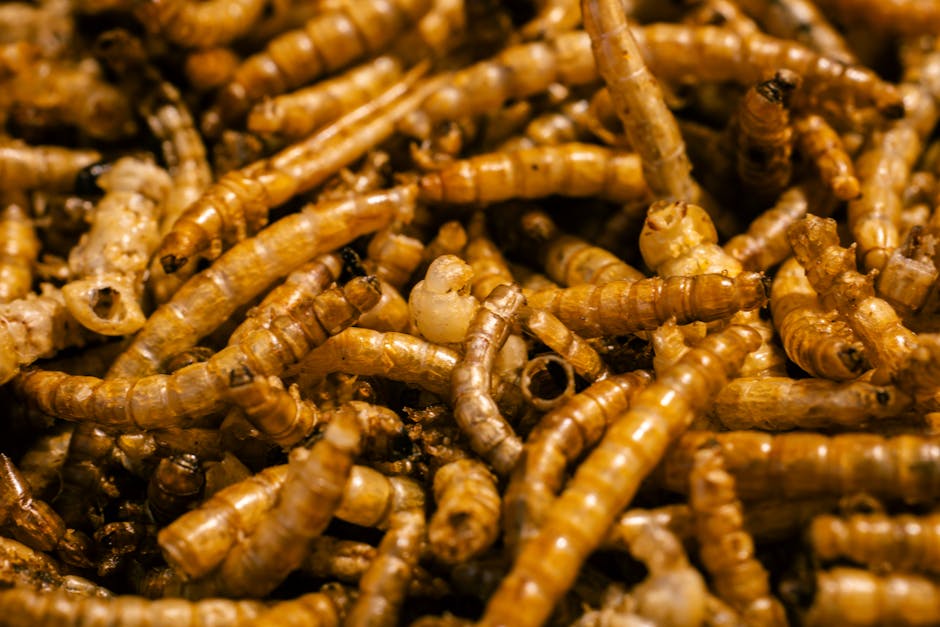
- The world’s population growth is driving the need for sustainable food production methods, and insect farming is emerging as a viable solution.
- Insect farming can reduce food waste and provide a sustainable source of protein for animal feed, addressing pressing environmental issues.
- The practice of breeding insects like crickets, mealworms, and black soldier flies on a large scale uses organic waste as feed.
- Insect farming has the potential to play a significant role in meeting the global demand for protein while minimizing environmental impact.
- State-of-the-art facilities are using automation and manual labor to optimize insect breeding and harvesting processes.
The world’s population is projected to reach 9.7 billion by 2050, putting a significant strain on the global food system. With the current food production methods, it is estimated that one-third of all food produced globally is lost or wasted. However, an innovative solution is emerging in the form of insect farming, which involves breeding insects on a large scale for food and animal feed. Alasdair Keane recently visited an underground insect farm that is revolutionizing the way we manage food waste, turning it into a valuable resource for animal feed.
The Rise of Insect Farming

Insect farming has been gaining traction in recent years due to its potential to address some of the world’s most pressing environmental issues, including food waste, climate change, and biodiversity loss. The practice involves breeding insects such as crickets, mealworms, and black soldier flies on a large scale, using organic waste as feed. This approach not only reduces the amount of waste sent to landfills but also provides a sustainable source of protein for animal feed. As the global demand for protein continues to grow, insect farming is poised to play a significant role in meeting this demand while minimizing the environmental impact.
How Insect Farming Works

The insect farm visited by Alasdair Keane is a state-of-the-art facility that uses cutting-edge technology to breed and harvest insects. The farm uses a combination of automation and manual labor to ensure the optimal growth and health of the insects. The process begins with the collection of food waste from local restaurants, supermarkets, and food manufacturers. The waste is then sorted and processed into a nutrient-rich feed for the insects. The insects are bred in large containers, where they are monitored and cared for by the farm’s staff. Once the insects have reached maturity, they are harvested and processed into a high-protein animal feed.
Benefits and Challenges
The benefits of insect farming are numerous, including reduced greenhouse gas emissions, minimal water usage, and a significant reduction in waste. In addition, insect farming requires significantly less land and feed than traditional livestock farming, making it a more sustainable option. However, there are also challenges associated with insect farming, including the need for significant investment in infrastructure and technology, as well as the development of new regulatory frameworks to govern the industry. Despite these challenges, many experts believe that insect farming has the potential to revolutionize the way we produce food and manage waste.
Implications and Future Directions
The implications of insect farming are far-reaching, with the potential to impact not only the environment but also the economy and society as a whole. As the industry continues to grow and develop, it is likely to create new job opportunities and stimulate local economies. Additionally, insect farming has the potential to improve food security, particularly in developing countries where access to protein-rich foods is limited. However, further research is needed to fully understand the benefits and challenges of insect farming and to develop sustainable and scalable business models.
Expert Perspectives
Experts in the field of insect farming are enthusiastic about the potential of this innovative approach to address some of the world’s most pressing environmental issues. According to Dr. Sarah Taylor, a leading expert in entomology, “insect farming has the potential to revolutionize the way we produce food and manage waste, providing a sustainable and scalable solution to some of the world’s most pressing environmental challenges.” However, others have raised concerns about the potential risks and challenges associated with insect farming, including the need for strict regulations to ensure food safety and environmental sustainability.
As the insect farming industry continues to evolve and grow, it will be important to monitor its development and address any challenges or concerns that arise. With its potential to reduce waste, minimize environmental impact, and improve food security, insect farming is an innovation that is worth watching. As Alasdair Keane noted during his visit to the underground insect farm, “this is a game-changer for the way we think about food waste and sustainability, and it has the potential to make a significant impact on the environment and the economy.”