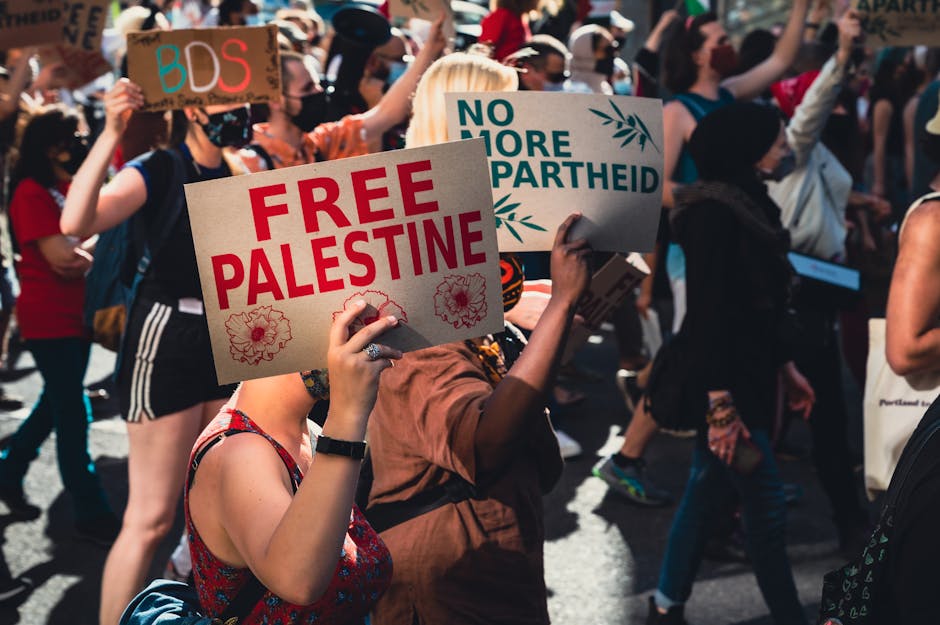
- The EU must treat Israel as an apartheid state due to its systemic oppression and discrimination against Palestinians.
- Israel’s introduction of the death penalty for Palestinians further solidifies its status as an apartheid state.
- The EU’s relationship with Israel is significant, given Israel’s status as a group of countries that still practice capital punishment.
- The international community must take a strong stance against Israel’s actions to protect the rights of Palestinians.
- Israel’s policies create a reality where Palestinians are treated as second-class citizens, with restricted access to basic resources.
The introduction of the death penalty for Palestinians in Israel has reignited concerns that the country is operating as an apartheid state, with some calling for the European Union to cut ties with Israel. This drastic measure has sparked outrage among human rights groups, who argue that it is a clear indication of Israel’s intention to further oppress the Palestinian population. With this move, Israel joins a small group of countries that still practice capital punishment, a fact that has significant implications for its relationships with other nations. As the international community grapples with how to respond to this development, one thing is clear: the EU must take a strong stance against Israel’s actions.
The Apartheid Label: Why It Matters

The label of apartheid is not one that is taken lightly, and it is not a term that has been loosely applied to Israel’s actions. Rather, it is a designation that is rooted in the country’s long history of systemic oppression and discrimination against the Palestinian people. From the construction of the separation barrier to the restrictions on movement and access to basic resources, Israel’s policies have created a reality in which Palestinians are treated as second-class citizens. The introduction of the death penalty is merely the latest in a long line of measures that have contributed to this reality, and it is a stark reminder of the need for the international community to take action.
Key Details of the Death Penalty Law

The death penalty law, which was recently introduced in Israel, applies specifically to Palestinians who are convicted of certain crimes, including terrorism. While the law does not explicitly state that it will be used to target Palestinians, the fact that it has been introduced at a time when tensions between Israel and the Palestinian population are running high has raised concerns that it will be used as a tool of oppression. The law has been widely condemned by human rights groups, who argue that it is a clear violation of international law and a further erosion of the rights of the Palestinian people. As the law begins to be implemented, it is likely that we will see a significant increase in the number of Palestinians who are sentenced to death, a fact that will only serve to further exacerbate the already fraught relationship between Israel and the Palestinian population.
Analysis: Causes, Effects, and Implications
The introduction of the death penalty law in Israel is a complex issue, with a multitude of causes and effects. On one hand, the law can be seen as a response to the rising tide of violence in the region, with some arguing that it is a necessary measure to protect the safety and security of Israeli citizens. On the other hand, the law can also be seen as a cynical attempt to further oppress the Palestinian population, with the aim of maintaining Israel’s grip on power in the region. Regardless of the motivations behind the law, one thing is clear: it will have significant implications for the relationship between Israel and the Palestinian population, as well as for the country’s relationships with other nations. As the international community grapples with how to respond to this development, it is essential that we consider the potential consequences of our actions, and work towards a solution that prioritizes the rights and dignity of all individuals involved.
Implications for the EU and the International Community
The introduction of the death penalty law in Israel has significant implications for the European Union and the international community. As a major trading partner and ally of Israel, the EU has a unique role to play in shaping the country’s actions and policies. By speaking out against the death penalty law and calling for its repeal, the EU can send a strong message that it will not tolerate human rights abuses and that it is committed to upholding the principles of justice and equality. Furthermore, the EU can also use its economic leverage to pressure Israel into changing its policies, by imposing sanctions or restricting trade. As the international community grapples with how to respond to this development, it is essential that we consider the potential consequences of our actions, and work towards a solution that prioritizes the rights and dignity of all individuals involved.
Expert Perspectives
Experts are divided on the best course of action for the EU and the international community. Some argue that the EU should impose harsh sanctions on Israel, in order to pressure the country into changing its policies. Others argue that a more nuanced approach is needed, one that takes into account the complex history and politics of the region. Pernando Barrena, a leading expert on the issue, has called for the EU to cut ties with Israel, arguing that the country’s actions are a clear indication of its intention to further oppress the Palestinian population. Regardless of the approach that is taken, one thing is clear: the international community must take a strong stance against Israel’s actions, and work towards a solution that prioritizes the rights and dignity of all individuals involved.
As we look to the future, it is clear that the situation in Israel and the Palestinian territories will continue to be a major source of concern for the international community. The introduction of the death penalty law is merely the latest in a long line of developments that have contributed to the erosion of trust and the escalation of violence in the region. As we move forward, it is essential that we prioritize the rights and dignity of all individuals involved, and work towards a solution that is just and equitable for all. The question on everyone’s mind is: what will the EU do next? Will it take a strong stance against Israel’s actions, or will it continue to turn a blind eye to the human rights abuses that are taking place in the region? Only time will tell, but one thing is clear: the EU’s response will have significant implications for the future of the region and the world at large.