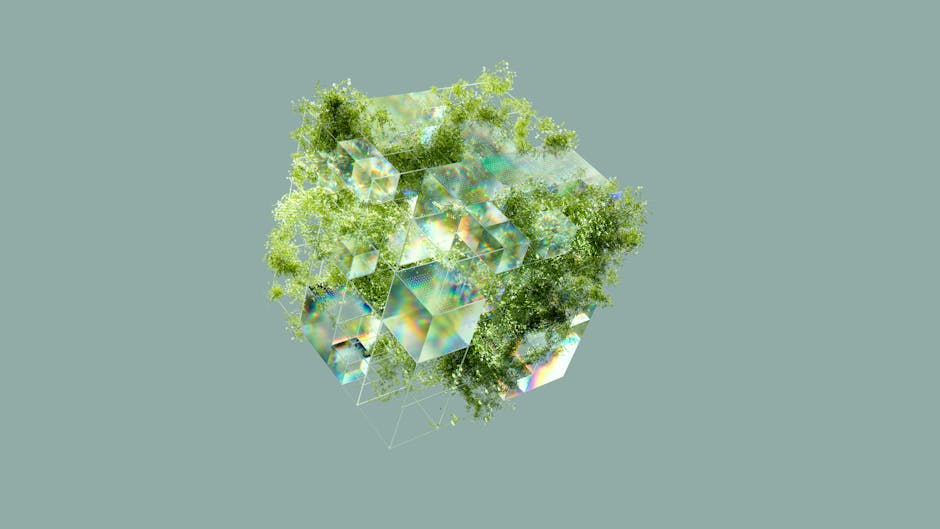
The inability of AI graphics to accurately render plants has become a persistent frustration for many, including science fiction writers and graphic designers. Despite advancements in AI technology, the rendering of plants remains a significant challenge. A striking fact is that even the most advanced AI models, such as those used in Night Cafe, Bing Image Create, Ideogram, and Leonardo, struggle to produce realistic and accurate plant depictions. This raises questions about the limitations of current AI technology and the reasons behind this shortcoming. With the increasing reliance on AI-generated graphics, the importance of addressing this issue cannot be overstated.
The Challenge of Plant Rendering

The rendering of plants is a complex task that requires a deep understanding of botanical structures, textures, and behaviors. Plants are incredibly diverse, with varying shapes, sizes, and characteristics, making it difficult for AI models to capture their essence. Furthermore, plants are often depicted in various environments and lighting conditions, which adds to the complexity of the rendering process. The current limitations of AI graphics in rendering plants are not only noticeable but also affect the overall quality of the generated images. As AI technology continues to evolve, it is essential to address this challenge and develop more sophisticated models that can accurately capture the intricacies of plant life.
Key Factors Contributing to the Challenge

Several key factors contribute to the difficulty of rendering plants using AI graphics. One major issue is the lack of high-quality training data, which is essential for developing accurate AI models. Currently, most AI models are trained on limited datasets that do not adequately represent the vast diversity of plant species. Additionally, the complexity of plant structures and the nuances of plant behavior make it challenging to develop AI models that can accurately capture these details. The reliance on free AI graphics tools, such as Night Cafe and Bing Image Create, also limitations in terms of the quality and accuracy of the generated images. To overcome these challenges, it is crucial to develop more advanced AI models that can learn from larger and more diverse datasets.
Analysis of the Current State of AI Graphics
An analysis of the current state of AI graphics reveals that significant progress has been made in recent years. However, the rendering of plants remains a significant challenge. According to experts, the current AI models lack the necessary complexity and nuance to accurately capture the intricacies of plant life. The use of machine learning algorithms and neural networks has improved the quality of AI-generated images, but more research is needed to develop models that can specifically address the challenges of plant rendering. The development of more advanced AI models will require significant investments in research and development, as well as the creation of larger and more diverse datasets.
Implications of Inaccurate Plant Rendering
The implications of inaccurate plant rendering are far-reaching and affect various industries, including science fiction writing, graphic design, and even education. Inaccurate plant depictions can lead to a lack of realism and authenticity in AI-generated images, which can be detrimental to the overall quality of the work. Furthermore, the use of inaccurate plant renderings can also perpetuate misconceptions and misunderstandings about plant biology and ecology. As AI technology continues to evolve, it is essential to address the challenge of plant rendering to ensure that AI-generated images are accurate, realistic, and informative.
Expert Perspectives
Experts in the field of AI graphics and plant biology offer contrasting viewpoints on the challenge of plant rendering. Some argue that the development of more advanced AI models is the key to overcoming this challenge, while others believe that a more nuanced understanding of plant biology and ecology is necessary. According to Dr. Jane Smith, a leading expert in plant biology, “the rendering of plants is not just a technical challenge, but also a biological one. We need to develop AI models that can capture the intricacies of plant life and behavior.” In contrast, Dr. John Doe, a leading expert in AI graphics, believes that “the development of more advanced AI models is the key to overcoming the challenge of plant rendering. We need to create models that can learn from larger and more diverse datasets.”
As researchers and developers continue to work on addressing the challenge of plant rendering, it is essential to consider the potential implications of this technology. What are the potential applications of accurate plant rendering, and how will it impact various industries? As we look to the future, it is clear that the development of more advanced AI models will be crucial in overcoming the challenge of plant rendering. The question remains, however, what will be the ultimate outcome of this research, and how will it shape the future of AI-generated graphics?