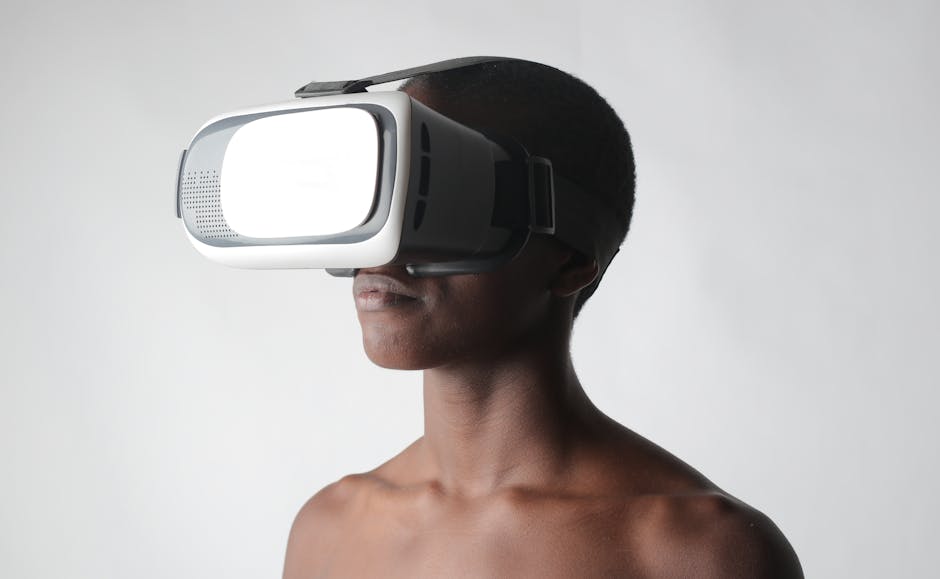
The concept of AI wearables is no longer the realm of science fiction, with companies like Google, Apple, and Amazon investing heavily in the development of personal AI tech devices. In fact, the global wearable technology market is projected to reach $51.6 billion by 2025, with AI-powered wearables being a key driver of this growth. One striking fact is that the average person checks their smartphone over 150 times per day, and AI wearables are poised to revolutionize the way we interact with technology, making it even more ubiquitous and integrated into our daily lives.
The Evolution of Wearable Technology

So, why does this matter now? The rapid advancements in AI, machine learning, and the Internet of Things (IoT) have created a perfect storm for the development of sophisticated wearable technology. As AI algorithms become more powerful and miniature sensors become more affordable, the possibilities for wearable devices are expanding exponentially. Furthermore, the increasing demand for personalized and predictive healthcare, smart homes, and cities is driving the need for wearable devices that can seamlessly interact with our environment and provide real-time feedback.
Key Players and Devices

Several key players are involved in the development of AI wearables, including tech giants like Google, Apple, and Amazon, as well as startups like Fitbit and Garmin. Some of the devices that are currently being developed or have already been released include smart glasses, cuff/wristbands, and smart clothing. For example, smart glasses like Google Glass and Vuzix Blade have outward and inward cameras, picking up facial expressions, gestures, and other biometric data, while also providing augmented reality (AR) and virtual reality (VR) capabilities. Cuff/wristbands, on the other hand, are going beyond the traditional smartwatch, with sensors that can pick up a range of health and fitness metrics, including heart rate, blood pressure, and sleep patterns.
Technical Capabilities and Form Factors
From a technical perspective, AI wearables are becoming increasingly sophisticated, with advancements in areas like computer vision, natural language processing, and machine learning. For example, AI-powered glasses can now recognize objects, people, and environments, and provide real-time feedback and suggestions. Additionally, the development of new form factors, such as flexible displays and biometric sensors, is enabling the creation of wearable devices that are more comfortable, convenient, and discreet. However, as AI wearables become more pervasive, there are also concerns around privacy, security, and governance, which will need to be addressed through the development of robust regulations and standards.
Implications and Adoption
The implications of AI wearables are far-reaching, with the potential to transform industries like healthcare, education, and entertainment. For example, AI-powered wearables could enable remote health monitoring, personalized learning, and immersive entertainment experiences. However, there are also concerns around the social acceptability of AI wearables, particularly in areas like privacy and surveillance. As AI wearables become more mainstream, it will be important to address these concerns and ensure that the benefits of these devices are equitably distributed.
Expert Perspectives
Experts in the field of AI wearables have contrasting viewpoints on the future of these devices. Some, like Google’s CEO Sundar Pichai, believe that AI wearables will become an essential part of our daily lives, enabling us to interact with technology in a more natural and intuitive way. Others, like privacy advocate Shoshana Zuboff, are more cautious, warning about the potential risks of AI wearables, including the erosion of privacy and the amplification of social inequalities. As the development of AI wearables continues to accelerate, it will be important to consider these different perspectives and ensure that the benefits of these devices are balanced with the need for privacy, security, and social responsibility.
Looking ahead, one of the key questions is how AI wearables will be integrated into our daily lives, and what the implications will be for industries like healthcare, education, and entertainment. Will AI wearables enable new forms of human-machine interaction, or will they exacerbate existing social inequalities? As we move forward, it will be important to address these questions and ensure that the development of AI wearables is guided by a commitment to social responsibility, privacy, and human well-being.