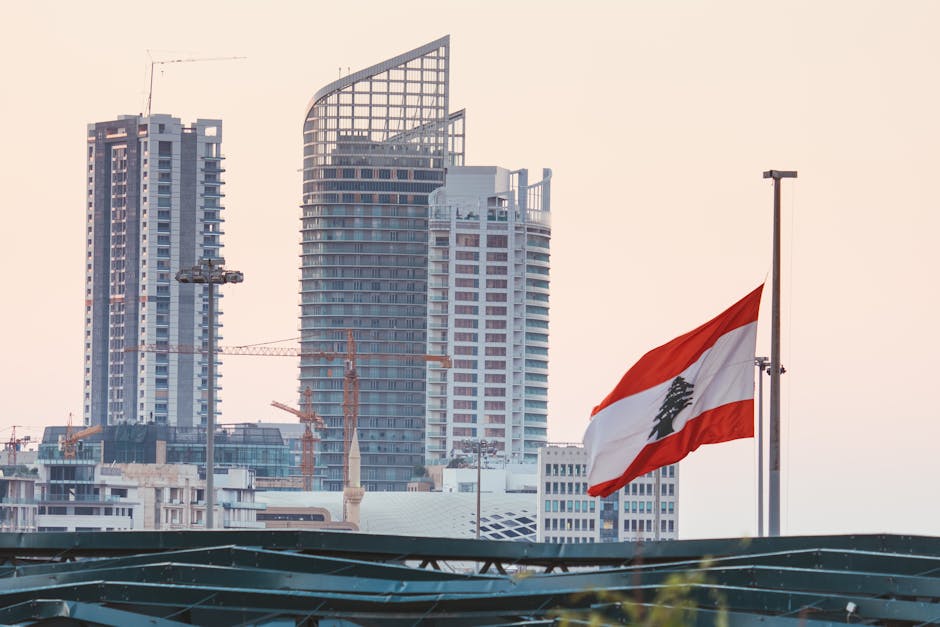
- Lebanon’s President Joseph Aoun has declared the country’s independence from regional conflicts.
- A fragile ceasefire with Israel has been in place for several weeks, paving the way for Lebanon’s sovereignty.
- Lebanon has long been caught in the crossfire of rival nations and factions, but this may be changing.
- The country’s rich history and strategic location have made it a hub for regional power struggles.
- Aoun’s statement signals a new era of sovereignty for Lebanon, with far-reaching implications for the Middle East.
A striking fact has emerged from the Middle East, where Lebanon’s President Joseph Aoun has declared that his country is no longer a pawn in regional conflicts. This bold statement comes amid a fragile ceasefire with neighboring Israel, which has been in place for several weeks. The president’s words are significant, as they signal a new era of sovereignty for Lebanon, a country that has long been caught in the crossfire of rival nations and factions. With its rich history and strategic location, Lebanon has often found itself at the center of regional power struggles, but Aoun’s statement suggests that this may be about to change.
A New Era Of Sovereignty

The situation in Lebanon matters now more than ever, as the country navigates a complex web of alliances and rivalries in the Middle East. For decades, Lebanon has been vulnerable to interference from its neighbors, including Israel, Syria, and Iran. However, with the recent ceasefire and Aoun’s declaration of independence, there are signs that Lebanon may be asserting its sovereignty and taking control of its own destiny. This is a significant development, as it could have far-reaching implications for the regional balance of power and the future of the Middle East. As the world watches, Lebanon is poised to emerge as a key player in its own right, rather than simply being a pawn in the games of others.
Background To The Ceasefire

The ceasefire between Lebanon and Israel is a crucial factor in the current situation, and it has been the result of intense diplomatic efforts by both sides. The agreement has held for several weeks, despite some initial skepticism and concerns about its durability. Key details of the ceasefire include the withdrawal of Israeli troops from Lebanese territory and the establishment of a buffer zone to prevent future clashes. The agreement has also been backed by international powers, including the United States and the European Union, which have pledged to support the peace process and provide economic aid to Lebanon. As the ceasefire continues to hold, there are hopes that it may pave the way for a more lasting peace and a new era of cooperation between Lebanon and Israel.
Causes And Effects Of The Conflict
An analysis of the conflict between Lebanon and Israel reveals a complex set of causes and effects. The roots of the conflict date back to the 1960s and 1970s, when Palestinian militants used Lebanon as a base for attacks on Israel. Since then, the situation has been marked by periodic outbreaks of violence, including a devastating war in 2006. The conflict has had a profound impact on both countries, causing widespread destruction and loss of life. However, it has also had significant regional and international implications, drawing in other countries and factions and contributing to the instability of the Middle East. As experts point out, the conflict is also driven by deeper factors, including competition for resources and strategic influence in the region.
Implications Of The Ceasefire
The implications of the ceasefire between Lebanon and Israel are far-reaching and significant. For Lebanon, the agreement offers a chance to rebuild and recover from years of conflict, and to assert its sovereignty and independence. For Israel, the ceasefire provides a measure of security and stability, and the opportunity to focus on other regional challenges. The international community also has a stake in the ceasefire, as it offers a rare glimmer of hope in a region often marked by conflict and instability. As the situation continues to evolve, it is clear that the ceasefire has the potential to be a major turning point in the history of the Middle East, and one that could have significant and lasting implications for the region and the world.
Expert Perspectives
Experts have varying perspectives on the ceasefire and its implications, reflecting the complexity and nuance of the situation. Some analysts see the agreement as a major breakthrough, and a significant step towards a more lasting peace. Others are more skeptical, pointing out that the ceasefire is fragile and that there are still many challenges to be overcome. As one expert notes, the situation is “delicate and prone to disruption,” and it will require careful management and diplomacy to ensure that the peace holds. Despite these challenges, there is a sense of optimism and hope among many observers, who see the ceasefire as a rare opportunity for progress and cooperation in a region often marked by conflict.
Looking to the future, there are many questions about what the ceasefire will mean for Lebanon and the wider region. Will the agreement hold, and will it pave the way for a more lasting peace? How will the international community support the peace process, and what role will regional powers play in shaping the future of the Middle East? These are just a few of the questions that will be watched with great interest in the coming weeks and months, as the situation in Lebanon continues to evolve and unfold. As the world waits with bated breath, one thing is clear: the ceasefire between Lebanon and Israel has the potential to be a major turning point in the history of the region, and one that could have far-reaching implications for the future of the Middle East and the world.