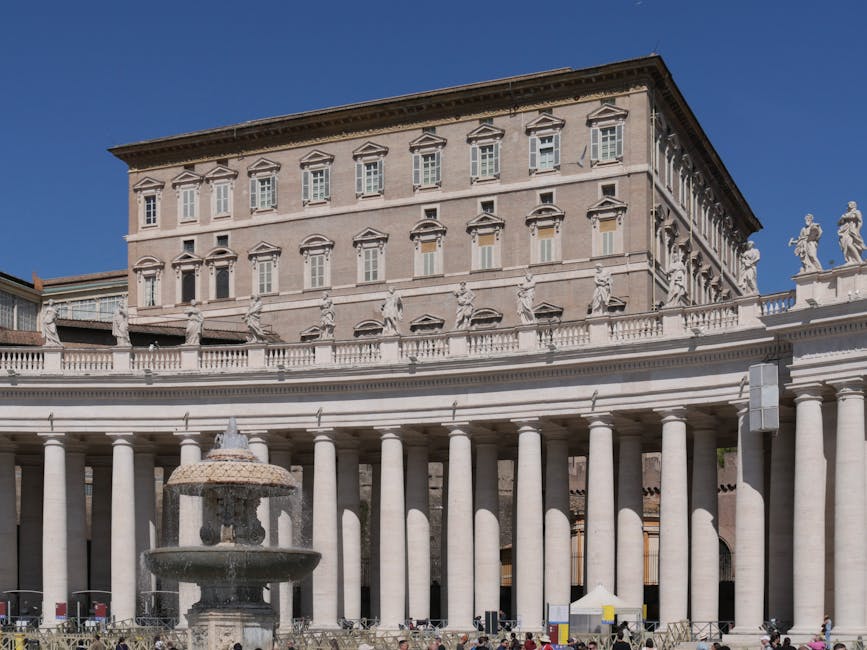
- Pope Leo XIV has emerged as a vocal critic of President Trump’s policies, shedding his initial mild-mannered mediator reputation.
- The Pope’s transformation has sent shockwaves throughout the global community, with his words carrying significant weight among the 1.3 billion Catholics worldwide.
- Pope Leo’s newfound willingness to challenge the US President has significant implications for international relations and global politics.
- The Pope’s ability to adapt and respond to challenges has been a hallmark of his papacy, earning him widespread respect.
- The Pope’s voice remains a powerful force for change in the complex web of global politics.
In a surprising turn of events, Pope Leo XIV has emerged as a vocal critic of President Trump’s policies, shedding his initial reputation as a mild-mannered mediator. This transformation has been particularly notable in recent months, as the Pope has increasingly spoken out against the President’s stance on issues such as immigration and climate change. With over 1.3 billion Catholics worldwide, the Pope’s words carry significant weight, and his newfound willingness to challenge the US President has sent shockwaves throughout the global community. The Pope’s transformation is a fascinating example of how global leaders can evolve in response to changing circumstances, and it has significant implications for international relations. The Pope’s ability to adapt and respond to challenges has been a hallmark of his papacy, and his willingness to speak out against injustice has earned him widespread respect. As the Pope continues to navigate the complex web of global politics, his voice is likely to remain a powerful force for change.
The Making of a Mediator

When Pope Leo XIV was first elected, he was widely seen as a compromise candidate, chosen for his ability to bring people together and find common ground. His early statements and actions seemed to confirm this reputation, as he focused on building bridges and promoting dialogue within the Catholic Church and beyond. However, as the months passed and President Trump’s administration began to implement its policies, the Pope found himself facing increasing pressure to speak out. The Pope’s initial response was cautious, but as the President’s rhetoric and actions became more divisive, the Pope began to feel compelled to respond. This marked a significant shift in the Pope’s approach, as he began to use his platform to advocate for the rights and dignity of marginalized communities. The Pope’s transformation from a mild-mannered mediator to a vocal advocate has been remarkable, and it reflects his deep commitment to promoting justice and compassion.
A New Era of Confrontation

The turning point in the Pope’s relationship with President Trump came when the President launched a series of attacks on the Pope’s stance on immigration. The President’s rhetoric was characteristically blunt, and it sparked a fierce backlash from the Pope and his supporters. The Pope’s response was swift and decisive, as he condemned the President’s words and actions as ‘un-Christian’ and ‘inhumane.’ This marked a significant escalation in the conflict between the two leaders, and it has had far-reaching consequences for global relations. The Pope’s willingness to challenge the President has emboldened other leaders to speak out, and it has created a sense of momentum around issues such as climate change and social justice. As the Pope continues to speak out, he is likely to face increasing opposition from the President and his supporters, but he has also earned the respect and admiration of many around the world.
Understanding the Pope’s Transformation
The Pope’s transformation from a mild-mannered mediator to a vocal advocate can be understood in the context of his deep commitment to promoting justice and compassion. The Pope’s faith is rooted in a profound sense of empathy and solidarity with marginalized communities, and he has consistently used his platform to advocate for their rights and dignity. The President’s attacks on the Pope’s stance on immigration were a wake-up call, and they prompted the Pope to re-evaluate his approach and find a new sense of purpose. The Pope’s transformation is also reflective of the changing global landscape, as leaders around the world are increasingly being called upon to speak out against injustice and promote human rights. The Pope’s ability to adapt and respond to changing circumstances has been a hallmark of his papacy, and his willingness to challenge the President has earned him a reputation as a courageous and principled leader.
Implications and Consequences
The implications of the Pope’s transformation are far-reaching and significant. As a global leader with a massive following, the Pope’s words carry enormous weight, and his willingness to challenge the President has created a sense of momentum around issues such as climate change and social justice. The Pope’s advocacy has also emboldened other leaders to speak out, and it has created a sense of solidarity among marginalized communities around the world. However, the Pope’s transformation has also created tensions and divisions, particularly within the Catholic Church. Some have criticized the Pope for being too political, while others have praised him for his courage and conviction. As the Pope continues to navigate the complex web of global politics, he will face increasing challenges and opportunities, and his ability to adapt and respond will be crucial in shaping the future of the Catholic Church and the world.
Expert Perspectives
Experts are divided on the implications of the Pope’s transformation, with some praising his courage and conviction, while others criticize him for being too political. According to Dr. Kathy McNeely, a theologian at Georgetown University, ‘The Pope’s willingness to challenge the President reflects his deep commitment to promoting justice and compassion, and it has created a sense of momentum around issues such as climate change and social justice.’ However, others, such as Dr. Thomas Farr, a theologian at the Catholic University of America, argue that ‘The Pope’s transformation has created tensions and divisions within the Catholic Church, and it has raised questions about the role of the Church in global politics.’
As the Pope looks to the future, he will face increasing challenges and opportunities. According to Vatican insiders, the Pope is likely to continue speaking out on issues such as climate change and social justice, and he may also use his platform to promote greater understanding and dialogue between different faiths and cultures. The Pope’s ability to adapt and respond to changing circumstances will be crucial in shaping the future of the Catholic Church and the world, and his legacy as a courageous and principled leader will depend on his willingness to continue challenging injustice and promoting human rights. One open question is how the Pope’s transformation will impact the Catholic Church’s relationship with other faith communities, and whether his advocacy will inspire a new era of interfaith dialogue and cooperation.