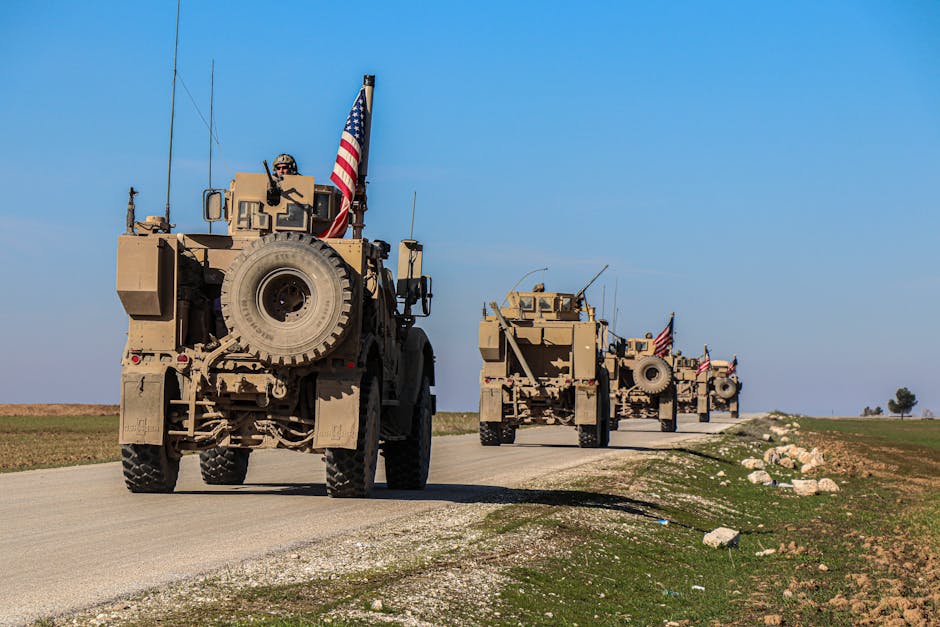
- The U.S. has completed the handover of its military bases in Syria, ending a decade-long military presence.
- The withdrawal was part of the international coalition against the Islamic State, which saw the U.S. military involvement escalate in 2014.
- Proponents argue that the withdrawal is necessary to end U.S. involvement in foreign conflicts, while critics fear a power vacuum could be exploited by extremist groups.
- The U.S. military presence initially aimed to support the Syrian Democratic Forces but later evolved to include broader objectives like protecting civilians and promoting stability.
- The withdrawal is expected to have significant implications for the region, potentially altering the balance of power and affecting ongoing conflicts.
The United States has officially completed the handover of its military bases in Syria, marking a significant milestone in the country’s withdrawal from the region. This transition signals the end of a formal U.S. military presence in Syria for the first time in more than a decade, a period that has been marked by intense conflict and humanitarian crises. The U.S. had maintained a presence in Syria since 2011, with its military involvement escalating in 2014 as part of the international coalition against the Islamic State. The withdrawal of U.S. forces from Syria has been a subject of debate, with proponents arguing that it is a necessary step towards ending U.S. involvement in foreign conflicts, while critics warn that it could create a power vacuum that would be exploited by extremist groups.
Background and Context

The U.S. military presence in Syria was initially aimed at supporting the Syrian Democratic Forces (SDF) in their fight against the Islamic State. Over time, however, the mission evolved to include a broader range of objectives, including the protection of civilians and the promotion of stability in the region. Despite these efforts, the conflict in Syria has continued to escalate, with multiple factions vying for control and the humanitarian situation deteriorating. The U.S. withdrawal from Syria is likely to have significant implications for the region, potentially creating a power vacuum that could be exploited by extremist groups or other external actors. As the situation in Syria continues to unfold, it is clear that the U.S. withdrawal will be a major factor in shaping the future of the region.
The Handover Process

The handover of U.S. military bases in Syria has been a complex and challenging process, involving the transfer of equipment, facilities, and personnel to other coalition partners or local forces. The U.S. has worked closely with its allies, including the SDF, to ensure a smooth transition and to minimize the risk of disruption to ongoing operations. Despite these efforts, however, the handover process has not been without its challenges, with some critics arguing that the U.S. is abandoning its allies and creating a power vacuum that could be exploited by extremist groups. The U.S. has sought to reassure its partners that it remains committed to the region and will continue to provide support, albeit in a different form. As the handover process is completed, attention will turn to the implications of the U.S. withdrawal and the potential consequences for the region.
Analysis and Implications
The U.S. withdrawal from Syria has significant implications for the region, potentially creating a power vacuum that could be exploited by extremist groups or other external actors. The conflict in Syria has already been marked by the involvement of multiple external actors, including Russia, Iran, and Turkey, each with their own interests and agendas. The U.S. withdrawal is likely to create an opportunity for these actors to expand their influence, potentially leading to further escalation and instability in the region. Furthermore, the withdrawal of U.S. forces from Syria could also have implications for the global fight against terrorism, potentially allowing extremist groups to regroup and reconstitute. As the situation in Syria continues to unfold, it is clear that the U.S. withdrawal will be a major factor in shaping the future of the region and the global security landscape.
Regional Consequences
The U.S. withdrawal from Syria will have significant consequences for the region, potentially affecting a range of countries and actors. The SDF, which has been a key partner for the U.S. in the fight against the Islamic State, is likely to be impacted, potentially facing increased pressure from other factions or external actors. Other countries in the region, including Turkey and Iraq, may also be affected, potentially facing increased instability or security threats. The U.S. withdrawal from Syria will also have implications for the global refugee crisis, potentially leading to further displacement and humanitarian needs. As the situation in Syria continues to unfold, it is clear that the U.S. withdrawal will have far-reaching consequences for the region and the world.
Expert Perspectives
Experts are divided on the implications of the U.S. withdrawal from Syria, with some arguing that it is a necessary step towards ending U.S. involvement in foreign conflicts, while others warn that it could create a power vacuum that would be exploited by extremist groups. Some analysts argue that the U.S. withdrawal will allow other actors, such as Russia and Iran, to expand their influence in the region, potentially leading to further escalation and instability. Others argue that the U.S. withdrawal will allow the SDF and other local forces to take greater control of their own destiny, potentially leading to increased stability and security in the region. As the situation in Syria continues to unfold, it is clear that the U.S. withdrawal will be a major factor in shaping the future of the region.
Looking to the future, it is clear that the situation in Syria will continue to be a major factor in shaping the global security landscape. The U.S. withdrawal from Syria will create new challenges and opportunities, potentially leading to increased instability or security threats. As the international community seeks to address the ongoing conflict in Syria, it is clear that a coordinated and sustained approach will be needed, involving a range of actors and strategies. The question on everyone’s mind is what will happen next in Syria, and how the international community will respond to the challenges and opportunities that arise. One thing is certain, however: the U.S. withdrawal from Syria marks a significant turning point in the conflict, and its implications will be felt for years to come.