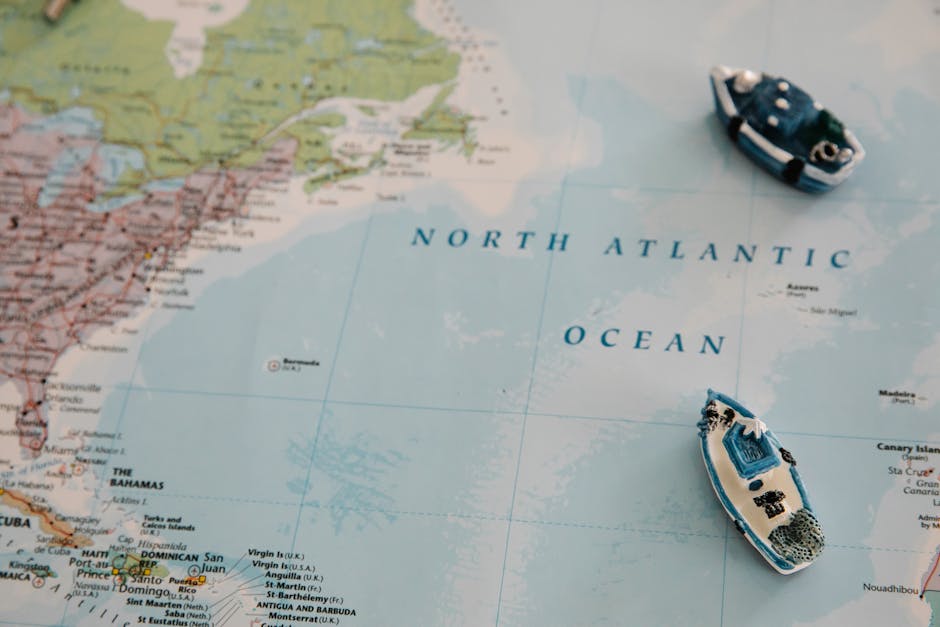
- A new study warns the Atlantic Meridional Overturning Circulation (Amoc) is more likely to collapse, risking global climate disruption.
- -collapse would lead to rising sea levels, more intense hurricanes, and altered precipitation patterns, affecting billions.
- Scientists urge immediate action to mitigate climate change to prevent the collapse of the Amoc.
- The Amoc plays a critical role in regulating regional climates, particularly in Europe, Africa, and the Americas.
- Climate models predicting the biggest slowdown in Amoc are now considered the most realistic.
A groundbreaking study published today reveals that the critical Atlantic current system is significantly more likely to collapse than previously thought, with scientists warning of catastrophic consequences for Europe, Africa, and the Americas. The research, conducted by a team of international experts, suggests that climate models predicting the biggest slowdown are the most realistic, sparking concerns about the future of the global climate system. The findings were announced at a press conference in London, where scientists emphasized the urgent need for action to mitigate the effects of climate change.
The Atlantic Current Under Threat

The Atlantic meridional overturning circulation (Amoc) is a major part of the global climate system, playing a crucial role in regulating regional climate conditions. The new research found that the Amoc is at a higher risk of collapse than previously thought, with scientists warning that this would have severe consequences for the entire planet. A collapse of the Amoc would lead to a significant rise in sea levels, more frequent and intense hurricanes, and drastic changes to precipitation patterns, affecting millions of people worldwide.
Understanding the Amoc

The Amoc is a complex system that transports warm water from the equator towards the North Pole, releasing heat and moisture into the atmosphere. This process helps to moderate the climate in Europe, Africa, and the Americas, making it an essential component of the global climate system. However, the Amoc is vulnerable to the effects of climate change, with rising temperatures and melting ice caps altering the delicate balance of the system. Scientists have been monitoring the Amoc for decades, but the new research provides the most comprehensive understanding of the system to date.
What to Watch
As the situation continues to unfold, scientists will be closely monitoring the Amoc for signs of further weakening. The next few months will be critical in determining the trajectory of the system, with researchers warning that the consequences of inaction could be severe. The international community will be watching the situation closely, with many calling for urgent action to reduce greenhouse gas emissions and mitigate the effects of climate change. As the world waits with bated breath, one thing is clear: the fate of the Atlantic current system hangs in the balance, and the consequences of its collapse would be catastrophic.