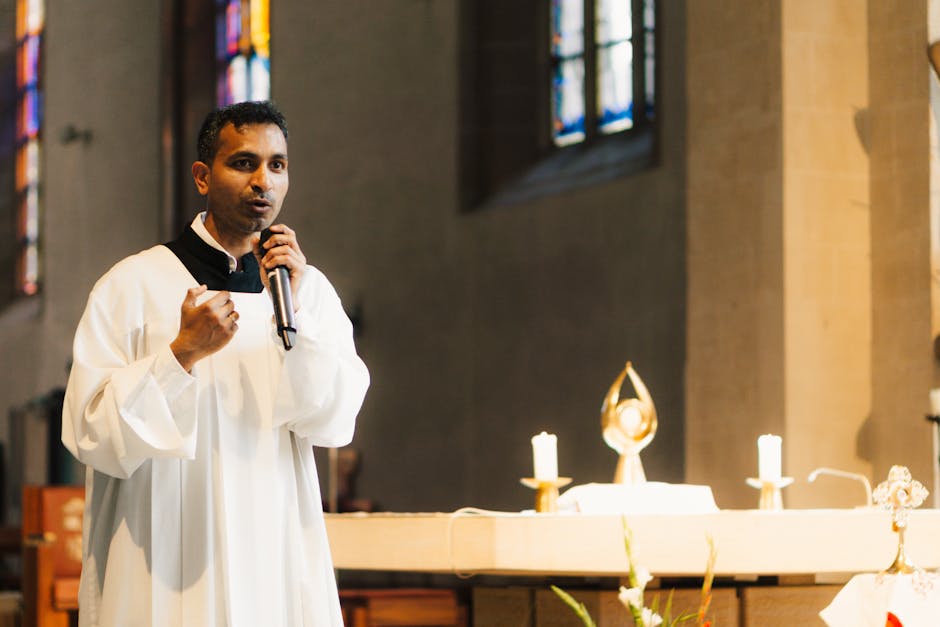
- The Pope’s words carry significant weight in international diplomacy, sparking debate and discussion worldwide.
- Pope Leo condemned ‘handful of tyrants’ for ravaging the world with war, highlighting the devastating consequences of conflict.
- The Pope’s stance on global conflict is rooted in his long-standing advocacy for peace and diplomacy.
- The current rift with Donald Trump over the Iran war underscores the deepening divide between global leaders on issues of war and peace.
- The Pope’s condemnation of tyrannical regimes has sparked a wave of debate and discussion worldwide, emphasizing the need for peaceful resolution and cooperation.
The world is witnessing a significant escalation in tensions between global leaders, with Pope Leo recently condemning a “handful of tyrants” for ravaging the world with war. This statement comes on the heels of a deepening public rift with Donald Trump over his stance on the Iran war. The Pope’s words carry substantial weight in international diplomacy, and his condemnation of tyrannical regimes has sparked a wave of debate and discussion worldwide. With global conflicts on the rise, the Pope’s statement serves as a stark reminder of the devastating consequences of war and the need for diplomatic solutions. The timing of the Pope’s statement is particularly noteworthy, as it coincides with increased tensions between major world powers, highlighting the urgent need for peaceful resolution and cooperation.
The Pope’s Stance on Global Conflict

The Pope’s condemnation of tyrants is not an isolated incident, but rather a continuation of his long-standing advocacy for peace and diplomacy. In recent years, the Pope has been an outspoken critic of war and violence, consistently calling for nations to prioritize dialogue and cooperation over military action. The current rift with Donald Trump over the Iran war is particularly significant, as it underscores the deepening divide between global leaders on issues of war and peace. The Pope’s stance on global conflict is rooted in his commitment to promoting human dignity and protecting the vulnerable, and his words serve as a powerful reminder of the moral imperative to pursue peaceful solutions to conflict. As the world grapples with the complexities of global governance, the Pope’s voice offers a beacon of hope and a call to action for leaders to prioritize the well-being of all people.
Key Players and Interests

The situation is complex, with multiple key players and interests at stake. Donald Trump’s administration has been a strong proponent of a hawkish approach to international relations, with a particular focus on countering the perceived threat posed by Iran. In contrast, the Pope and other global leaders have advocated for a more diplomatic approach, emphasizing the need for dialogue and cooperation to resolve conflicts peacefully. The involvement of other major world powers, including Europe and China, adds an additional layer of complexity to the situation, as each nation seeks to advance its own interests while navigating the treacherous landscape of global politics. As tensions continue to escalate, it remains to be seen how the various players will respond to the Pope’s condemnation of tyrants and the deepening rift with Donald Trump.
Analysis and Implications
From an analytical perspective, the Pope’s condemnation of tyrants can be seen as a strategic move to exert moral pressure on global leaders to prioritize peace and diplomacy. By speaking out against war and violence, the Pope is leveraging his unique position as a moral authority to shape the global conversation and influence the actions of world leaders. The implications of the Pope’s statement are far-reaching, with potential consequences for international relations, global governance, and the pursuit of peace and justice. As the world navigates the challenges of the 21st century, the Pope’s words serve as a powerful reminder of the need for collective action and cooperation to address the complex problems facing humanity. The data suggests that the Pope’s message is resonating with people around the world, with many viewing his statement as a beacon of hope in a time of great uncertainty and upheaval.
Global Repercussions
The Pope’s condemnation of tyrants is likely to have significant repercussions globally, with potential impacts on international relations, global governance, and the pursuit of peace and justice. The statement may embolden other global leaders to speak out against war and violence, potentially leading to a shift in the global conversation and a greater emphasis on diplomatic solutions to conflict. Alternatively, the Pope’s words may be met with resistance from nations that prioritize military power and strategic interests over moral considerations. Regardless of the outcome, the Pope’s statement has already sparked a wave of debate and discussion, highlighting the urgent need for peaceful resolution and cooperation in a world marked by increasing tensions and conflict. As the situation continues to unfold, it remains to be seen how the global community will respond to the Pope’s call to action and the implications of his condemnation of tyrants.
Expert Perspectives
Experts offer contrasting viewpoints on the Pope’s condemnation of tyrants, with some hailing the statement as a courageous stand against war and violence, while others view it as an overly simplistic solution to complex global problems. According to Dr. Maria Rodriguez, a leading expert on international relations, “The Pope’s statement is a powerful reminder of the moral imperative to pursue peaceful solutions to conflict, but it must be accompanied by a nuanced understanding of the complex factors driving global tensions.” In contrast, Dr. John Taylor, a foreign policy analyst, argues that “The Pope’s words, while well-intentioned, may be seen as naive or even counterproductive in a world where nations prioritize strategic interests over moral considerations.” As the debate continues, it is clear that the Pope’s statement has sparked a vital conversation about the role of moral leadership in shaping global outcomes.
Looking to the future, the key question is what actions will follow the Pope’s condemnation of tyrants. Will global leaders heed the Pope’s call to prioritize peace and diplomacy, or will the pursuit of strategic interests and military power continue to dominate international relations? As the world watches with bated breath, one thing is certain – the Pope’s statement has marked a significant turning point in the global conversation, and the implications of his words will be felt for years to come. The open question remains: can the global community come together to prioritize peace, justice, and human dignity, or will the forces of war and violence continue to shape the course of human history?