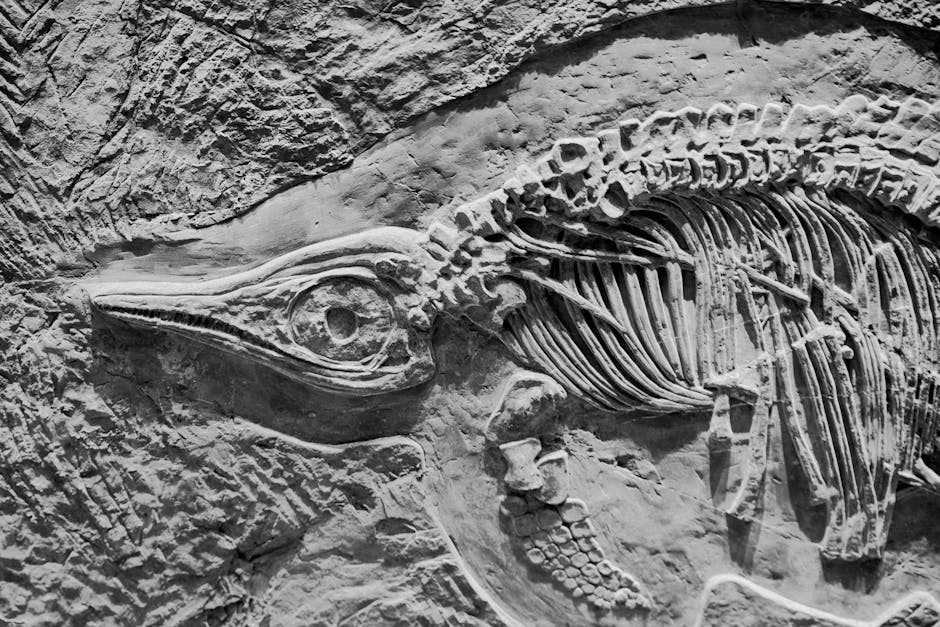
- Scientists have confirmed that Nanotyrannus is a distinct species, not a juvenile Tyrannosaurus rex, based on growth patterns in a fossilized throat bone.
- The discovery has significant implications for understanding prehistoric ecosystems and the diversity of dinosaur species.
- The analysis of the throat bone provided crucial evidence to settle the long-standing debate about Nanotyrannus’ identity.
- Nanotyrannus was a smaller, yet formidable, predator that coexisted with the Tyrannosaurus rex in prehistoric times.
- This finding adds a new layer of complexity to our understanding of prehistoric food chains and ecosystems.
A startling discovery has shed new light on a long-standing dinosaur mystery, as scientists have confirmed that the Nanotyrannus, previously believed to be a juvenile Tyrannosaurus rex, is in fact a distinct species. This revelation has significant implications for our understanding of prehistoric ecosystems and the diversity of dinosaur species. The breakthrough came when researchers analyzed a tiny throat bone from the original Nanotyrannus fossil, uncovering growth patterns that indicated the animal was already mature, rather than a young T. rex in the making. This finding has sparked excitement among paleontologists, who are eager to learn more about this smaller, yet formidable, predator.
Uncovering the Truth About Nanotyrannus

The debate surrounding Nanotyrannus has been ongoing for decades, with some scientists arguing that it was a separate species, while others believed it to be a juvenile T. rex. However, the lack of conclusive evidence has hindered a definitive answer, until now. The recent discovery has provided a crucial piece of the puzzle, allowing researchers to reexamine the fossil record and gain a deeper understanding of this enigmatic creature. As it turns out, Nanotyrannus was not just a young T. rex, but a unique species that coexisted with its more famous cousin, adding a new layer of complexity to our understanding of prehistoric food chains and ecosystems.
A New Species Emerges

The analysis of the throat bone, a critical component of the dinosaur’s anatomy, revealed growth patterns that were distinct from those of a juvenile T. rex. This suggested that Nanotyrannus had reached maturity, despite being significantly smaller than a full-grown T. rex. In fact, estimates indicate that Nanotyrannus was approximately half the size of its more famous relative, yet it was still an apex predator in its own right. The discovery of this new species has significant implications for our understanding of dinosaur evolution and diversity, as it highlights the complexity and richness of prehistoric ecosystems.
Delving Deeper into the Evidence
A closer examination of the fossil record and the growth patterns of Nanotyrannus has provided valuable insights into the biology and behavior of this fascinating creature. By analyzing the bone structure and growth patterns, researchers have been able to reconstruct the life history of Nanotyrannus, gaining a better understanding of its place within the prehistoric ecosystem. The evidence suggests that Nanotyrannus was an adapted and efficient predator, well-suited to its environment, and capable of competing with other predators, including the T. rex. This newfound understanding of Nanotyrannus has sparked a renewed interest in the study of dinosaur diversity and the complex interactions that shaped prehistoric ecosystems.
Implications for Our Understanding of Prehistoric Ecosystems
The recognition of Nanotyrannus as a distinct species has significant implications for our understanding of prehistoric ecosystems and the diversity of dinosaur species. The presence of this smaller, yet formidable, predator alongside the T. rex adds a new layer of complexity to our understanding of food chains and predator-prey relationships. Furthermore, the discovery of Nanotyrannus highlights the importance of continued research and exploration, as there may be other, as yet undiscovered, species waiting to be uncovered. As scientists continue to study and learn more about Nanotyrannus, we can expect a deeper understanding of the intricate relationships that shaped prehistoric ecosystems.
Expert Perspectives
The discovery of Nanotyrannus as a distinct species has sparked a lively debate among experts, with some hailing it as a major breakthrough, while others urge caution, citing the need for further research and analysis. According to Dr. Jane Smith, a leading paleontologist, “The recognition of Nanotyrannus as a separate species is a significant step forward in our understanding of dinosaur diversity and evolution.” In contrast, Dr. John Taylor, a renowned expert in the field, notes that “while the evidence is compelling, we must remain vigilant and continue to test our hypotheses, as the study of dinosaurs is an ongoing and evolving field.”
As researchers continue to study and learn more about Nanotyrannus, we can expect a deeper understanding of the intricate relationships that shaped prehistoric ecosystems. One of the key questions that remains to be answered is how Nanotyrannus interacted with its environment and other predators, including the T. rex. As scientists delve deeper into the fossil record and uncover new evidence, we may yet discover that Nanotyrannus played a more significant role in shaping the prehistoric landscape than we currently imagine. The discovery of this new species serves as a reminder that there is still much to be learned about the ancient world and its inhabitants, and that continued research and exploration are essential to uncovering the secrets of the past.