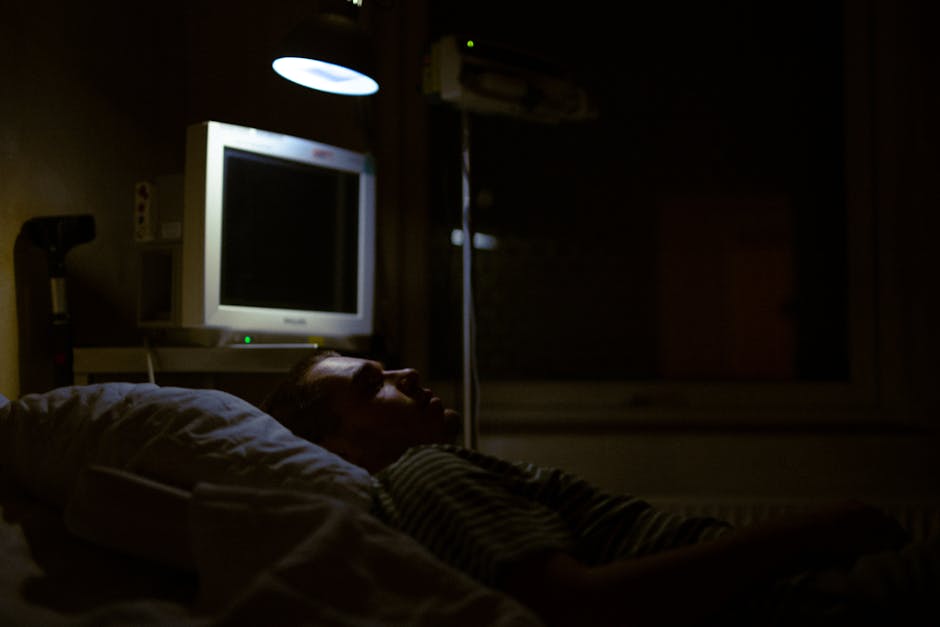
- Terminally ill patients often report having dreams filled with reunions with lost loved ones and visions of doors, stairways, and light.
- Dreams can serve as a powerful tool for coping with the physical and emotional challenges of terminal illness.
- Research suggests that our dreams become more emotive and symbolic as we approach the end of our lives.
- The study of dreams in terminally ill patients is a relatively new field, but one that has garnered significant attention.
- Dreams may offer a unique glimpse into the subconscious mind and its ability to process and cope with mortality.
As humans, we spend a significant portion of our lives sleeping and dreaming, with research suggesting that our dreams become more emotive and symbolic as we approach the end of our lives. A striking fact is that terminally ill patients often report having dreams that are filled with reunions with lost loved ones, as well as visions of doors, stairways, and light, which are said to help them come to terms with the dying process. These dreams are not only a source of comfort but also a fascinating area of study, as they offer a unique glimpse into the subconscious mind and its ability to process and cope with mortality.
The Role Of Dreams In The Dying Process

The study of dreams in terminally ill patients is a relatively new field, but one that has garnered significant attention in recent years. As our understanding of the human brain and its functions has grown, so too has our appreciation for the importance of dreams in the dying process. Dreams have long been seen as a way for our subconscious mind to process and consolidate memories, as well as to work through difficult emotions and experiences. For those who are terminally ill, dreams can serve as a powerful tool for coping with the physical and emotional challenges of their condition, and for finding a sense of peace and acceptance as they approach the end of their lives.
Common Themes In Dreams Of The Dying

Research has identified a number of common themes in the dreams of terminally ill patients, including reunions with loved ones who have passed away, as well as visions of doors, stairways, and light. These themes are often symbolic, and can be seen as a way for the subconscious mind to process and cope with the idea of mortality. For example, dreams of doors and stairways may represent a transition or a journey, while visions of light may symbolize hope, guidance, or spiritual enlightenment. Similarly, reunions with loved ones who have passed away may serve as a way for the dying person to come to terms with their own mortality, and to find a sense of comfort and reassurance.
Analysis Of The Symbolic Language Of Dreams
The symbolic language of dreams is a complex and multifaceted topic, and one that has been studied extensively in the fields of psychology and neuroscience. According to experts, the symbolic language of dreams is a way for our subconscious mind to communicate with our conscious mind, and to process and consolidate memories and emotions. In the context of terminally ill patients, the symbolic language of dreams can offer a unique glimpse into the subconscious mind and its ability to cope with mortality. By analyzing the common themes and symbols that appear in the dreams of the dying, researchers can gain a deeper understanding of the psychological and emotional processes that occur at the end of life.
Implications For End-Of-Life Care
The study of dreams in terminally ill patients has significant implications for end-of-life care, and highlights the importance of providing emotional and spiritual support to those who are dying. By acknowledging and exploring the symbolic language of dreams, healthcare providers can gain a deeper understanding of the psychological and emotional needs of their patients, and can develop more effective strategies for supporting them through the dying process. This may involve providing opportunities for patients to share their dreams and experiences, as well as offering guidance and support to help them interpret and understand the symbolism and themes that appear in their dreams.
Expert Perspectives
Experts in the field of dream analysis and end-of-life care offer a range of perspectives on the significance and importance of dreams in the dying process. Some see dreams as a way for the subconscious mind to process and cope with mortality, while others view them as a source of comfort and reassurance. According to Dr. Karen Wyatt, a hospice physician and dream analyst, “dreams can be a powerful tool for healing and transformation, and can offer a unique glimpse into the subconscious mind and its ability to cope with mortality.” Dr. Wyatt emphasizes the importance of exploring and understanding the symbolic language of dreams, and of providing emotional and spiritual support to those who are dying.
As researchers continue to study and explore the symbolic language of dreams, it is clear that there is still much to be learned about the role of dreams in the dying process. One open question is how healthcare providers can best support patients who are experiencing vivid and emotive dreams, and how they can help them to interpret and understand the symbolism and themes that appear in their dreams. By continuing to explore and understand the complex and multifaceted topic of dreams, we can gain a deeper appreciation for the human experience, and can develop more effective strategies for supporting those who are dying.