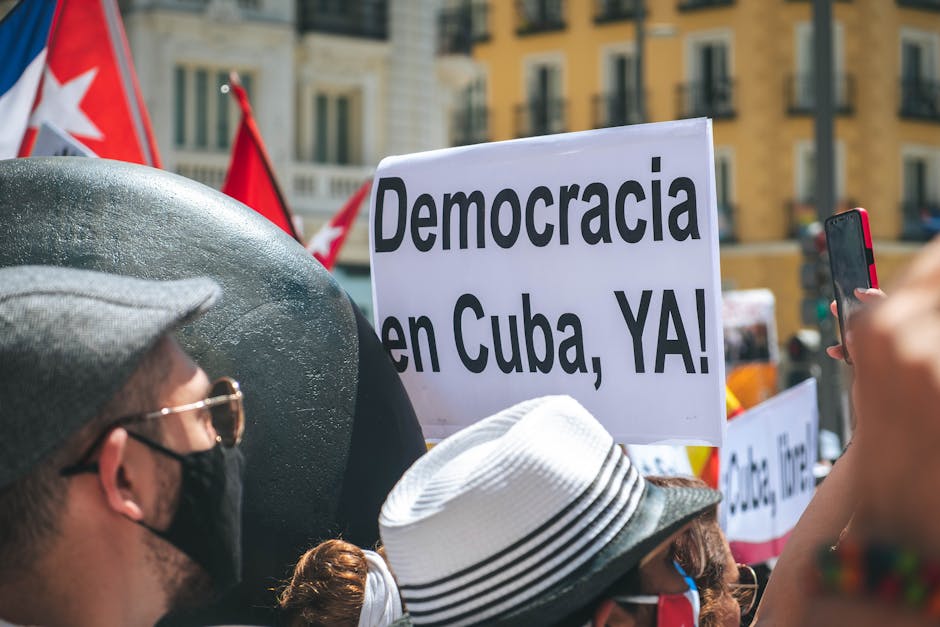
- Cuba marks 66th anniversary of Fidel Castro’s socialist revolutionary declaration amid escalating tensions with the US.
- President Miguel Diaz-Canel strikes a defiant tone, but faces growing concerns of a deepening crisis in the region.
- Cuba’s economy struggles under the weight of the COVID-19 pandemic and decades of US embargo and sanctions.
- The US seeks to exert influence over Cuba’s political and economic trajectory, sparking uncertainty among the Cuban people.
- President Diaz-Canel must balance socialist principles with economic realities to navigate the country’s challenging situation.
Cuba is marking the 66th anniversary of Fidel Castro’s socialist revolutionary declaration, with President Miguel Diaz-Canel striking a defiant tone amid escalating tensions with the United States. The Cuban leader’s address comes as the US ramps up pressure on the island nation, with threats of an energy blockade and fresh sanctions. The move has sparked concerns of a deepening crisis in the region, with Cuba’s economy already reeling from the impact of the COVID-19 pandemic and decades of US embargo. As the Cuban people celebrate this milestone, they do so under the shadow of uncertainty, with the US seeking to exert its influence over the island’s political and economic trajectory.
The Anniversary of a Revolution

The anniversary of the socialist revolutionary declaration is a significant date in Cuba’s calendar, commemorating the moment when Fidel Castro’s movement seized power and began to shape the country’s socialist future. This year’s celebrations take place against a backdrop of heightened tensions with the US, which has long been a thorn in the side of the Cuban government. The Trump administration’s decision to tighten sanctions and restrict travel to the island has had a devastating impact on Cuba’s economy, with the country’s tourism sector and foreign investment flows severely curtailed. As President Diaz-Canel seeks to navigate these treacherous waters, he must balance the need to maintain the country’s socialist principles with the pressing need to reform the economy and attract foreign investment.
US Pressure and Energy Blockade Threats

The US has been ratcheting up the pressure on Cuba in recent months, with the State Department imposing fresh sanctions on the country’s military and intelligence agencies. The move is part of a broader effort to undermine the Cuban government and pave the way for a potential regime change. The threat of an energy blockade has also been raised, with the US seeking to restrict Cuba’s access to oil and gas imports. This would have a catastrophic impact on the country’s economy, which is already struggling to meet the basic needs of its population. As the Cuban government seeks to respond to these threats, it has been reaching out to other countries in the region, including Venezuela and Mexico, in a bid to secure alternative sources of energy and economic support.
Causes and Consequences
The roots of the current crisis in US-Cuba relations are complex and multifaceted, reflecting a deep-seated ideological divide between the two countries. The US has long been opposed to Cuba’s socialist system, which it views as a threat to its own economic and political interests in the region. The Cuban government, on the other hand, sees the US as a colonial power that has sought to dominate and exploit the island for centuries. As the two countries engage in a war of words and diplomatic maneuvering, the consequences for the Cuban people are very real. The economy is in crisis, with shortages of food and medicine widespread. The country’s infrastructure is also in a state of disrepair, with frequent power outages and a lack of access to basic services like healthcare and education.
Implications and Uncertainty
The implications of the current crisis in US-Cuba relations are far-reaching and uncertain, with the potential for a deeper and more prolonged conflict. The Cuban people are already feeling the effects of the US embargo, with shortages of food and medicine widespread. The country’s economy is also in crisis, with a severe shortage of foreign exchange and a lack of access to international markets. As the US seeks to tighten its grip on the island, there are fears of a humanitarian crisis, with the potential for widespread poverty and instability. The international community is watching the situation closely, with many countries calling for a peaceful resolution to the crisis and an end to the US embargo.
Expert Perspectives
Experts are divided on the likely outcome of the current crisis in US-Cuba relations, with some predicting a deeper and more prolonged conflict. Others see the potential for a negotiated settlement, with the US and Cuba engaging in diplomatic talks to resolve their differences. According to Dr. Emily Morris, a specialist in Cuban affairs at the University of London, ‘the current situation is highly volatile, with the potential for a miscalculation or accident that could spark a wider conflict.’ However, she also notes that ‘there are still opportunities for a peaceful resolution, particularly if the US is willing to engage in meaningful diplomatic talks with the Cuban government.’
As the situation continues to unfold, one thing is clear: the Cuban people will be watching the developments closely, with their future hanging in the balance. The US and Cuba are at a crossroads, with the potential for a deeper and more prolonged conflict or a negotiated settlement. The international community will be watching the situation closely, with many countries calling for a peaceful resolution to the crisis and an end to the US embargo. As the anniversary of the socialist revolutionary declaration is marked, the Cuban people will be hoping for a brighter future, free from the threats and uncertainties that have plagued their country for so long.