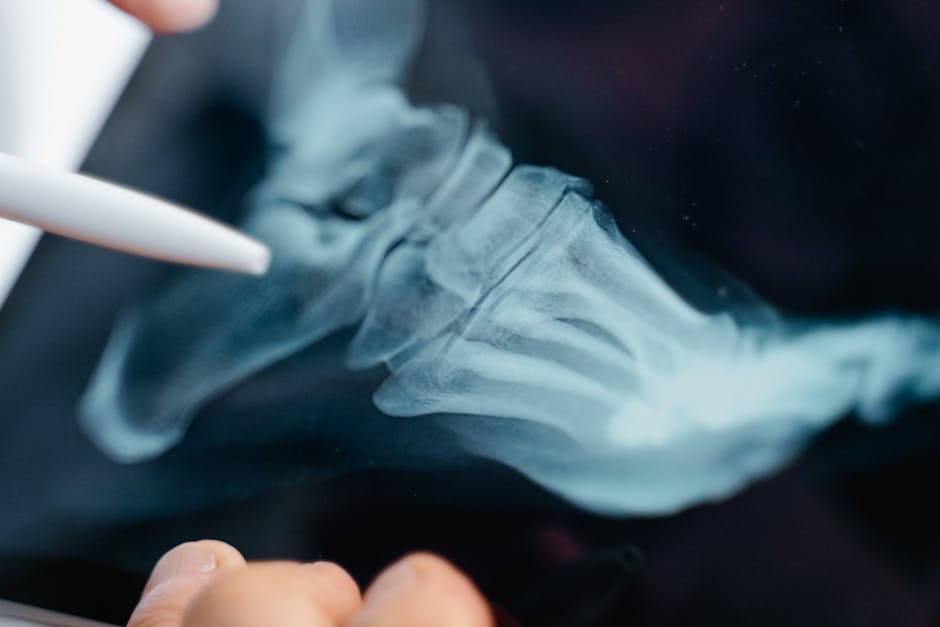
- Children’s bones have a remarkable ability to heal from severe injuries, even when bones are significantly displaced.
- Broken wrists are a common injury in children, accounting for about half of children’s fractures.
- Children’s bones have a unique ‘superpower’ that enables them to straighten and heal over time, a process known as remodeling.
- Researchers are questioning the necessity of surgical intervention in severely displaced distal radial fractures in children.
- Plaster casts may be a safer and more effective treatment option for children’s fractures instead of surgery.
A striking fact has emerged from a recent large trial: children’s bones have a remarkable ability to heal from severe injuries, even when the bones are significantly displaced. Broken wrists are among the most common injuries in children, accounting for about half of children’s fractures, with severely displaced distal radial fractures being a particularly prevalent issue. However, unlike adults, children have been found to possess a unique ‘superpower’ that enables their bones to straighten and heal over time, a process known as remodeling. This phenomenon has led researchers to question the necessity of surgical intervention in such cases, and instead, explore the potential of using plaster casts as a safer and more effective treatment option.
The Remodeling Process

The remodeling process in children’s bones is a complex and fascinating phenomenon that has garnered significant attention in recent years. As children grow and develop, their bones are constantly being reshaped and reformed to adapt to the demands of their rapidly changing bodies. This process is made possible by the unique properties of children’s bones, which are more malleable and responsive to stress than those of adults. The ability of children’s bones to remodel and heal from injuries is a critical aspect of their development, and one that has significant implications for the treatment of fractures and other bone-related injuries. With the rising incidence of childhood injuries, understanding the remodeling process has become increasingly important, and researchers are now seeking to harness its power to improve treatment outcomes for young patients.
Trial Details

A recent large trial has shed new light on the effectiveness of using plaster casts to treat severely displaced distal radial fractures in children. The study, which involved a significant number of participants, aimed to determine whether a plaster cast would achieve the same long-term results as surgical intervention, without exposing children to the risks associated with surgery. The trial’s findings have been eagerly anticipated by medical professionals and parents alike, as they have the potential to revolutionize the way childhood fractures are treated. By comparing the outcomes of children who received plaster cast treatment with those who underwent surgery, researchers were able to gain valuable insights into the efficacy of this approach and its potential to reduce the need for surgical intervention.
Analysis and Implications
The analysis of the trial’s data has revealed some remarkable findings, with significant implications for the treatment of childhood fractures. According to the study, children who were treated with plaster casts showed comparable long-term results to those who underwent surgery, with their bones healing and remodeling over time. This suggests that, in many cases, surgical intervention may not be necessary, and that a plaster cast may be a safer and more effective treatment option. The study’s findings have been welcomed by medical professionals, who recognize the potential of this approach to reduce the risks and complications associated with surgery. Furthermore, the study’s data has provided valuable insights into the factors that influence the remodeling process, including the age of the child, the severity of the injury, and the effectiveness of the plaster cast treatment.
Expert Perspectives
The trial’s findings have been met with enthusiasm by experts in the field, who recognize the potential of this approach to improve treatment outcomes for children with fractures. However, some experts have also expressed caution, highlighting the need for further research to fully understand the implications of this study. As one expert noted, ‘while the findings of this study are certainly promising, it is essential that we continue to monitor the long-term outcomes of children who have been treated with plaster casts, to ensure that this approach is both safe and effective.’ Another expert added, ‘the study’s findings have significant implications for the way we treat childhood fractures, and highlight the need for a more nuanced approach that takes into account the unique properties of children’s bones.’
Looking to the future, the trial’s findings raise important questions about the role of surgical intervention in the treatment of childhood fractures. As researchers continue to explore the potential of plaster cast treatment, it is likely that we will see a shift towards more conservative approaches to fracture management. However, it is also essential that we recognize the limitations of this approach and the need for ongoing monitoring and evaluation to ensure that children receive the best possible care. Ultimately, the study’s findings have the potential to revolutionize the way we treat childhood fractures, and to improve outcomes for young patients around the world.