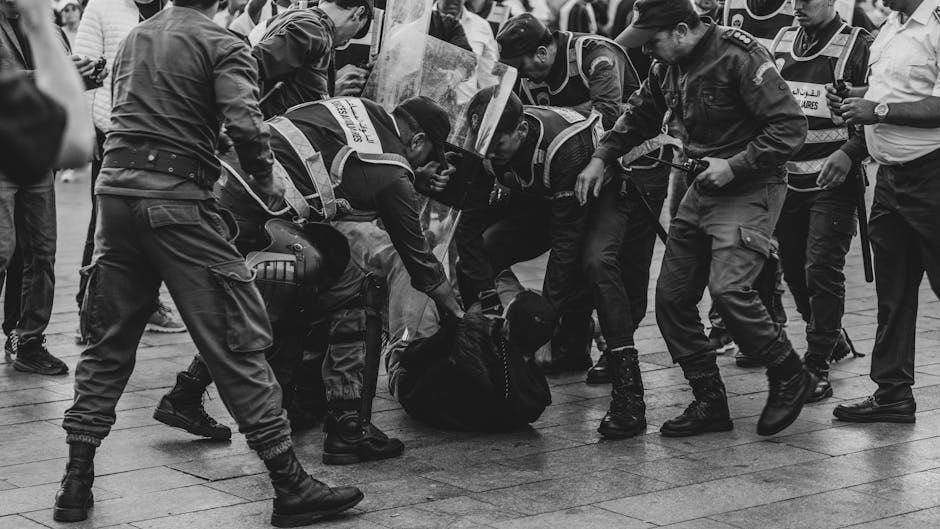
- Bahraini authorities have been accused of using excessive force to suppress opposition and silence critics during a domestic crackdown tied to the war in Iran.
- The Bahraini government’s human rights record has come under intense scrutiny, with concerns raised about the treatment of detainees and lack of due process.
- The case of an intelligence officer charged with assault leading to death has sparked widespread outrage and raised questions about the use of force by Bahraini authorities.
- Bahrain’s involvement in regional conflicts has led to a broader crackdown on dissent, with many detained on espionage or national security-related charges.
- The international community is watching closely as the case unfolds, with significant implications for Bahrain’s human rights record and relationships with other countries.
A striking fact has emerged from Bahrain, where an intelligence officer has been charged with assault leading to death, in the case of a man accused of espionage during a domestic crackdown tied to the war in Iran. The charges come as Bahrain continues to grapple with the consequences of its involvement in regional conflicts, and the treatment of detainees has become a major concern. The incident has sparked widespread outrage and raised questions about the use of force by Bahraini authorities. With the international community watching closely, the case is likely to have significant implications for Bahrain’s human rights record and its relationships with other countries.
The Crackdown on Dissent

The charging of the intelligence officer is the latest development in a broader crackdown on dissent in Bahrain, which has been ongoing for several years. The Bahraini government has been accused of using excessive force to suppress opposition and silence critics, and the country’s human rights record has come under intense scrutiny. The crackdown has been tied to the war in Iran, with Bahraini authorities accusing many of those detained of espionage or other crimes related to national security. However, human rights groups have raised concerns about the treatment of detainees and the lack of due process in many cases. As the situation continues to unfold, it is clear that the charging of the intelligence officer is just one part of a much larger story.
Key Details of the Case

The case against the intelligence officer centers on the death of a man who was accused of espionage by Bahraini authorities. The man was detained as part of the broader crackdown on dissent, and his death has been the subject of widespread controversy. The intelligence officer has been charged with assault leading to death, and the case is likely to be closely watched by the international community. The Bahraini government has faced criticism for its handling of the case, with many accusing the authorities of trying to cover up the circumstances of the man’s death. As the case moves forward, it is likely that more details will emerge about the events surrounding the man’s death and the role of the intelligence officer.
Analysis of the Situation
The charging of the intelligence officer is a significant development in the case, but it is also just one part of a much larger analysis of the situation in Bahrain. The country’s involvement in regional conflicts has created a complex and volatile situation, and the treatment of detainees has become a major concern. Human rights groups have raised concerns about the use of force by Bahraini authorities, and the lack of due process in many cases has been a major issue. The international community has been watching the situation closely, and the charging of the intelligence officer is likely to be seen as a positive step towards accountability. However, much more needs to be done to address the underlying issues and ensure that the rights of all individuals are protected.
Implications of the Case
The implications of the case against the intelligence officer are far-reaching and significant. The charging of the officer is likely to have major implications for Bahrain’s human rights record and its relationships with other countries. The international community has been watching the situation closely, and the case is likely to be seen as a test of Bahrain’s commitment to accountability and the rule of law. The case is also likely to have significant implications for the individuals and families affected by the crackdown on dissent, who have been waiting for justice and accountability for many years. As the case moves forward, it is likely that more details will emerge about the events surrounding the man’s death and the role of the intelligence officer.
Expert Perspectives
Experts have been weighing in on the case, with many expressing cautiously optimistic views about the charging of the intelligence officer. Some have praised the Bahraini authorities for taking steps towards accountability, while others have raised concerns about the lack of transparency and the need for further action. The case has sparked a lively debate about the role of the international community in promoting human rights and accountability, and the need for greater scrutiny of the actions of governments in the region. As the case moves forward, it is likely that expert perspectives will continue to play an important role in shaping the narrative and pushing for greater accountability.
Looking to the future, many questions remain unanswered about the case and its implications. What will be the outcome of the trial, and how will it impact Bahrain’s human rights record? How will the international community respond to the case, and what steps will be taken to promote greater accountability and transparency? As the situation continues to unfold, it is clear that the charging of the intelligence officer is just the beginning of a much larger story, one that will have significant implications for Bahrain and the wider region.