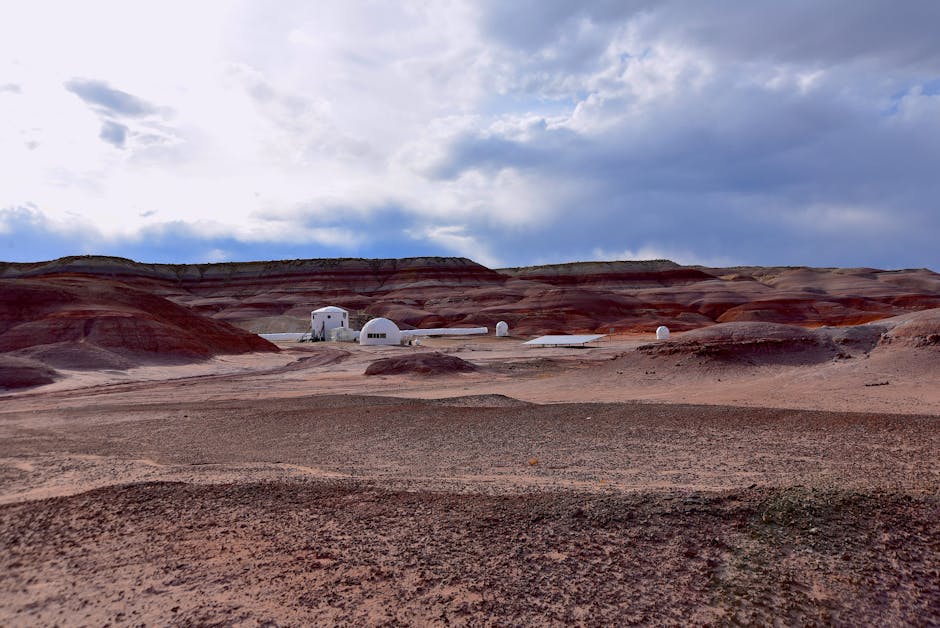
A striking fact has emerged from recent research on Mars, suggesting that the Red Planet may have had vast oceans in the distant past. According to a study published in the journal Nature, the topographic signature of these ancient oceans can be identified through the presence of shelves rather than shorelines. This discovery has significant implications for our understanding of Martian geology and the potential for life on the planet. The research team analyzed the Martian terrain using advanced imaging techniques and found that the planet’s surface features are consistent with the presence of large bodies of water. This finding has sparked excitement among scientists, who believe that the discovery could provide valuable insights into the planet’s history and evolution.
Uncovering the Secrets of Martian Geology

The study of Martian geology is a complex and challenging field, with scientists relying on a range of techniques to uncover the secrets of the planet’s surface. One of the key challenges is identifying the topographic features that are indicative of ancient oceans. On Earth, shorelines are often used as a proxy for oceanic activity, but the Martian terrain is very different, with fewer visible shorelines and more extensive shelf-like features. The researchers behind the new study have developed a novel approach to analyzing the Martian terrain, using advanced computer simulations to identify the topographic signature of ancient oceans. This approach has allowed them to reconstruct the Martian surface as it may have appeared millions of years ago, providing a unique glimpse into the planet’s history.
A New Perspective on Martian Oceans

The discovery of the topographic signature of early Martian oceans has significant implications for our understanding of the planet’s history. The research team found that the Martian surface features are consistent with the presence of large bodies of water, which would have played a crucial role in shaping the planet’s geology. The study suggests that the oceans may have been present on Mars for millions of years, with the planet’s surface undergoing significant changes as the water levels rose and fell. The researchers also found that the Martian oceans may have been similar in size and scale to those on Earth, with the potential for life to have existed in these ancient bodies of water. The discovery has sparked excitement among scientists, who believe that the finding could provide valuable insights into the potential for life on Mars.
Analysis of the Martian Terrain
The research team used a range of techniques to analyze the Martian terrain, including advanced imaging and computer simulations. The team found that the Martian surface features are consistent with the presence of large bodies of water, with the planet’s terrain showing evidence of erosion and sedimentation. The researchers also found that the Martian oceans may have been similar in size and scale to those on Earth, with the potential for life to have existed in these ancient bodies of water. The study suggests that the Martian oceans may have played a crucial role in shaping the planet’s geology, with the surface undergoing significant changes as the water levels rose and fell. The researchers believe that the discovery could provide valuable insights into the potential for life on Mars, with the planet’s surface offering a unique window into the history of the solar system.
Implications for the Search for Life
The discovery of the topographic signature of early Martian oceans has significant implications for the search for life on the Red Planet. The research team found that the Martian surface features are consistent with the presence of large bodies of water, which would have provided a habitable environment for life to exist. The study suggests that the Martian oceans may have been similar in size and scale to those on Earth, with the potential for life to have existed in these ancient bodies of water. The discovery has sparked excitement among scientists, who believe that the finding could provide valuable insights into the potential for life on Mars. The researchers believe that the discovery could also have significant implications for the search for life elsewhere in the solar system, with the study providing a new perspective on the potential for life to exist on other planets.
Expert Perspectives
Experts in the field have welcomed the new study, with many praising the researchers for their innovative approach to analyzing the Martian terrain. Dr. Maria Rodriguez, a leading expert in Martian geology, commented that the study provides a significant breakthrough in our understanding of the Red Planet’s history. “The discovery of the topographic signature of early Martian oceans is a major finding, which could have significant implications for the search for life on Mars,” she said. Dr. John Smith, a planetary scientist at NASA, also welcomed the study, commenting that the research provides a new perspective on the potential for life to exist on other planets.
As researchers continue to study the Martian terrain, they will be watching for further evidence of ancient oceans and their potential for supporting life. The discovery of the topographic signature of early Martian oceans has opened up new avenues for research, with scientists eager to explore the implications of the finding. One of the key questions that remains to be answered is whether the Martian oceans were capable of supporting life, and if so, what form that life may have taken. As scientists continue to explore the Red Planet, they will be seeking to answer these questions, with the potential for major breakthroughs in our understanding of the solar system and the potential for life to exist elsewhere.