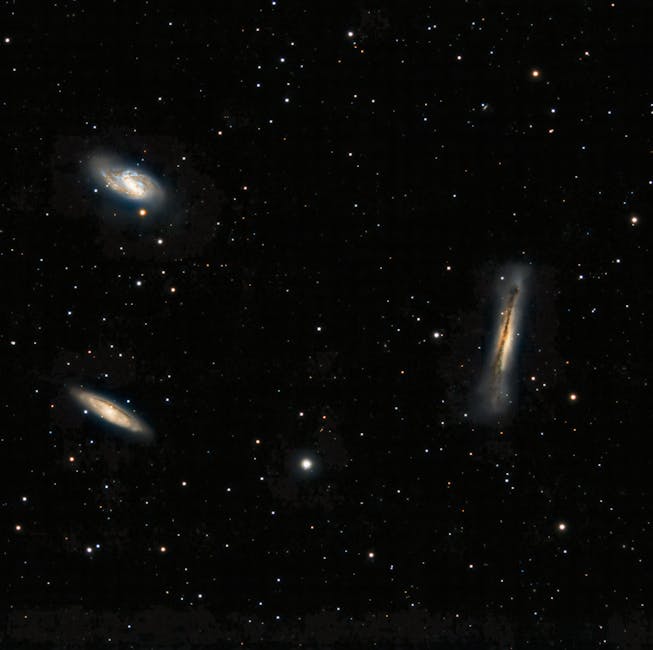
- The Dark Energy Spectroscopic Instrument (DESI) has created the largest ever map of the universe, capturing 47 million galaxies and quasars.
- The map’s precision and scale will revolutionize our understanding of the universe, particularly in regards to dark energy.
- The DESI survey will help scientists study the distribution of galaxies and quasars, gaining insights into the universe’s evolution and structure.
- The new data will enable researchers to probe the mysteries of dark energy like never before.
- The DESI survey will serve as a vital tool for researchers, providing unprecedented glimpses into the vast expanse of space and time.
The universe has never been mapped in such exquisite detail as it has now, thanks to the Dark Energy Spectroscopic Instrument (DESI), which has captured a staggering 47 million galaxies and quasars in its quest to understand the cosmos. This monumental achievement marks the largest ever map of the universe, providing an unprecedented glimpse into the vast expanse of space and time. The map’s sheer scale and precision will undoubtedly revolutionize our understanding of the universe, particularly in regards to the enigmatic dark energy that is thought to drive its accelerating expansion. With this new data, scientists will be able to probe the mysteries of dark energy like never before, potentially unveiling new insights into the fundamental nature of the universe.
Unveiling the Cosmic Landscape

The completion of the DESI survey is a major milestone in the field of astrophysics, and its significance cannot be overstated. By creating the most detailed map of the universe to date, researchers will be able to study the distribution of galaxies and quasars across vast distances, gaining a deeper understanding of the universe’s evolution and structure. This, in turn, will help scientists address some of the most pressing questions in modern astrophysics, including the nature of dark energy and its role in shaping the cosmos. As the most accurate and comprehensive map of the universe, the DESI survey will serve as a vital tool for researchers, enabling them to refine their theories and models of the universe’s behavior.
A New Era of Cosmic Exploration

The DESI instrument, mounted on the Nicholas U. Mayall 4-meter Telescope at Kitt Peak National Observatory, has been conducting its survey since 2019, using a novel approach to collect spectra from millions of galaxies and quasars. By analyzing these spectra, researchers can infer the distance and velocity of each object, effectively creating a 3D map of the universe. The survey’s key findings include the detection of millions of galaxies, each containing billions of stars, as well as thousands of quasars, which are incredibly luminous objects thought to be powered by supermassive black holes. The sheer scale and complexity of the data collected by DESI will require sophisticated analysis techniques, but the potential rewards are well worth the effort.
Deciphering the Mysteries of Dark Energy
One of the primary motivations behind the DESI survey is to better understand dark energy, a mysterious component that is thought to drive the accelerating expansion of the universe. By studying the distribution of galaxies and quasars, researchers hope to gain insights into the properties of dark energy and its role in shaping the cosmos. The DESI map will provide an unprecedented level of detail, allowing scientists to probe the universe’s structure and evolution with unparalleled precision. According to experts, the new data will be instrumental in refining our understanding of dark energy, potentially revealing new clues about its nature and behavior. As the analysis of the DESI data continues, researchers are eagerly anticipating the potential breakthroughs that may arise from this groundbreaking survey.
Implications for Our Understanding of the Universe
The completion of the DESI survey has significant implications for our understanding of the universe, particularly in regards to the interplay between dark energy and the formation of structure within the cosmos. By providing a detailed map of the universe’s galaxy distribution, the DESI data will enable researchers to study the relationships between galaxies, galaxy clusters, and superclusters, shedding light on the complex processes that have shaped the universe over billions of years. Furthermore, the survey’s findings will have a profound impact on our understanding of the universe’s fundamental parameters, including its age, size, and composition. As scientists continue to analyze the DESI data, they will be able to refine their models of the universe, potentially leading to a deeper understanding of the cosmos and its many mysteries.
Expert Perspectives
According to Dr. Maria Elena Monzani, a cosmologist at the SLAC National Accelerator Laboratory, the DESI survey represents a major breakthrough in the field of astrophysics, providing an unprecedented level of detail and precision. “The DESI map will be instrumental in helping us understand the properties of dark energy and its role in shaping the universe,” she notes. In contrast, Dr. David Schlegel, a cosmologist at the Lawrence Berkeley National Laboratory, cautions that the analysis of the DESI data will require careful consideration of potential systematic errors and biases. “While the DESI survey is a remarkable achievement, we must be careful not to overinterpret the results, ensuring that our conclusions are grounded in robust and reliable data,” he advises.
As researchers continue to analyze the DESI data, they will be watching with great interest to see how the new findings will impact our understanding of the universe. One of the key questions on everyone’s mind is whether the DESI survey will ultimately reveal new insights into the nature of dark energy, potentially resolving the long-standing mystery of its origin and behavior. As the scientific community eagerly awaits the results of the ongoing analysis, one thing is certain – the DESI survey has marked the beginning of a new era in cosmic exploration, one that promises to unveil the secrets of the universe like never before.