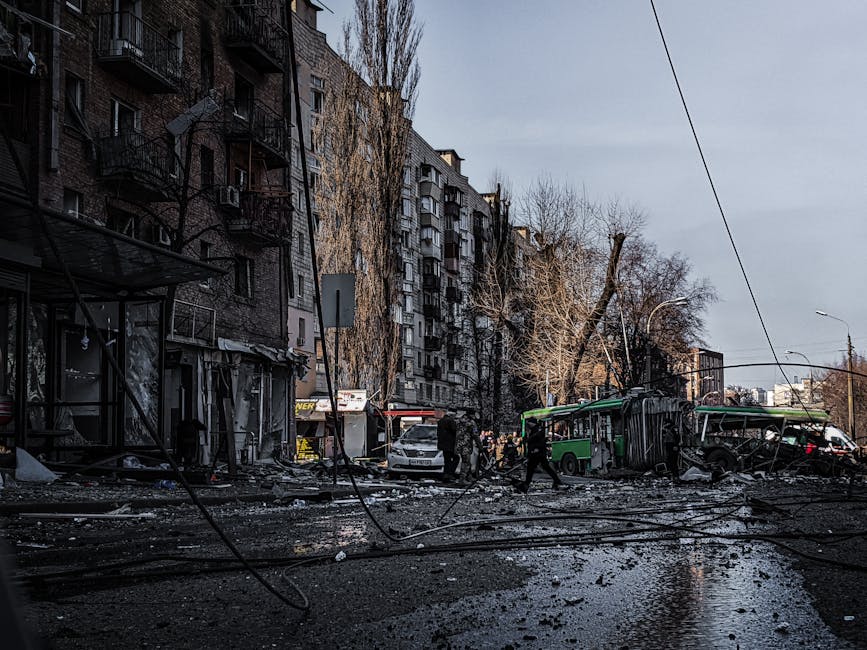
- Russian strikes on Ukrainian cities have increased in frequency and intensity, causing significant destruction and casualties.
- The conflict in Ukraine has resulted in a devastating humanitarian crisis, with millions displaced and in need of assistance.
- The economic consequences of the conflict are being felt globally, with trade disruptions and sanctions taking a toll.
- The situation in Ukraine is a pressing global issue that requires immediate attention and action from the international community.
- Increased diplomatic efforts are needed to bring an end to the violence and find a peaceful resolution to the conflict.
As the conflict in Ukraine continues to escalate, a striking fact has emerged: the frequency and intensity of Russian strikes on major Ukrainian cities have increased significantly, with Kyiv’s Podilsky district being the latest to bear the brunt of these attacks. On a single day, dozens of people were injured, and numerous homes were damaged or destroyed, highlighting the devastating impact of this ongoing war on civilians. The sheer scale of destruction and the rising number of casualties underscore the urgent need for a peaceful resolution to the conflict. The international community is watching with bated breath as the situation unfolds, with many calling for increased diplomatic efforts to bring an end to the violence.
Rising Tensions and Escalating Violence

The recent wave of attacks across Ukraine, including the strike on Kyiv’s Podilsky district, is a stark reminder of why this conflict matters now more than ever. The world is witnessing a dangerous escalation of violence, with both sides suffering heavy losses. The humanitarian crisis is deepening, with millions of Ukrainians displaced and in dire need of assistance. The economic consequences are also being felt, not just in Ukraine but globally, as trade disruptions and sanctions take their toll. As the international community grapples with how to respond, one thing is clear: the situation in Ukraine is a pressing global issue that requires immediate attention and action.
Details of the Attack

Key details are emerging about the attack on Kyiv’s Podilsky district, which was part of a broader campaign of strikes against Ukrainian cities. The attack, which involved multiple rockets, resulted in significant damage to residential buildings and infrastructure. Emergency services were quickly deployed to the scene, with medical personnel working to treat the injured and rescue teams searching for anyone trapped under the rubble. The Ukrainian government has condemned the attack as a blatant disregard for human life and international law, and there are growing calls for those responsible to be held accountable. As investigations into the attack continue, the focus remains on providing aid to those affected and finding a path towards peace.
Analyzing the Conflict
An analysis of the causes and effects of the conflict in Ukraine reveals a complex web of historical, political, and economic factors. Experts point to the role of nationalism, territorial disputes, and geopolitical rivalries in fueling the violence. The impact on civilians has been devastating, with widespread displacement, injury, and loss of life. Data on the conflict shows a clear escalation in recent months, with an increase in attacks on urban areas and civilian infrastructure. From an expert angle, there is a growing consensus that a diplomatic solution is the only viable path forward, requiring engagement from all parties involved, including international mediators. The challenge lies in finding common ground and building trust in a process that has been marked by distrust and hostility.
Implications and Consequences
The implications of the ongoing conflict in Ukraine are far-reaching, affecting not just the immediate victims of the violence but also the broader population and the global community. The humanitarian crisis is perhaps the most pressing concern, with millions in need of food, shelter, and medical care. The economic implications are also significant, with trade and investment in the region severely impacted. Furthermore, the conflict has geopolitical implications, straining relations between major world powers and raising concerns about regional and global stability. As the situation continues to unfold, it is clear that the consequences of inaction would be severe, underscoring the need for a concerted international effort to bring peace and stability to the region.
Expert Perspectives
Experts offer contrasting viewpoints on the best way forward, with some advocating for increased military support to Ukraine and others pushing for a negotiated peace. Some analysts believe that diplomatic efforts should focus on finding a compromise that addresses the security concerns of all parties involved, while others argue that any negotiation with the current leadership is futile. Despite these differences, there is a shared recognition of the urgent need for action to prevent further escalation and to address the humanitarian crisis. Experts also highlight the importance of understanding the historical and cultural context of the conflict, as well as the need for a sustainable and inclusive peace process that involves all stakeholders.
Looking forward, the question on everyone’s mind is what the future holds for Ukraine and the region. Will diplomatic efforts succeed in bringing an end to the violence, or will the conflict continue to escalate? The international community is watching closely, aware that the consequences of failure would be catastrophic. As the situation remains fluid, one thing is certain: the need for a peaceful resolution has never been more pressing. The world waits with bated breath for the next developments, hoping that a path towards peace and stability can be found soon.