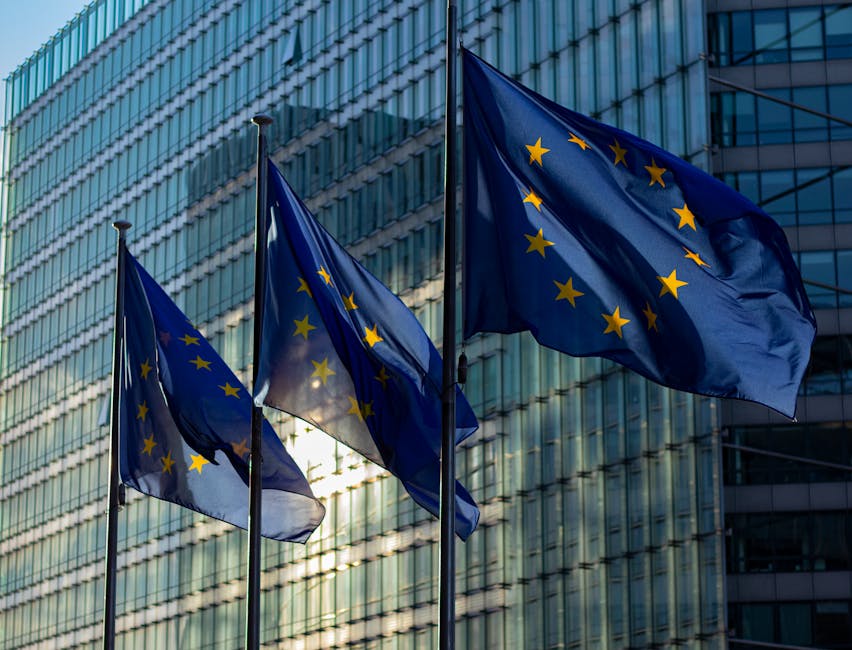
- A petition in the European Parliament aims to review the EU-Israel Association Agreement due to human rights concerns and recent tensions.
- The agreement has been a cornerstone of economic and political cooperation between the EU and Israel since 1995.
- Public sentiment and political will are driving the reevaluation of the relationship, with over 1 million signatures collected so far.
- The review could lead to changes in trade, aid, and diplomatic ties, potentially altering the balance of power in the Middle East.
- Criticism of Israel’s policies in the occupied Palestinian territories, including settlement expansion and violence in Gaza, has sparked the petition.
In a move that could have significant geopolitical ramifications, a petition in the European Parliament is on the verge of forcing a formal review of the EU-Israel Association Agreement. The agreement, signed in 1995, has been a cornerstone of economic and political cooperation between the two parties, but recent tensions and human rights concerns have sparked a reevaluation. The petition, which has already garnered over 1 million signatures, is a clear indication of public sentiment and political will to reassess the relationship. If successful, the review could lead to changes in trade, aid, and diplomatic ties, potentially altering the balance of power in the Middle East and beyond.
Background: A Long-Standing Partnership Under Scrutiny

The EU-Israel Association Agreement has long been a symbol of mutual interests and shared values. However, the relationship has been strained by Israel’s policies in the occupied Palestinian territories, particularly the ongoing conflict and the expansion of settlements. Recent events, such as the escalation of violence in Gaza and the continued blockade, have further fueled criticism from EU member states and the broader public. The petition, initiated by a coalition of European NGOs and supported by several prominent MEPs, argues that the agreement should be revised to address these issues and ensure that EU funds and trade benefits do not contribute to human rights violations.
Key Details: The Petition and Its Supporters

The petition, titled “Reconsider the EU-Israel Association Agreement,” has been circulating in the European Parliament since early 2023. It calls for a comprehensive review of the agreement, which includes provisions for free trade, scientific cooperation, and cultural exchanges. The main supporters of the petition include human rights organizations, peace activists, and politicians from various EU countries who believe that the current terms of the agreement are no longer tenable. The petition’s success in reaching the 1 million signature threshold has now triggered a formal process that could see the agreement brought before the European Commission for a detailed assessment.
Analysis: Causes and Consequences
The push for a review of the EU-Israel Association Agreement is driven by a combination of factors, including increased public awareness of human rights issues, the influence of pro-Palestinian advocacy groups, and the broader geopolitical shifts in the region. Data from recent polls and surveys indicate a growing dissatisfaction among EU citizens with Israel’s actions. Moreover, experts highlight the potential economic and diplomatic consequences of a revised agreement. For instance, changes in trade terms could impact Israeli industries heavily reliant on EU markets, while a reduction in aid and cooperation could strain bilateral relations. The European Commission’s response will be crucial in determining the future of this alliance.
Implications: A New Chapter in EU-Israel Relations
If the EU decides to revise or suspend the Association Agreement, the implications could be far-reaching. Israel could face economic challenges, as the EU is one of its largest trading partners. Additionally, a shift in EU policy could influence other international actors, potentially leading to a cascade of diplomatic actions. For the Palestinian territories, a revised agreement could bring increased pressure on Israel to address human rights concerns and could open new avenues for support and recognition. The outcome of this review will be closely watched by both sides and could set a new precedent in the region’s political landscape.
Expert Perspectives
While some experts argue that a review of the agreement is necessary to uphold EU values and promote peace, others caution that such a move could backfire. Dr. Sarah Thompson, a Middle East analyst at the European Council on Foreign Relations, believes that “a suspension of the agreement could isolate Israel and reduce the EU’s leverage in the peace process.” Conversely, Professor Michael Cohen of Tel Aviv University suggests that “the EU has a moral obligation to ensure that its policies do not inadvertently support human rights abuses, and a review is a step in the right direction.”
The next few months will be critical as the European Commission deliberates on the petition and decides on the next steps. The outcome will not only affect EU-Israel relations but could also influence the broader dynamics of the Middle East conflict. What remains to be seen is whether this review will lead to a more balanced and just relationship or further complicate an already volatile situation.