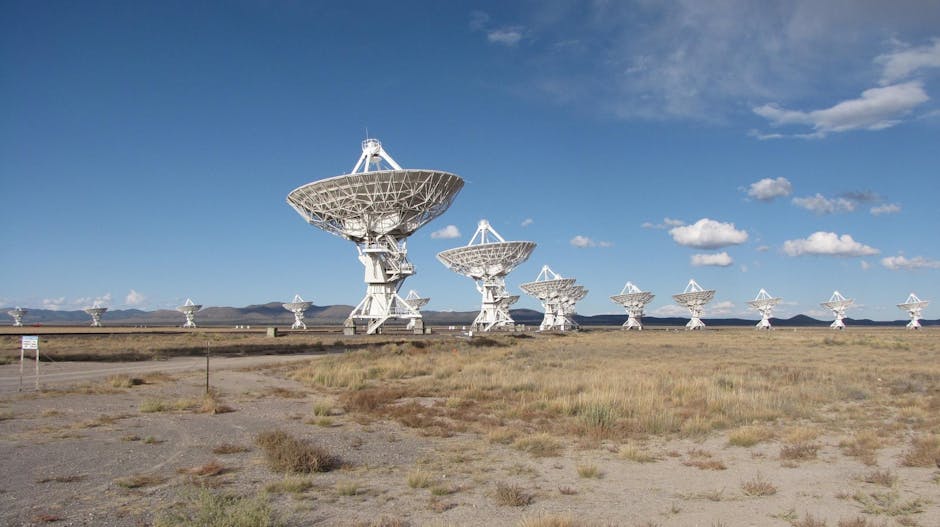
- Radio waves have revolutionized astronomy with their ability to travel vast distances and penetrate deep into space.
- The unique properties of radio waves allow them to carry information from distant galaxies and stars without distortion.
- Radio waves have played a crucial role in significant discoveries in modern astronomy, including dark matter and dark energy detection.
- Radio astronomy has a rich history of pioneering scientists and groundbreaking discoveries.
- The study of radio waves provides a window into the universe’s past, allowing for unprecedented detail in our understanding of the cosmos.
The universe is full of mysteries waiting to be unraveled, and one of the most powerful tools in our quest for understanding is the humble radio wave. With the ability to travel vast distances and penetrate deep into space, radio waves have revolutionized our understanding of the cosmos, from the formation of stars and galaxies to the search for extraterrestrial life. In her new book, Radio Universe, Emma Chapman takes readers on a mind-expanding journey through the history and science of radio astronomy, revealing the hidden wonders of the universe and the scientists who are pushing the boundaries of human knowledge.
The Power of Radio Waves

So, why are radio waves so important in our understanding of the universe? The answer lies in their unique properties, which allow them to travel long distances without being absorbed or distorted by the interstellar medium. This means that radio waves can carry information from distant galaxies and stars, providing a window into the past and allowing us to study the universe in unprecedented detail. From the detection of dark matter and dark energy to the search for gravitational waves, radio waves have played a crucial role in some of the most significant discoveries in modern astronomy.
A History of Radio Astronomy

The story of radio astronomy is a fascinating one, filled with pioneering scientists and groundbreaking discoveries. From the early experiments of Karl Jansky and Grote Reber to the modern-day telescopes that scan the skies for signs of life, radio astronomy has come a long way in a relatively short period of time. Chapman’s book takes readers on a journey through this history, highlighting the key milestones and discoveries that have shaped our understanding of the universe. With its engaging narrative and insightful analysis, Radio Universe is a must-read for anyone interested in the history and science of radio astronomy.
Searching for Alien Civilisations
One of the most intriguing areas of research in radio astronomy is the search for extraterrestrial life. With the discovery of exoplanets and the detection of biosignatures, the possibility of finding life beyond Earth has never been more exciting. Chapman’s book explores the latest developments in this field, from the SETI Institute’s efforts to detect radio signals from nearby stars to the forthcoming Square Kilometre Array, which will be capable of detecting faint signals from distant galaxies. With its in-depth analysis and expert insights, Radio Universe provides a comprehensive overview of the search for alien civilisations and the role that radio waves are playing in this quest.
Implications and Applications
The implications of radio astronomy are far-reaching, with applications in fields ranging from astrophysics and cosmology to engineering and technology. From the development of new technologies and instruments to the inspiration of future generations of scientists and engineers, the impact of radio astronomy will be felt for decades to come. As Chapman’s book demonstrates, the study of radio waves is not just about understanding the universe – it’s also about driving innovation and advancing human knowledge.
Expert Perspectives
So, what do the experts think about the future of radio astronomy and the search for alien civilisations? According to Chapman, the next decade will be crucial in determining the course of this research, with new telescopes and technologies coming online that will allow us to study the universe in unprecedented detail. With its expert insights and authoritative analysis, Radio Universe provides a unique perspective on the future of radio astronomy and the role that it will play in our understanding of the cosmos.
As we look to the future, one question remains: what will we discover next? Will we find evidence of alien life, or will we uncover new secrets about the universe that challenge our current understanding? With Radio Universe, Chapman provides a compelling and thought-provoking exploration of the possibilities, inviting readers to join her on a journey through the wonders of the cosmos and the power of radio waves to reveal its secrets.