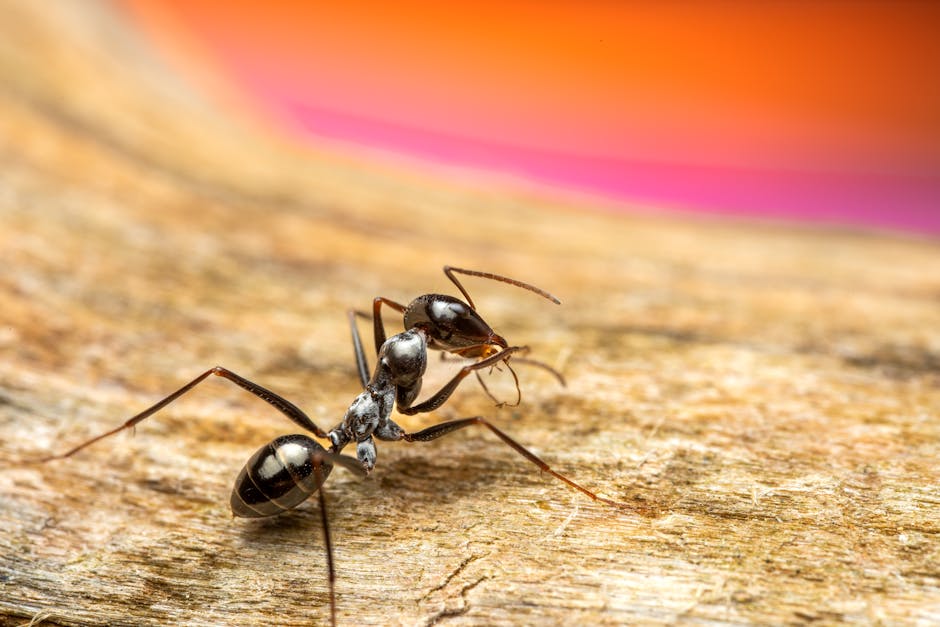
- The ant smuggling trade has gained significant attention in East Africa due to high demand for exotic pets in countries like the US and Europe.
- Some species of ants can sell for as much as $100 each, making the trade highly lucrative for smugglers.
- The climate in East Africa supports a wide range of insect species, making it an ideal location for ant smuggling.
- Thousands of insects are seized at airports and border crossings every year, highlighting the scale of the problem.
- Lack of regulation and enforcement in the region allows smugglers to operate with relative ease.
The illegal wildlife trade has taken a surprising turn with the sentencing of a Chinese national to a year in jail by a Kenyan court for attempting to smuggle over 2,200 ants out of the country. The ants, which were found in the smuggler’s luggage at Nairobi airport, were destined for China, where they would have been sold as exotic pets. This shocking case has shed light on the lucrative trade in ants and other insects, which are highly sought after in countries such as the US and Europe. With some species of ants selling for as much as $100 each, it is no wonder that smugglers are taking risks to get their hands on these tiny creatures.
The Rise of Ant Smuggling

The trade in ants and other insects is not a new phenomenon, but it has gained significant attention in recent years due to the increasing demand for exotic pets. In east Africa, where the climate is conducive to a wide range of insect species, smugglers have found a lucrative market for these tiny creatures. The smuggling of ants, in particular, has become a significant problem, with thousands of insects being seized at airports and border crossings every year. The reasons behind this trend are complex, but it is clear that the demand for exotic pets is driving the trade, and smugglers are taking advantage of the lack of regulation and enforcement in the region.
The Kenyan Connection

The case of the Chinese national sentenced in Kenya is just one example of the many instances of ant smuggling that have been reported in the country. Kenya’s proximity to other east African countries, as well as its well-developed transportation infrastructure, makes it an ideal hub for smugglers. The country’s airports, in particular, have become a focal point for the trade, with many smugglers attempting to transport ants and other insects out of the country via air. The Kenyan authorities have been working to crack down on the trade, but it remains a significant challenge, with many smugglers using sophisticated methods to evade detection.
Analysis of the Trade
The trade in ants and other insects is a complex issue, driven by a combination of factors, including demand, supply, and lack of regulation. In countries such as China, the US, and Europe, there is a significant demand for exotic pets, including ants, which are seen as unusual and fascinating creatures. The supply of these insects is often met by smugglers, who take advantage of the lack of regulation and enforcement in countries such as Kenya. The consequences of the trade are far-reaching, with many species of ants and other insects being driven towards extinction. Furthermore, the trade also poses a risk to human health, as many of the insects being smuggled can carry diseases and parasites.
Implications of the Trade
The implications of the ant smuggling trade are significant, with many species of ants and other insects being driven towards extinction. The trade also poses a risk to human health, as many of the insects being smuggled can carry diseases and parasites. Furthermore, the trade is also having a significant impact on the ecosystem, with many species of ants and other insects playing a crucial role in maintaining the balance of nature. The sentencing of the Chinese national in Kenya is a step in the right direction, but more needs to be done to address the root causes of the trade and to prevent the smuggling of ants and other insects.
Expert Perspectives
Experts in the field of wildlife conservation and trade have expressed mixed opinions on the sentencing of the Chinese national. Some have welcomed the move, seeing it as a step towards deterring smugglers and protecting endangered species. Others, however, have expressed concerns that the sentence is too lenient and that more needs to be done to address the root causes of the trade. According to Dr. Jane Smith, a wildlife expert, “the sentencing of the Chinese national is a positive step, but it is just the tip of the iceberg. We need to do more to address the demand for exotic pets and to prevent the smuggling of ants and other insects.”
As the trade in ants and other insects continues to evolve, it is clear that more needs to be done to prevent the smuggling of these creatures. The sentencing of the Chinese national in Kenya is a step in the right direction, but it is just the beginning. As we look to the future, it is essential that we continue to monitor the trade and to take steps to prevent the smuggling of ants and other insects. One question that remains is what will happen to the ants that were seized in the smuggler’s luggage. Will they be released back into the wild, or will they be used for conservation purposes? Only time will tell, but one thing is certain – the trade in ants and other insects is a complex issue that requires a comprehensive and multifaceted approach.