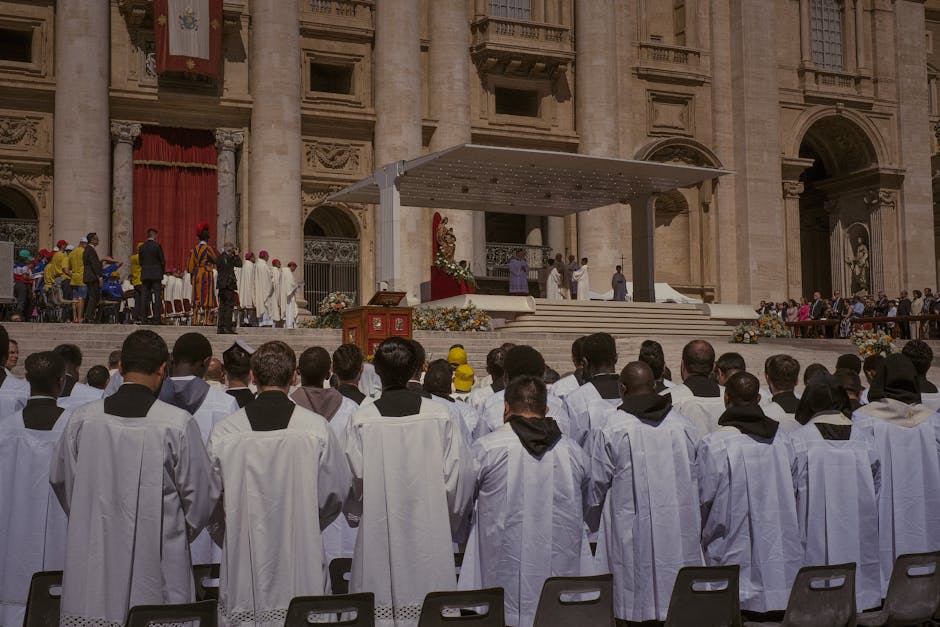
- Pope Leo’s visit to Cameroon is a calculated move to assert the Vatican’s influence in a region dominated by US power.
- The Pope’s message of peace and unity is a stark contrast to the divisive rhetoric coming from the White House.
- The Vatican has long been a vocal critic of the US war on Iran, and the Pope’s visit is seen as a way to counterbalance US military might.
- The Pope’s visit has sparked a global debate about the role of religion in international relations and the limits of presidential power.
- The fragile relationship between the US and the Vatican may worsen due to the Pope’s criticism of the US war on Iran.
The world is watching as Pope Leo visits Cameroon, bringing a message of peace and unity to a region plagued by conflict and violence. In a striking turn of events, the Pope’s visit has been met with criticism from US President Donald Trump, who has lashed out at the Pope over his calls for peace and criticism of the US war on Iran. This unexpected development has sparked a global debate about the role of religion in international relations and the limits of presidential power. With the Pope’s visit coming at a time of rising tensions between the US and the Vatican, the world is holding its breath to see how this situation will unfold. The Pope’s message of peace and unity is a stark contrast to the divisive rhetoric coming from the White House, and it remains to be seen how this will impact the already fragile relationship between the US and the Vatican.
A Delicate Balance of Power

The Pope’s visit to Cameroon is not just a symbolic gesture, but a calculated move to assert the Vatican’s influence in a region where the US has traditionally held sway. The Vatican has long been a vocal critic of the US war on Iran, and the Pope’s visit is seen as a way to counterbalance the US’s military might with a message of peace and diplomacy. The Pope’s call for peace and unity is not just a moral imperative, but a pragmatic response to the rising tensions in the region. As the US and Iran engage in a war of words, the Pope’s visit is a reminder that there are alternative solutions to conflict, and that the international community must work together to find peaceful solutions to the world’s most pressing problems. The Vatican’s move is a clever strategic play, as it seeks to assert its influence in a region where the US has traditionally held sway.
Trump’s Criticism and the Vatican’s Response

US President Donald Trump has been vocal in his criticism of the Pope, accusing him of being ‘soft on terrorism’ and ‘out of touch’ with the realities of the world. The Vatican has responded by saying that the Pope’s message of peace is not a sign of weakness, but a sign of strength and courage. The Vatican has also pointed out that the Pope’s call for peace is not just a moral imperative, but a pragmatic response to the rising tensions in the region. As the US and Iran engage in a war of words, the Pope’s visit is a reminder that there are alternative solutions to conflict, and that the international community must work together to find peaceful solutions to the world’s most pressing problems. The Vatican’s response is a clear indication that it will not be intimidated by the US President’s criticism, and that it will continue to speak out against injustice and promote peace and unity.
Analyzing the Causes and Effects
The causes of the current tensions between the US and the Vatican are complex and multifaceted. The US war on Iran has been a major point of contention, with the Vatican criticizing the US for its aggressive stance. The Pope’s visit to Cameroon is also seen as a way to counterbalance the US’s influence in the region, and to promote a more nuanced and diplomatic approach to conflict resolution. The effects of the current tensions are already being felt, with the US and the Vatican engaging in a war of words and the international community looking on with concern. As the situation continues to unfold, it remains to be seen how the US and the Vatican will resolve their differences, and what the long-term implications will be for the international community. The current tensions are a stark reminder of the challenges of international diplomacy, and the need for leaders to work together to find peaceful solutions to the world’s most pressing problems.
Implications for the International Community
The implications of the current tensions between the US and the Vatican are far-reaching and profound. The international community is watching with concern as the US and the Vatican engage in a war of words, and the potential consequences of a rift between the two are significant. The US and the Vatican have traditionally been close allies, and a rift between the two could have major implications for international relations and global security. The Pope’s visit to Cameroon is a reminder that the international community must work together to find peaceful solutions to the world’s most pressing problems, and that the US and the Vatican must put aside their differences and work towards a common goal. The international community is holding its breath as it waits to see how the situation will unfold, and what the long-term implications will be for global peace and security.
Expert Perspectives
Experts are divided on the implications of the current tensions between the US and the Vatican. Some see the Pope’s visit to Cameroon as a bold move to assert the Vatican’s influence in a region where the US has traditionally held sway. Others see the US President’s criticism of the Pope as a sign of a deeper rift between the two, and a potential threat to global peace and security. As the situation continues to unfold, it remains to be seen how the US and the Vatican will resolve their differences, and what the long-term implications will be for the international community. The expert perspectives are a reminder that the situation is complex and multifaceted, and that there are no easy solutions to the challenges of international diplomacy.
As the world watches the situation unfold, one thing is clear: the Pope’s visit to Cameroon has sparked a global debate about the role of religion in international relations and the limits of presidential power. The question on everyone’s mind is what will happen next, and how the US and the Vatican will resolve their differences. Will the Pope’s message of peace and unity be enough to bring the two sides together, or will the US President’s criticism of the Pope be the start of a deeper rift between the two? Only time will tell, but one thing is certain: the world will be watching with bated breath as the situation continues to unfold.