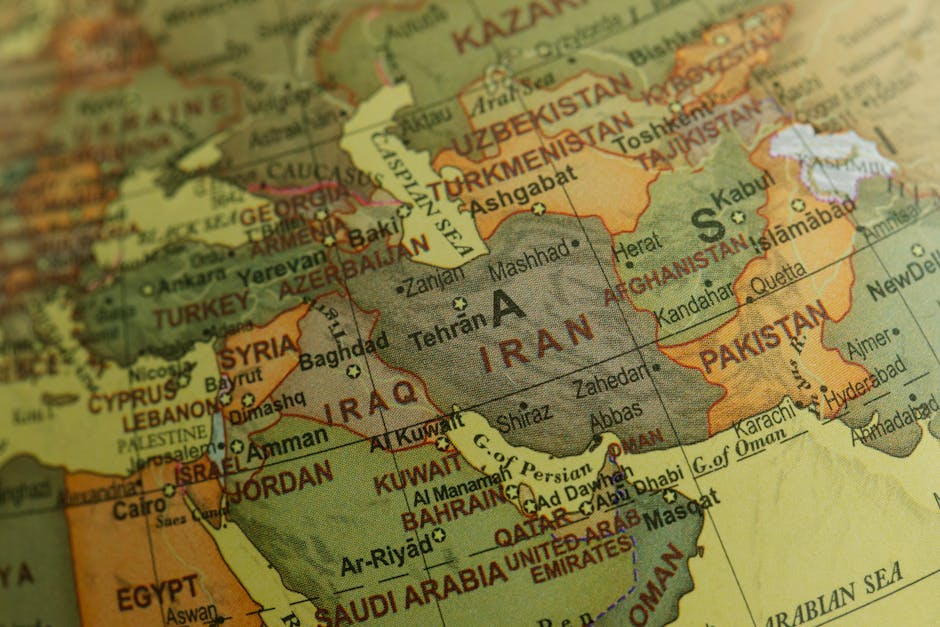
A striking fact has emerged in the midst of escalating U.S.-Iran tensions: Pakistani mediators have arrived in Tehran in a bid to keep peace talks alive. This development comes as the U.S. Navy has effectively locked down trade to Iranian ports, prompting Iran to respond by threatening critical shipping routes across the region. The move by Pakistan, a key player in regional diplomacy, underscores the gravity of the situation and the urgent need for a peaceful resolution. With the U.S. and Iran engaging in a war of words, the international community is holding its breath, hoping that diplomacy will prevail. The Pakistani mediators’ arrival in Tehran is seen as a positive step, but the road to peace is long and fraught with challenges.
The Regional Context

The current tensions between the U.S. and Iran are not new, but the recent escalation has brought the region to the brink of conflict. The U.S. Navy’s decision to lock down trade to Iranian ports has been seen as a provocative move, one that has drawn sharp criticism from Tehran. Iran, in turn, has threatened to disrupt critical shipping routes, including the Strait of Hormuz, a vital waterway through which much of the world’s oil passes. The situation is complex, with multiple players and interests at stake. The Pakistani mediators’ arrival in Tehran is a testament to the region’s desire for peace and stability. As the situation continues to unfold, it is clear that the coming days and weeks will be crucial in determining the trajectory of U.S.-Iran relations.
Key Players and Interests

The U.S. and Iran are the main protagonists in this drama, but other players are also involved. The U.S. Navy’s lockdown of Iranian ports has been supported by some regional allies, while others have urged caution. Iran, on the other hand, has received backing from some of its regional partners, including Syria and Iraq. The Pakistani mediators’ role is to navigate this complex web of interests and find a way forward that satisfies all parties. The U.S. has demanded that Iran cease its nuclear program and withdraw its support for militant groups in the region. Iran, meanwhile, has called for an end to U.S. sanctions and a recognition of its right to develop its nuclear program for peaceful purposes. As the talks stall, the risk of conflict grows, and the region holds its breath.
Analysis and Implications
Analysts say that the current situation is fraught with risk, and the consequences of conflict would be severe. The region is already unstable, with multiple conflicts raging in countries such as Syria, Yemen, and Libya. A war between the U.S. and Iran would have far-reaching implications, including the disruption of global oil supplies and the potential for a wider regional conflict. The economic costs would also be significant, with the potential for a global recession. The Pakistani mediators’ efforts are focused on finding a peaceful resolution, one that addresses the concerns of all parties. This will require careful diplomacy and a willingness to compromise. As the situation unfolds, it is clear that the coming days and weeks will be crucial in determining the trajectory of U.S.-Iran relations.
Regional Consequences
The consequences of conflict between the U.S. and Iran would be felt across the region. The disruption of shipping routes would have a significant impact on global trade, while the potential for a wider regional conflict would draw in other players. The region is already unstable, with multiple conflicts raging in countries such as Syria, Yemen, and Libya. A war between the U.S. and Iran would only add to the instability, creating a perfect storm of conflict and chaos. The Pakistani mediators’ efforts are focused on preventing this scenario, one that would have devastating consequences for the region and the world. As the situation unfolds, it is clear that the coming days and weeks will be crucial in determining the trajectory of U.S.-Iran relations.
Expert Perspectives
Experts are divided on the prospects for peace, with some saying that the Pakistani mediators’ efforts are a positive step, while others are more skeptical. Some analysts believe that the U.S. and Iran are too far apart, and that a peaceful resolution is unlikely. Others argue that the Pakistani mediators’ arrival in Tehran is a sign that the region is committed to finding a peaceful solution. As the situation unfolds, it is clear that the coming days and weeks will be crucial in determining the trajectory of U.S.-Iran relations. The international community is watching with bated breath, hoping that diplomacy will prevail and that the region will avoid the devastating consequences of conflict.
Looking ahead, the coming days and weeks will be crucial in determining the trajectory of U.S.-Iran relations. The Pakistani mediators’ efforts are focused on finding a peaceful resolution, one that addresses the concerns of all parties. This will require careful diplomacy and a willingness to compromise. As the situation unfolds, it is clear that the region is holding its breath, hoping that diplomacy will prevail and that the devastating consequences of conflict can be avoided. The question on everyone’s mind is: can the Pakistani mediators succeed in their bid to keep U.S.-Iran peace talks alive, or will the region be plunged into chaos and conflict?