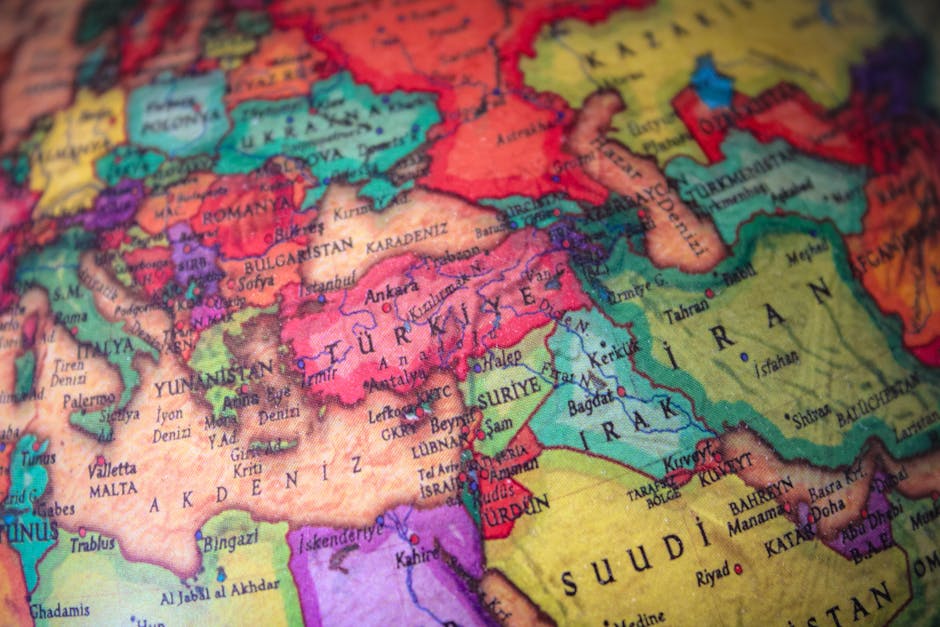
- Israeli and Lebanese officials met in Washington for direct talks, marking a significant shift in their 70-year relationship.
- The talks, facilitated by the US, aimed to address longstanding issues, including border disputes and maritime claims.
- The meeting comes after decades of conflict, political instability, and regional tensions between the two nations.
- Understanding the historical context of the Lebanon-Israel relationship is crucial for grasping the significance of these recent talks.
- The recent meeting represents a new era of diplomacy between Lebanon and Israel, with implications for regional stability.
The fact that Israeli and Lebanese officials met in Washington this week for direct talks is a striking development, given that the two nations have technically been at war since 1948. This meeting marks a significant shift in the relationship between the two countries, which have been embroiled in conflict for over seven decades. The talks, facilitated by the United States, aimed to address longstanding issues, including border disputes and maritime claims. As the world watches this new era of diplomacy unfold, it is essential to understand the complex and often tumultuous history between Lebanon and Israel.
Historical Context: A Legacy of Conflict

The Lebanon-Israel relationship has been shaped by decades of conflict, political instability, and regional tensions. The 1948 Arab-Israeli War marked the beginning of a protracted state of war between the two nations, with Lebanon serving as a key battleground. Since then, the country has been embroiled in various conflicts, including the 1982 Israeli invasion and the 2006 Lebanon War. The complex web of alliances, sectarian divisions, and foreign interventions has contributed to the persistence of this conflict. As the region continues to evolve, understanding the historical context of the Lebanon-Israel relationship is crucial for grasping the significance of these recent talks.
Key Developments: The Road to Washington

The recent meeting between Israeli and Lebanese officials in Washington was the culmination of months of diplomatic efforts. The talks were facilitated by the United States, which has been actively engaged in promoting a resolution to the conflict. The meeting focused on addressing key issues, including the demarcation of the maritime border between the two countries and the exploitation of natural resources in the disputed area. The Lebanese delegation, led by Deputy Speaker of Parliament Elias Bou Saab, met with Israeli Energy Minister Yuval Steinitz, marking a rare instance of direct communication between the two nations. As the details of the talks emerge, it is clear that both sides are seeking to find common ground and explore opportunities for cooperation.
Analysis: Regional Implications and Challenges
The meeting between Israeli and Lebanese officials has significant implications for the region, with potential consequences for the broader Middle East conflict. The talks may pave the way for increased cooperation on issues such as counter-terrorism, border security, and economic development. However, the path forward is fraught with challenges, including the influence of external actors, such as Iran and Syria, which have historically played a significant role in shaping the conflict. Furthermore, domestic politics in both countries may pose obstacles to progress, with hardline factions opposed to any form of compromise or cooperation. As analysts and experts weigh in on the significance of these talks, it is clear that the road to a lasting resolution will be long and arduous.
Implications: A New Era of Diplomacy?
The recent talks between Israeli and Lebanese officials have sparked hope for a new era of diplomacy in the region. If successful, these efforts could have far-reaching implications for the people of Lebanon and Israel, who have lived with the consequences of conflict for generations. A resolution to the maritime border dispute, for example, could unlock significant economic benefits, including access to natural resources and increased trade. Moreover, a reduction in tensions between the two nations could contribute to a more stable regional environment, with potential benefits for the broader Middle East. As the international community watches these developments with interest, it is essential to recognize the challenges that lie ahead and the need for sustained diplomatic efforts to support this nascent process.
Expert Perspectives
Experts and analysts offer contrasting viewpoints on the significance of the recent talks between Israeli and Lebanese officials. Some see the meeting as a crucial step towards a lasting resolution, while others are more skeptical, citing the many obstacles that remain. According to Dr. Michael Herzog, a senior fellow at the Washington Institute for Near East Policy, “the talks represent a significant opportunity for progress, but it is essential to manage expectations and recognize the complexity of the issues at hand.” In contrast, Dr. Tamara Cofman Wittes, a senior fellow at the Brookings Institution, notes that “the meeting is a positive development, but it is only the first step in a long and difficult process.” As experts continue to weigh in on the implications of these talks, it is clear that a nuanced understanding of the complex factors at play is essential for navigating this critical moment in the Lebanon-Israel relationship.
As the world looks to the future, one question remains: what comes next? Will these talks mark the beginning of a new era of diplomacy between Lebanon and Israel, or will they ultimately prove to be a false start? As the international community continues to engage with this critical issue, it is essential to recognize the need for sustained efforts to support the peace process and promote a lasting resolution to the conflict. The coming months and years will be crucial in determining the trajectory of the Lebanon-Israel relationship, and the world will be watching with great interest as this story continues to unfold.