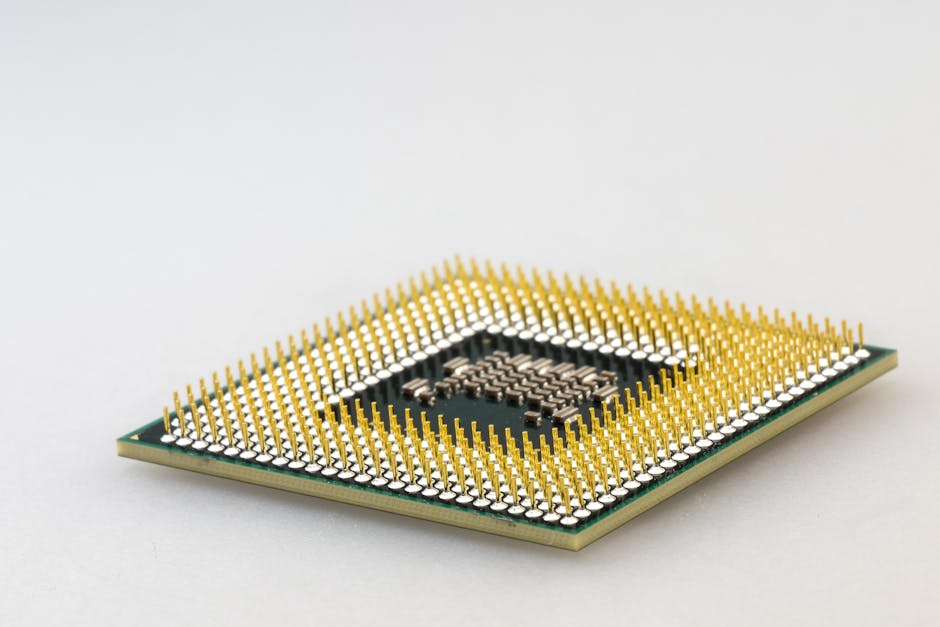
- The global semiconductor industry is projected to reach $522 billion by 2025, driven by demand for advanced chips.
- AI-powered design tools are democratizing access to chip design, allowing startups to compete with industry giants.
- Recent advancements in machine learning algorithms and computing power are automating tasks in chip design.
- AI-driven chip design enables the production of high-quality chips at a fraction of the traditional cost and time.
- Startups can now leverage AI-powered tools to level the playing field in chip development.
The global semiconductor industry is projected to reach $522 billion by 2025, with the demand for advanced chips driving innovation in fields like artificial intelligence, 5G, and the Internet of Things. However, the process of designing and manufacturing these complex components has traditionally been the exclusive domain of a select few companies, with the likes of Intel, Samsung, and Taiwan Semiconductor Manufacturing Company dominating the market. But with the advent of AI-powered design tools, this landscape is undergoing a significant shift, as startups and smaller players are now able to compete with the industry giants, democratizing access to one of tech’s most valuable resources.
The Rise of AI-Driven Chip Design

The use of AI in chip design is not an entirely new concept, but recent advancements in machine learning algorithms and computing power have made it possible to automate many of the tasks involved in the process. This includes everything from designing the initial architecture of the chip to optimizing its performance and power consumption. As a result, companies are now able to produce high-quality chips at a fraction of the cost and time it would have taken using traditional methods. This is particularly significant for startups, which often lack the resources and expertise to develop complex chips from scratch, but can now leverage AI-powered tools to level the playing field.
Key Players and Innovations

Several startups are at the forefront of this revolution, including companies like SiFive and Flex Logix, which are using AI to develop customized chips for a range of applications, from edge computing to autonomous vehicles. These companies are able to design and manufacture chips that are tailored to specific use cases, rather than relying on off-the-shelf components. This approach not only improves performance and efficiency but also reduces power consumption and cost. Furthermore, the use of AI in chip design is enabling the creation of new types of chips that were previously impossible to produce, such as those with integrated AI accelerators or specialized sensors.
Analysis and Implications
The impact of AI on the chip design process is far-reaching, with potential implications for the entire tech industry. By democratizing access to chip design, AI is enabling a new wave of innovation, as companies and researchers are now able to develop customized chips for a wide range of applications. This, in turn, is driving advancements in fields like AI, robotics, and the Internet of Things, where specialized chips are required to enable complex functionalities. Additionally, the use of AI in chip design is also reducing the barriers to entry for new companies, allowing them to compete with established players and creating new opportunities for innovation and growth.
Industry-Wide Effects
The effects of AI-driven chip design will be felt across the entire tech industry, from the largest companies to the smallest startups. As the cost and time required to develop complex chips decrease, companies will be able to focus on higher-level design and innovation, rather than getting bogged down in the details of chip design. This will lead to a proliferation of new products and services, as companies are able to develop customized solutions for specific use cases. Moreover, the increased competition and innovation driven by AI will also lead to improved performance, efficiency, and cost-effectiveness, benefiting consumers and businesses alike.
Expert Perspectives
According to industry experts, the use of AI in chip design is a game-changer, enabling companies to develop complex chips at a fraction of the cost and time it would have taken using traditional methods. However, others caution that the increased reliance on AI also raises concerns about the potential for errors or biases in the design process, highlighting the need for careful testing and validation. As the industry continues to evolve, it will be important to strike a balance between the benefits of AI-driven chip design and the potential risks and challenges.
Looking ahead, the future of chip design is likely to be shaped by the continued advancement of AI and machine learning algorithms. As these technologies improve, we can expect to see even more complex and specialized chips being developed, enabling new applications and use cases that are currently unimaginable. The question on everyone’s mind is: what will be the next breakthrough in AI-driven chip design, and how will it change the tech landscape forever?