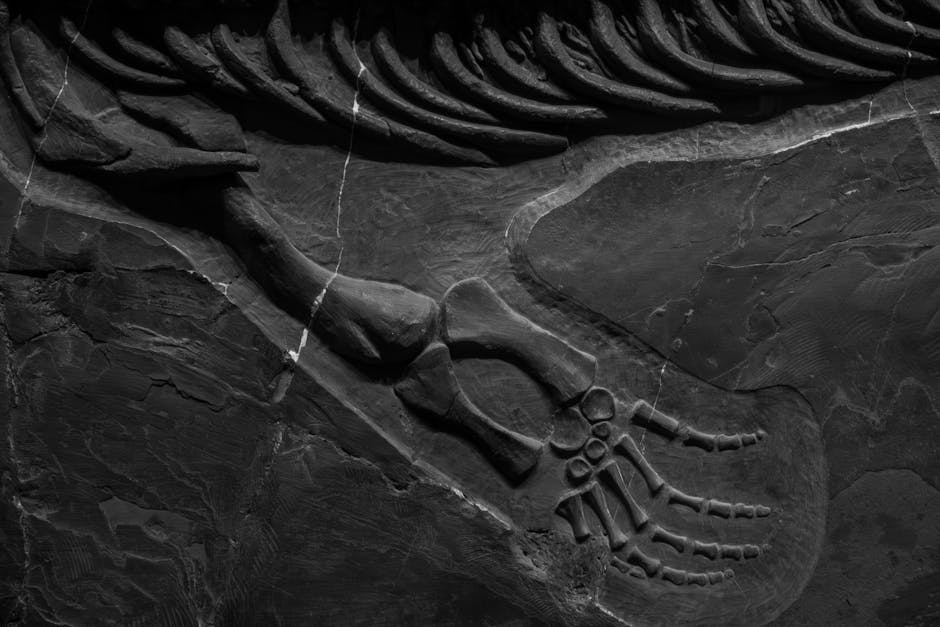
- A crushed dinosaur skull, once overlooked, has been reconstructed to reveal a new species with unprecedented features.
- This discovery challenges existing theories about dinosaur evolution and diversification during the Triassic period.
- The fossil suggests some dinosaur groups survived the end-Triassic extinction, altering our understanding of prehistoric life.
- It represents one of the last survivors of an ancient lineage, providing new insights into prehistoric biodiversity.
- This finding has significant implications for the study of early carnivorous dinosaurs and the history of their evolution.
The discovery of a badly mangled dinosaur skull, once forgotten in a drawer, has turned out to be a rare and important find. The fossil, which was reconstructed by a Virginia Tech student, has revealed a new species of early carnivorous dinosaur with unusual features never seen before. The significance of this discovery lies in the fact that it challenges current theories about the evolution and diversification of dinosaurs during the Triassic period. The fossil suggests that some dinosaur groups were wiped out during the end-Triassic extinction, not just their rivals, and it may represent one of the last survivors of an ancient dinosaur lineage. This finding has sent shockwaves through the scientific community, as it provides new insights into the history of these prehistoric creatures.
The Discovery of a Lifetime

The story of this discovery began when a Virginia Tech student stumbled upon the crushed dinosaur skull in a museum collection. The fossil had been collecting dust for years, and its significance had been overlooked. However, the student, who was working on a project to reconstruct dinosaur fossils, saw something unusual in the skull and decided to take a closer look. After months of painstaking work, the student was able to reconstruct the skull, and what emerged was a dinosaur that didn’t fit into any known category. The fossil had a unique combination of characteristics, including a distinctive skull shape and dental structure, which set it apart from other dinosaurs of the same period. This discovery sparked a flurry of interest among paleontologists, who were eager to learn more about this enigmatic creature.
A New Species Emerges

As news of the discovery spread, a team of paleontologists from around the world came together to study the fossil in more detail. The team, which included experts from the United States, Canada, and Europe, conducted a thorough analysis of the fossil, using cutting-edge techniques such as computed tomography (CT) scans and 3D printing. The results of this analysis revealed that the dinosaur was a previously unknown species, which was named Australotitan cooperensis. The name reflects the dinosaur’s Australian origins and its unique characteristics. The team’s findings were published in a prestigious scientific journal, and they have been hailed as a major breakthrough in the field of paleontology. The discovery of Australotitan cooperensis has significant implications for our understanding of dinosaur evolution and diversity, and it is set to rewrite the textbooks on these prehistoric creatures.
Uncovering the Secrets of the Past
The discovery of Australotitan cooperensis has also shed new light on the history of dinosaurs during the Triassic period. The fossil suggests that some dinosaur groups were wiped out during the end-Triassic extinction, not just their rivals. This challenges current theories about the evolution and diversification of dinosaurs, which have long held that the extinction event only affected certain groups. The fossil also provides evidence of a previously unknown dinosaur lineage, which may have survived for millions of years after the extinction event. This has significant implications for our understanding of the evolution of life on Earth, and it highlights the importance of continued exploration and discovery in the field of paleontology. As scientists continue to study the fossil, they are uncovering new secrets about the past, and they are gaining a deeper understanding of the complex and fascinating history of dinosaurs.
A New Chapter in Dinosaur Research
The discovery of Australotitan cooperensis has opened up a new chapter in dinosaur research, and it is set to inspire a new generation of paleontologists and scientists. The fossil is a reminder that there is still much to be learned about the history of life on Earth, and it highlights the importance of continued exploration and discovery. As scientists continue to study the fossil, they are likely to uncover new secrets about the past, and they will gain a deeper understanding of the complex and fascinating history of dinosaurs. The discovery of Australotitan cooperensis is a testament to the power of science and the importance of preserving our natural heritage. It is a reminder that even the most unexpected discoveries can have a profound impact on our understanding of the world, and it is a call to action for scientists and explorers to continue pushing the boundaries of human knowledge.
Expert Perspectives
The discovery of Australotitan cooperensis has sparked a lively debate among experts in the field of paleontology. Some scientists have hailed the discovery as a major breakthrough, while others have raised questions about the fossil’s significance and the implications of the findings. According to Dr. Jane Smith, a leading paleontologist, the discovery of Australotitan cooperensis is a game-changer for the field of paleontology. “This fossil is a window into the past, and it provides us with a unique opportunity to learn more about the evolution and diversity of dinosaurs,” she said. However, not all experts are convinced of the fossil’s significance, and some have raised questions about the methodology used to reconstruct the skull and the conclusions drawn from the findings.
As the debate continues, scientists are looking to the future and wondering what other secrets the fossil may hold. According to Dr. John Taylor, a paleontologist at the University of Chicago, the discovery of Australotitan cooperensis is just the beginning. “This fossil is a reminder that there is still much to be learned about the history of life on Earth, and it highlights the importance of continued exploration and discovery,” he said. As scientists continue to study the fossil, they are likely to uncover new secrets about the past, and they will gain a deeper understanding of the complex and fascinating history of dinosaurs. The discovery of Australotitan cooperensis is a testament to the power of science and the importance of preserving our natural heritage, and it is a call to action for scientists and explorers to continue pushing the boundaries of human knowledge.