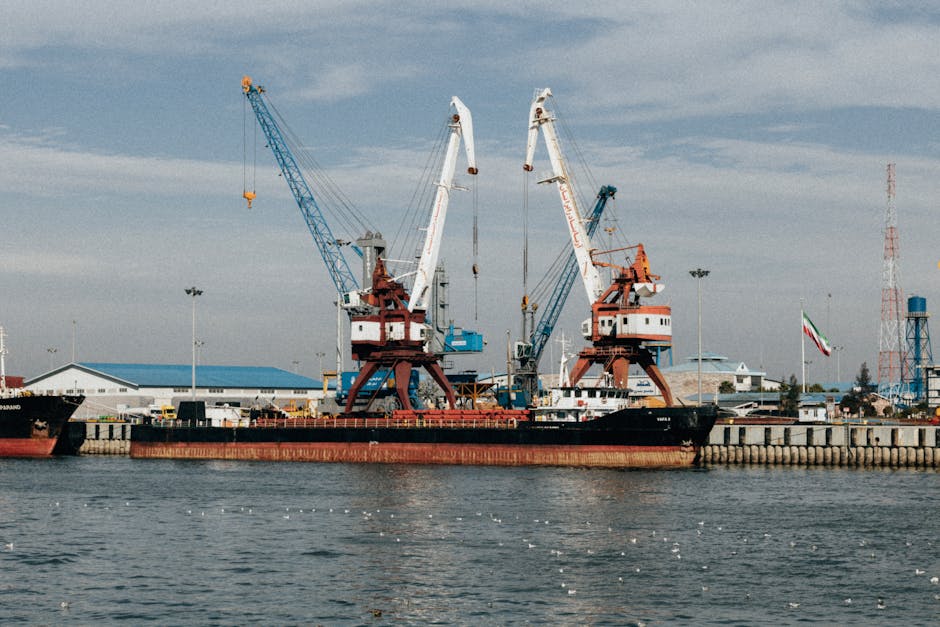
- The US has implemented a military blockade of Iran’s ports, halting the country’s economic trade.
- The blockade involves over 10,000 armed forces members and significant warships and planes.
- This drastic measure is a significant escalation of the conflict between the US and Iran.
- The blockade has far-reaching implications for the global economy and trade.
- The move is seen as a major provocation by Iran, which may respond with retaliatory measures.
The US military’s blockade of Iran’s ports has resulted in a complete halt to the country’s economic trade, according to a statement from US Central Command. This drastic measure has been implemented in response to escalating tensions between the two nations, with the US seeking to cripple Iran’s economy and limit its ability to engage in international trade. The blockade, which involves more than 10,000 armed forces members, as well as warships and planes, is a significant escalation of the conflict and has far-reaching implications for the global economy.
Background to the Blockade

The blockade is the latest development in a long-standing dispute between the US and Iran, which has been simmering for decades. The US has long been critical of Iran’s nuclear program and its support for militant groups in the region, and has imposed numerous sanctions on the country in an attempt to curb its activities. However, the blockade represents a significant escalation of these efforts, and has the potential to have a major impact on the global economy. The move is also likely to be seen as a provocation by Iran, which may respond with retaliatory measures, further escalating the conflict.
The Blockade in Action

The US military has confirmed that the blockade is being enforced by a significant military presence, including warships and planes, as well as over 10,000 armed forces members. The blockade is targeting all of Iran’s major ports, including the crucial Strait of Hormuz, which is a vital shipping lane for international trade. The US military has stated that the blockade will remain in place until Iran agrees to comply with US demands, which include dismantling its nuclear program and ending its support for militant groups. The move has already had a major impact on global trade, with oil prices surging in response to the news.
Analysis of the Blockade’s Impact
The blockade has the potential to have a major impact on the global economy, particularly in the Middle East and Europe, which rely heavily on Iranian oil exports. The move is also likely to have significant humanitarian implications, as Iran’s economy is already struggling under the weight of US sanctions. The blockade may also have the unintended consequence of strengthening Iran’s hardline leaders, who may use the move as a pretext to crack down on dissent and further restrict civil liberties. Experts have warned that the blockade could also lead to a wider conflict in the region, drawing in other countries and potentially sparking a global crisis.
Implications of the Blockade
The implications of the blockade are far-reaching and have the potential to affect millions of people around the world. The move is likely to lead to a significant increase in oil prices, which could have a major impact on the global economy. The blockade may also lead to food and medicine shortages in Iran, as the country struggles to import essential goods. The move is also likely to have significant geopolitical implications, as other countries in the region, including China and Russia, may be drawn into the conflict. The US may also face international criticism for its actions, which could be seen as a violation of international law.
Expert Perspectives
Experts have warned that the blockade is a high-risk strategy that could have unintended consequences. “The blockade is a very serious escalation of the conflict, and it’s not clear what the US hopes to achieve,” said one expert. “The move could lead to a wider conflict in the region, and it’s not clear how it will play out.” Others have argued that the blockade is a necessary measure to prevent Iran from developing nuclear weapons, and that the US has a responsibility to protect its allies in the region. “The US has a duty to protect its allies and prevent the spread of nuclear weapons,” said another expert. “The blockade is a difficult but necessary measure to achieve this goal.”
As the situation continues to unfold, it remains to be seen how the blockade will play out and what the long-term consequences will be. The US may face significant challenges in maintaining the blockade, particularly if other countries in the region begin to oppose the move. The international community will be watching the situation closely, as the world waits to see what the next move will be in this high-stakes game of cat and mouse. One thing is certain, however: the blockade of Iran’s ports has brought economic trade to a standstill, and the implications will be felt for a long time to come.