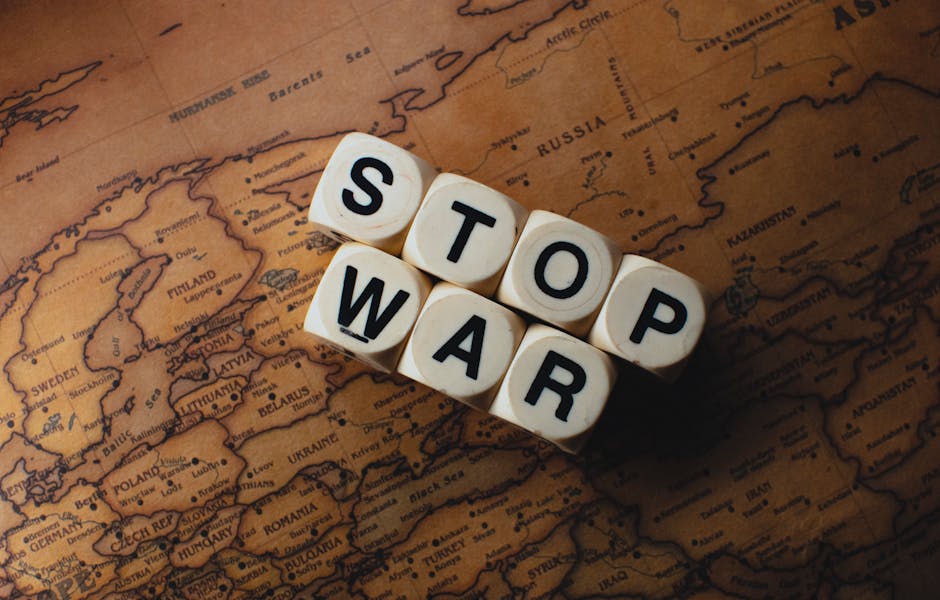
- The US-Iran conflict has entered its 47th day, with tensions escalating and the world on high alert.
- US President Donald Trump has hinted at potential second talks with Iran, offering hope for a diplomatic resolution.
- The conflict has already resulted in significant economic and human costs, with many fearing catastrophic consequences.
- The US withdrawal from the JCPOA in 2018 marked a significant turning point in the US-Iran relationship.
- The killing of Iranian military commander Qasem Soleimani has led to a major escalation of the conflict.
The US-Iran conflict has entered its 47th day, with the world watching anxiously as the two nations teeter on the brink of escalation. A striking fact is that despite the heightened tensions, US President Donald Trump has signalled a possible second round of talks with Iran in the coming days, sparking hopes of a diplomatic resolution to the crisis. The conflict, which began with the US drone strike that killed top Iranian military commander Qasem Soleimani, has already resulted in significant economic and human costs, with many fearing that a full-blown war could have catastrophic consequences for the region and the global economy. As the situation continues to unfold, one thing is clear: the world is holding its breath, waiting to see what will happen next.
Background to the Conflict

The current conflict between the US and Iran has its roots in a long and complex history of tensions between the two nations. The US withdrawal from the Joint Comprehensive Plan of Action (JCPOA), also known as the Iran nuclear deal, in 2018 marked a significant turning point in the relationship, with Iran responding by gradually increasing its uranium enrichment activities. The situation escalated further with the US imposition of stringent economic sanctions on Iran, which have had a devastating impact on the country’s economy. The killing of Soleimani in January 2020 marked a major escalation of the conflict, with Iran responding with missile strikes on US military bases in Iraq. The fact that the conflict has now entered its 47th day is a testament to the deep-seated tensions between the two nations, and the difficulty of finding a diplomatic solution.
Key Developments in the Conflict

Over the past 47 days, there have been several key developments in the conflict, each of which has contributed to the current state of tensions. The US has maintained its tough stance on Iran, with President Trump warning of severe consequences if Iran were to attack US interests. Iran, on the other hand, has continued to defy US demands, with the country’s supreme leader, Ayatollah Ali Khamenei, vowing to continue to develop the country’s missile program. The conflict has also had significant regional implications, with several countries, including Iraq and Pakistan, calling for calm and restraint. The possible second round of talks between the US and Iran, signalled by President Trump, is seen as a positive development, but it remains to be seen whether the two nations can find common ground and reach a diplomatic solution.
Analysis of the Conflict
Analysts say that the conflict between the US and Iran is driven by a complex mix of factors, including geopolitical rivalries, economic interests, and ideological differences. The US has long been concerned about Iran’s growing influence in the region, particularly in countries such as Iraq and Syria. Iran, on the other hand, sees the US as a threat to its national security and regional ambitions. The conflict has also been driven by domestic considerations, with both countries facing significant internal pressures. The US presidential election, scheduled for later this year, is seen as a major factor in President Trump’s decision-making on Iran, with the president keen to demonstrate his toughness on national security issues. In Iran, the government is facing significant economic challenges, with the country’s economy struggling under the weight of US sanctions.
Implications of the Conflict
The implications of the US-Iran conflict are far-reaching and significant, with the potential to affect not just the region but the global economy. A full-blown war between the two nations could have catastrophic consequences, including the disruption of global oil supplies and the destabilization of the region. The conflict is also having significant humanitarian implications, with many civilians caught in the crossfire. The possible second round of talks between the US and Iran offers a glimmer of hope, but it remains to be seen whether the two nations can find a diplomatic solution to the crisis. The international community is watching anxiously, with many countries calling for calm and restraint.
Expert Perspectives
Experts are divided on the prospects for a diplomatic solution to the US-Iran conflict, with some seeing the possible second round of talks as a positive development and others warning that the differences between the two nations are too great to be bridged. Some analysts argue that the US and Iran have a shared interest in avoiding a full-blown war, and that this could provide a basis for negotiations. Others, however, warn that the conflict is driven by deep-seated ideological and geopolitical differences, and that a diplomatic solution may be impossible to achieve. As the situation continues to unfold, one thing is clear: the world will be watching anxiously to see what happens next.
Looking to the future, the key question is what will happen next in the US-Iran conflict. Will the possible second round of talks between the two nations lead to a diplomatic solution, or will the conflict continue to escalate? The answer to this question will depend on a range of factors, including the willingness of the two nations to compromise and the role of external actors, such as Europe and China. One thing is certain, however: the world will be watching anxiously as the situation continues to unfold, and the consequences of a full-blown war between the US and Iran would be catastrophic.